
Fabric Comparisons
Oxford Fabric vs Polyester in Sports Bags | Racquet Bag
Oxford fabric is a weave, polyester is a fiber — and most "Oxford" bags are both. Compare durability, waterproofing, breathability, cost, and care in detail.
On this page
Overview / Start with the right comparison
Why This Comparison Is Usually Framed Wrong
Most Oxford-versus-polyester pages start from a false choice. Oxford is a weave, while polyester is a fiber. You cannot replace one with the other any more than you can replace “plain weave” with “cotton.” A fabric description needs both the structure and the material.
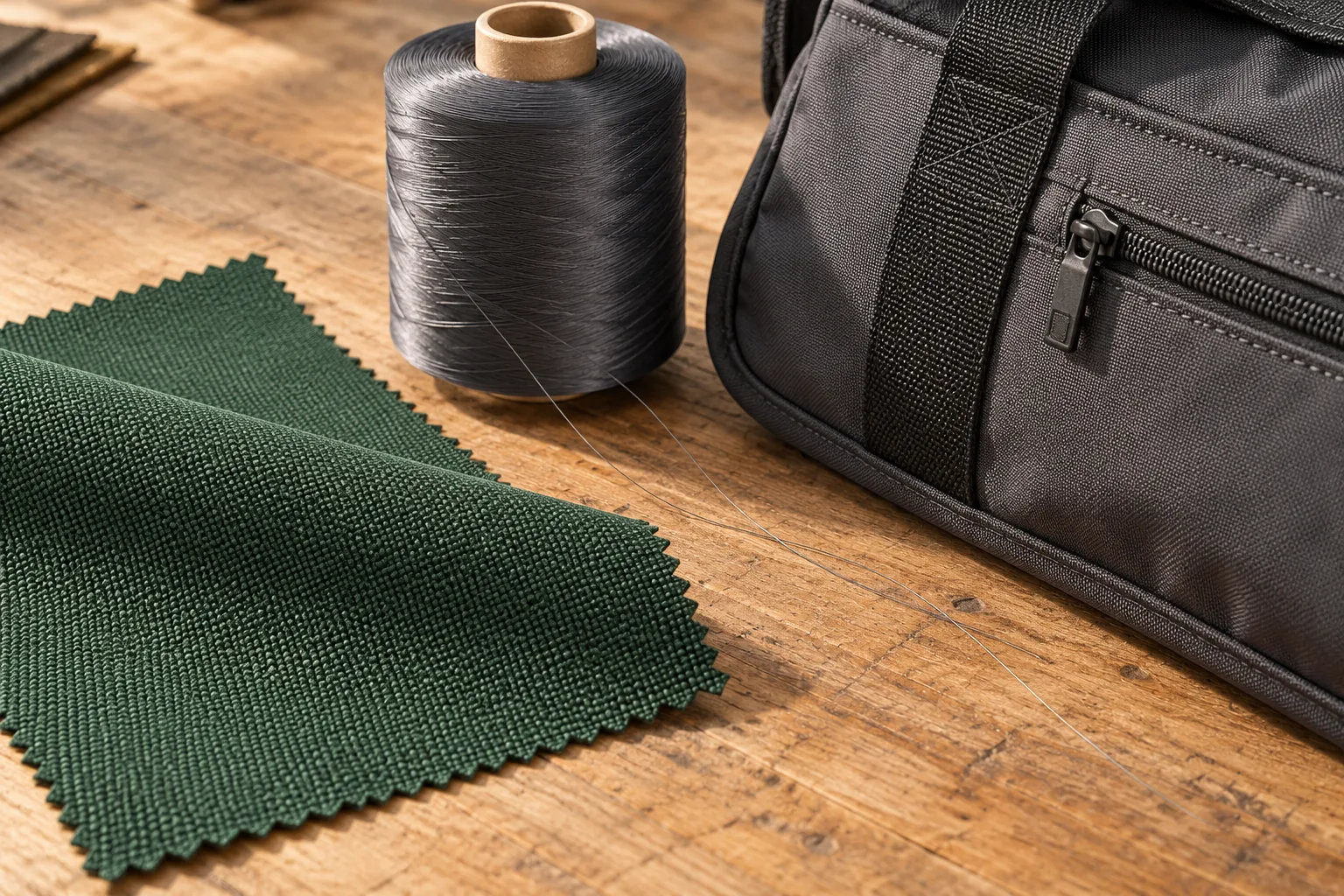
In a bag listing, “Oxford fabric” almost always means polyester Oxford with a coating on the back. In contrast, “polyester fabric” usually means a plain-woven polyester unless the seller gives more detail. Both fabrics may therefore contain the same polymer while handling water, scuffs, and shape differently.
The confusion is partly commercial. Supplier spec sheets are shortened for catalog use, and Oxford sounds more premium than polyester. That shortcut hides the choices that actually matter: fiber first, then denier, weave density, and finish. A smart comparison restores those missing terms before judging the fabric.
What this guide will help you compare
- What a weave changes, and what it cannot change.
- How denier, density, coating, and assembly affect service life.
- Which water claims belong to a fabric panel versus a finished bag.
- How to write a material request that a supplier can quote accurately.
| Term | What it tells you |
|---|---|
| Polyester | The PET fiber in the yarn |
| Oxford | The grouped basket-weave structure |
| 600D | The yarn’s linear density |
| PU coated | A backing barrier or finish |
| GSM | Finished fabric mass per area |
Takeaway: Compare complete constructions, not a weave name against a fiber name.
The Comparison in Detail
Oxford Is a Weave, Polyester Is a Fiber
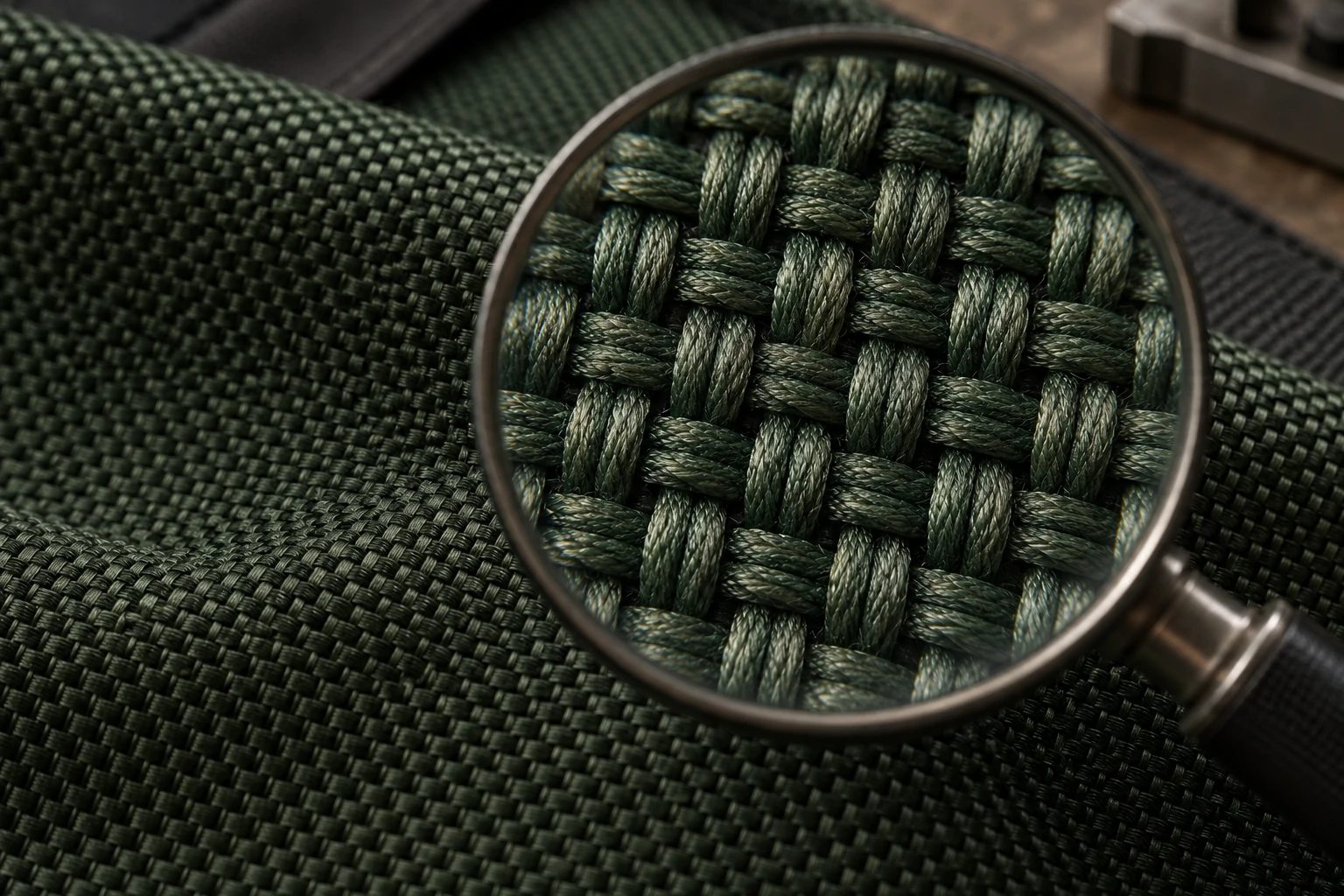
Oxford is a basket weave: grouped warp yarns run lengthwise and grouped weft yarns run across them. A common bag version uses a 2x2 arrangement, producing small raised squares. The structure gives the face more texture than a plain weave and can make a fabric look more substantial.
The name began with a cotton shirting cloth associated with nineteenth-century Oxford. It later became a description of construction, not a guarantee of fiber. Cotton Oxford remains familiar in shirts, nylon Oxford appears in some outdoor gear, and polyester Oxford is now the usual shorthand for economical bag shells.
Polyester means polyethylene terephthalate, a polymer melt-spun into continuous filaments before those filaments become yarn. Commercial polyester textiles expanded in the 1940s and 1950s. The fiber brings low moisture uptake, broad color options, and practical manufacturing availability; it does not dictate a basket structure.
The overlap is polyester Oxford: polyester yarn woven in an Oxford construction, often backed with polyurethane. That is why a backpack may honestly be called both polyester and Oxford. It is more precise to say “600D polyester Oxford, PU coated” than to claim that Oxford and polyester are rival materials.
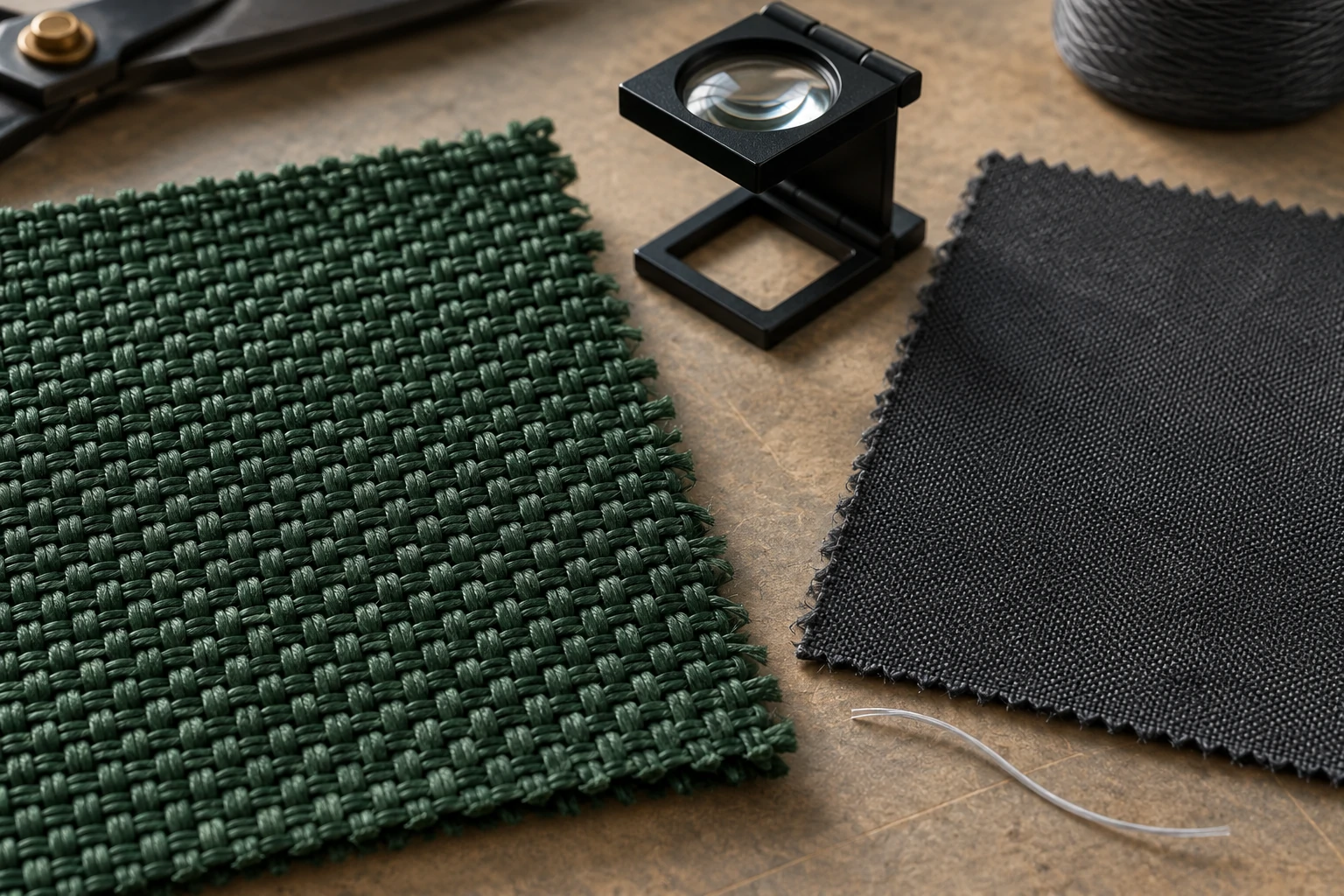
That wording also prevents a common purchasing error: replacing a quoted Oxford shell with unspecified “polyester.” The replacement might be a lighter plain weave with a different yarn count and no backing. It may meet a broad fiber requirement while missing the texture, stability, and weather behavior that the sample established.
| Part | Example | Why it belongs in the brief |
|---|---|---|
| Fiber | Polyester | Sets the yarn material |
| Weave | 2x2 Oxford | Sets the surface structure |
| Finish | PU coated | Sets a barrier or backing choice |
A complete fabric spec names three things
- Fiber: polyester, nylon, cotton, or a blend.
- Weave: Oxford, plain, twill, ripstop, or another construction.
- Finish: DWR, PU coating, PVC coating, laminate, or no finish.
How Each One Is Actually Made
Polyester starts as PET chips. Heat turns the polymer into a melt, which is pushed through spinnerets to make filaments. Drawing aligns the molecular chains; texturizing can add bulk or resilience. The yarn can then be woven, knitted, dyed, and finished for the intended market.
Oxford describes what happens during weaving. The loom groups yarns so they pass over and under one another in pairs or another regular bundle. The construction usually uses relatively dense yarn placement and can use two-ply yarns, meaning two yarns twisted together before weaving.
Two-ply yarns can give the cloth a firmer hand and may help it resist abrasion or yarn breakage, depending on the actual yarn and density. They are not an automatic strength rating. A lower-quality two-ply fabric can still lose to a carefully engineered single-ply construction.
| Polyester fiber route | Oxford fabric route |
|---|---|
| 1. Polymerize PET chips | 1. Select yarn count and ply |
| 2. Melt-spin filaments | 2. Set warp and weft groups |
| 3. Draw and texturize yarn | 3. Weave the basket structure |
| 4. Weave or knit the yarn | 4. Dye and inspect the greige fabric |
| 5. Dye and finish the textile | 5. Add coating or repellent finish |
For a sourcing request, ask whether the stated denier applies to warp, weft, or both. Ask for yarn density and finished weight too. Those details make an Oxford label usable rather than decorative.
Dyeing and finishing happen after the loom, so they can materially change the final product without changing the fiber label. The same nominal Oxford may be piece-dyed, printed, calendered, backed, or laminated. A reference swatch should identify the approved face, back, color, and finish rather than just the construction name.
Durability: Denier, Abrasion, and Tear Strength
Denier is the mass in grams of 9,000 meters of yarn. A higher denier usually means a heavier yarn, which often supports a tougher fabric. It does not establish finished strength on its own, because yarn quality, weave density, coating, backing, and test method also matter.
A 600D Oxford shell is a common starting point for backpacks and sports bags because it balances body and weight. A 210D lining can be appropriate inside the same bag. For a hard-wearing base, a buyer may consider 900D or 1680D, then check whether added stiffness and mass suit the design.
| Denier | Typical use | Relative abrasion resistance |
|---|---|---|
| 210D | Linings, light covers | Lower |
| 420D | Daypacks, pouches | Moderate |
| 600D | Backpacks, sports bags | Good |
| 900D | Travel and gear bags | Higher |
| 1680D | Luggage and reinforced zones | High |
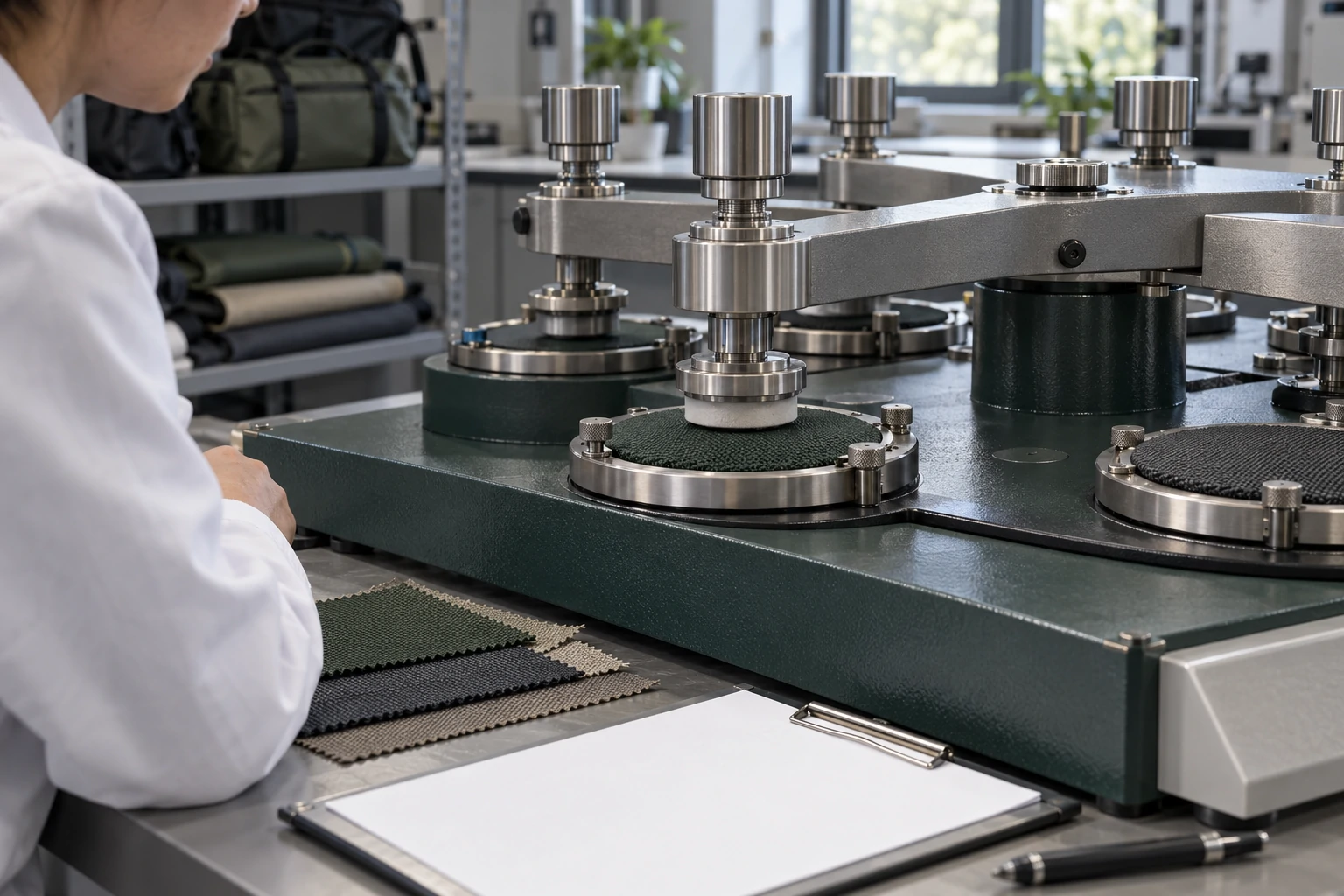
Martindale and Taber tests both rub a specimen under defined conditions. A cycle count tells you how long that particular specimen resisted the test endpoint; it is not a universal promise for a finished bag. Coating, backing, sample conditioning, and abrasive material can change a result substantially.
Tear strength measures resistance to a growing cut. Tensile strength measures a pull across a strip. Neither captures every real failure. Seam slippage, stitch density, seam allowance, and reinforcement at strap anchors often determine whether a durable fabric becomes a durable product.
Abrasion evidence is most useful when it describes the face that will be exposed in use. A bag base can be scuffed by concrete, while a shoulder panel mainly sees fabric-on-clothing friction. Use the product’s real contact points to decide whether to raise denier, add a reinforcement panel, or request a different coating.
When comparing options, review a lab report with the sample construction stated on the report. Then inspect a sewn prototype under realistic load. For a deeper denier comparison, see our guide to 600D, 900D, and 1680D fabric.
Water Resistance: Coatings, DWR, and What “Waterproof” Really Means
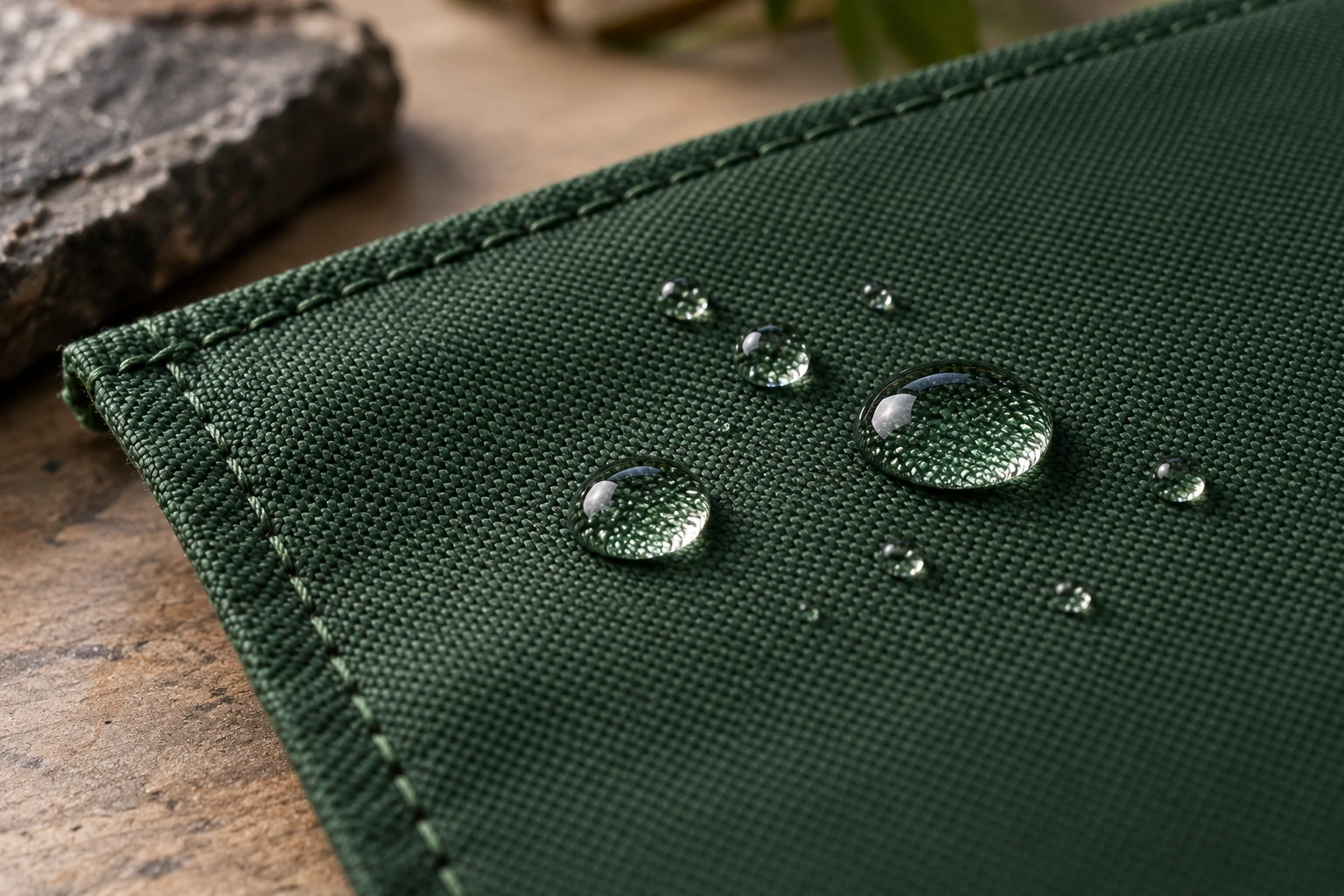
Uncoated polyester Oxford is water-resistant at best. The yarn itself takes up little water, but a woven surface still has spaces between yarns. In rain, the face can wet out and moisture can work through the fabric, especially when water sits on it or pressure is applied.
DWR, short for durable water repellent, changes the surface so droplets bead and roll off more readily. It reduces wetting but does not create a continuous barrier. A worn DWR finish can be renewed in some product systems; the correct care method depends on the finish supplier.
PU and PVC coatings form a physical barrier on the back of the textile. PU is commonly selected when flexibility matters. PVC often produces a heavier, sturdier-feeling surface. TPU is a flexible thermoplastic polyurethane option that can have lower odor than some alternatives, but formulation still matters.
Hydrostatic head measures a fabric’s resistance to water pressure, normally as millimeters of water column. Light coatings may be specified around lower pressure ranges, while purpose-built barrier fabrics can target higher ranges. The number belongs to a test method and specimen, not to every bag made from the fabric.
| Coating | Water resistance | Breathability | Hand feel | Typical use | Relative cost |
|---|---|---|---|---|---|
| Uncoated | Limited | Best of this group | Textile-like | Linings, dry use | $ |
| DWR only | Surface shedding | Higher | Natural | Light exposure | $ |
| PU | Good, spec dependent | Reduced | Flexible | Backpacks | $$ |
| PVC | Good, spec dependent | Low | Firm | Covers, utility bags | $$ |
| TPU | Good, spec dependent | Low | Flexible | Outdoor gear | $$$ |
Coating weight also influences behavior. More material may increase barrier continuity and stiffness, but it can make a fold line less comfortable and add mass to a large bag. Ask the mill for coating type and target application, then evaluate adhesion after flexing rather than treating any coating acronym as a finished performance claim.
Bag seams, zippers, and needle holes usually leak before a coated panel does. A waterproof claim should state whether the complete bag, including closures and seams, has been designed and tested for the stated exposure. Read our waterproof versus water-resistant guide for that distinction.
Breathability, Weight, and Hand Feel
Breathability is commonly discussed as moisture vapor transmission: how readily water vapor passes through a material under a stated test. A coating reduces the paths through a woven fabric, so a coated bag shell is generally less breathable than an uncoated textile. That trade-off is usually intentional.
A coated 600D backpack can feel clammy against the back during warm activity because the shell holds in heat and vapor. Foam channels and mesh back panels create spacing and airflow, but they do not make the outer Oxford fabric breathable. Design the contact area separately from the shell.
Denier and grams per square meter are related but not identical. Denier describes yarn mass per length; GSM describes completed fabric mass per area. The same 600D yarn can produce different GSM after density, coating, backing, and dyeing are accounted for.
Polyester Oxford tends to feel crisp and can sound more pronounced when folded. Nylon Oxford is often softer and more supple; cotton Oxford is softer still, though it can be heavier when wet and needs different weather management. Request a production-representative swatch before approving feel by description.
Hand feel is not merely cosmetic. A stiff shell can help a tote stand open and protect packed gear, while a softer shell can fold into luggage and ride closer to the body. Specify the intended silhouette and packing behavior early, because a late coating change can alter both the feel and the pattern allowances.
- Uncoated polyester Oxford: crisp, structured, moderate rustle.
- PU-coated polyester Oxford: firmer, less breathable, more body.
- Nylon Oxford: softer, often quieter, more supple.
- Cotton Oxford: soft and familiar, but absorbs more water.
Care, Colorfastness, and Printability
For most polyester Oxford bags, wash cold on a gentle cycle only when the construction permits it. Skip fabric softener, air dry, and avoid high heat. A hot tumble dryer can soften, deform, or delaminate a PU coating. Hardware, foam, adhesives, and printed logos may set stricter care limits.
Sunlight can fade any dyed textile over time. Solution-dyed yarns place color in the polymer before spinning, and UV-stabilized yarns are intended to better resist outdoor exposure. Neither term removes the need to check the supplier’s method and the exposure expected for the finished product.
Sublimation printing works on polyester because the dye bonds with polyester under heat; it does not work the same way on cotton Oxford. Screen print and heat transfer can work when the coating or face treatment accepts the ink. Test on the exact finished fabric, not a neighboring sample.
For branded bags, test a printed panel after the same flexing, rubbing, and cleaning it will receive in service. A mark that looks clean on a flat swatch may crack at a fold or adhere differently over a textured Oxford face. Approval should cover artwork, color, registration, and adhesion as one process.
- Brush off grit before washing.
- Use cold water and a gentle cycle when allowed.
- Do not use bleach or fabric softener.
- Air dry away from high direct heat.
- Check coating, logo, and trim instructions first.
Cost, Recycled Content, and End of Life
Use a relative cost index rather than a made-up price. Uncoated polyester Oxford is usually the lowest-cost route. PU-coated versions sit in the middle. Nylon and TPU-finished constructions tend to cost more because of their material, process, or performance choices. Order volume and specification determine the actual quote.
rPET means recycled polyethylene terephthalate, usually derived from a recycled PET feedstock. GRS, or Global Recycled Standard, is a chain-of-custody and content standard that may apply to a supplied material. OEKO-TEX Standard 100 is a textile chemical-safety testing label; it is not a durability or recycled-content claim.
Coated fabrics are difficult to recycle because the woven face, coating, backing, thread, and hardware are different materials. Fiber shedding is another concern through manufacture, use, and laundering. Design for long service life, repairable construction, and clear material disclosure before making broad end-of-life claims.
Recycled content should be discussed separately from recyclability. A fabric can contain rPET and still be hard to recycle after coating and assembly. Conversely, a mono-material concept may be easier to separate but may not provide the required barrier or service life. Record the trade-off plainly in the product brief.
| Option | Relative cost | Key consideration |
|---|---|---|
| Virgin polyester | $ | Widely available; ask for full spec |
| rPET | $$ | Verify claimed recycled content |
| Nylon Oxford | $$–$$$ | Compare matched constructions |
| Cotton Oxford | $$ | Different wet-use behavior |
For a focused material discussion, our nylon versus polyester sports-bag guide is a useful next comparison.
FAQ
Common Oxford and Polyester Questions
Use these answers as a short specification check before you compare samples.
Is Oxford fabric stronger than polyester?
Oxford fabric is not automatically stronger than polyester because Oxford is a weave and polyester is a fiber. A polyester Oxford can be stronger than a light plain polyester, but that depends on denier, yarn quality, density, coating, and the test being compared. Match fiber, denier, finished weight, and finish before deciding. Then evaluate seam construction, which can become the failure point in a finished bag.
Is 600D Oxford fabric waterproof?
600D Oxford fabric is not waterproof by denier alone. A 600D polyester Oxford may resist rain better when it has a specified PU, PVC, or TPU backing, and DWR can help droplets shed from the face. Yet needle holes, seams, and zippers can still let water into the bag. Ask for a full fabric construction and a whole-product test when waterproof performance matters.
Is Oxford fabric breathable enough for a backpack?
Oxford fabric can work well for a backpack shell, but coated Oxford is not a breathable back-contact material. A shell’s job is structure and weather management; foam channels and mesh are normally used where the bag touches the wearer. For a commuter or school bag, that division is usually practical. For active outdoor use, review the back panel, lining, and ventilation design alongside the shell.
Is Oxford fabric the same as canvas?
Oxford fabric is not the same as canvas. Oxford is a basket-weave construction, while canvas is a broad term often used for a heavy plain-weave fabric, traditionally cotton. Either can be made from different fibers and finished for different uses. A coated polyester Oxford may look rugged but will not handle or absorb moisture like cotton canvas. Compare the exact fiber, weave, weight, and finish.
Which is better for a tote bag, Oxford or polyester?
Polyester Oxford is usually better for a structured, utility-focused tote because it combines polyester yarn with a textured weave and can take a backing coating. Plain polyester may be better for a lighter, smoother tote or a printed promotional style. The right pick follows load, desired shape, print process, and rain exposure. A fabric swatch with the intended handles and seams is more informative than the label alone.
Does polyester Oxford fade in sunlight?
Polyester Oxford can fade in sunlight, although its resistance depends on dye method, color, UV treatment, geography, and exposure time. Solution-dyed polyester and UV-stabilized yarns are worth asking about for outdoor covers or gear. A dark color left in direct sun can change differently from a lighter color in occasional use. Request colorfastness evidence for the construction you plan to buy, not a generic claim.
Can Oxford fabric be recycled?
Oxford fabric can be recycled in principle when its material stream is known, but coated bag fabrics are rarely simple to recycle in practice. A polyester Oxford shell may also include PU, PVC, foam, thread, zippers, labels, and bonding layers. Those mixed components must be separated or handled by a suitable recycler. Choose durable construction and clear material documentation rather than assuming any Oxford product has an easy end-of-life path.
Is polyester Oxford safe for kids' bags?
Polyester Oxford can be suitable for kids’ bags when the complete bag meets the applicable market’s safety and chemical requirements. The word polyester does not prove that outcome. Review coatings, inks, hardware, small parts, and intended age group with the supplier, then request relevant documentation for the destination market. Also assess practical safety: strap adjustment, visibility, edge finishing, and a weight appropriate for the child.
Decision framework
Choose the Construction for the Use
Start with the service condition, then specify a construction that can carry it. That approach avoids treating a textured surface or a familiar fiber name as a performance guarantee.
For sports and racket bags, the winning combination is typically a 600D to 900D polyester Oxford shell backed with 0.15mm to 0.25mm polyurethane (PU). In our bag manufacturing facility, this construction powers high-performance custom pickleball bags and tournament gear packs with exceptional tear strength and weather protection.
- Heavy daily load: choose 600D or higher polyester Oxford, then validate base, seam, and strap reinforcement.
- Occasional light use: choose a lighter polyester construction when packability and cost matter more than abrasion margin.
- Outdoor exposure: choose the coating, DWR, UV approach, seams, and closures for the actual rain and sun conditions.
- Budget-first: compare uncoated and PU-coated polyester Oxford with the same density and finished weight.
The one line a buyer should always demand is fiber + denier + coating. Add weave density or finished GSM, intended use, and the required evidence whenever performance is important. That line gives a supplier something real to quote, sample, approve, and keep consistent across future production runs.
Oxford remains the weave and polyester remains the fiber; the finished fabric succeeds when both are selected together with the right finish, realistic testing plan, and careful bag construction.
Material inquiry
Custom Oxford Bag Sourcing & OEM Manufacturing
As an established sports and racquet bag manufacturer in China, Racquet Bag engineers premium Oxford weave sports bags for global brands and wholesale buyers. From high-density 600D Oxford pickleball bags to rigid structured rectangular badminton bags, our factory delivers complete OEM/ODM solutions, REACH-compliant PU backings, and low factory MOQ. Explore our full wholesale racquet bag collection or inquire for custom samples.
We use your details only to answer this request.