
Care & Protection
Waterproof vs Water Resistant Sports Bags | Racquet Bag
Waterproof vs water resistant: learn the key differences, ratings, materials, seams, and which protection is best for backpacks and sports bags.
On this page
Overview / Three useful definitions
What Is the Difference Between Waterproof and Water Resistant?
The difference is the claimed outcome under a stated exposure: reduced penetration versus prevention of penetration. Surface water repellency describes another property: how readily water wets the outside. These terms overlap and are not a universally standardized, three-step numerical rating system.
What Does Water Resistant Mean?
Water resistant means a material or product slows or limits water entry. Tight weaving, a surface treatment, or a light coating can help. Repeated splashes, sustained rain, and pressure against wet fabric can exceed that protection. The label alone does not specify how long contents stay dry.
What Does Waterproof Mean?
Waterproof means a barrier prevents liquid-water penetration within specified conditions. For a finished bag, this includes seams and openings. A meaningful claim names the exposure and supporting test; it does not automatically cover immersion, rough handling, or unlimited time in rain.
What Does Water Repellent Mean?
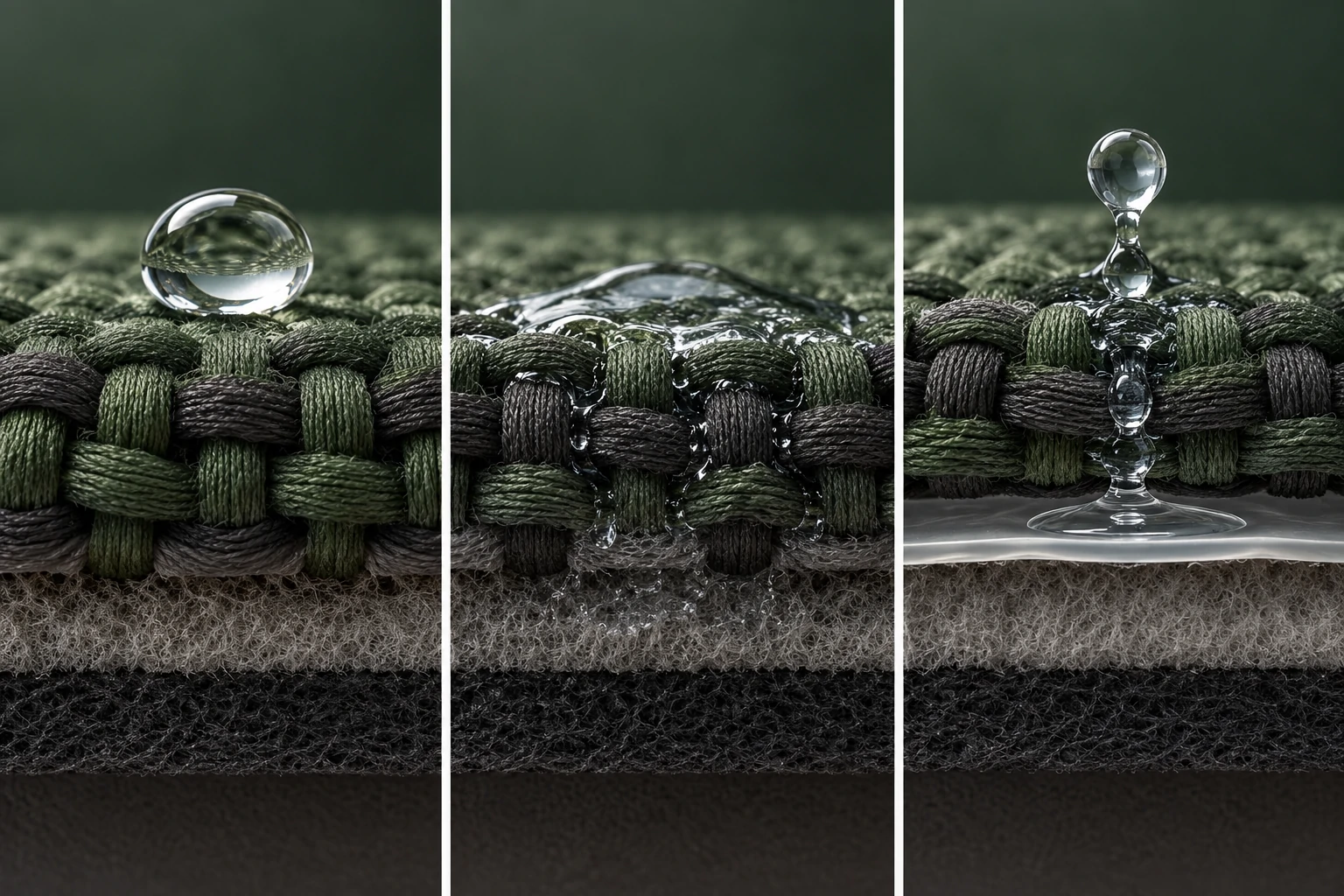
Water-repellent surfaces encourage droplets to bead and roll away. A durable water repellent finish, or DWR, helps reduce surface wetting. Beading does not prove that a continuous waterproof barrier exists underneath, nor that seams are sealed. A waterproof laminate can also have a repellent face.
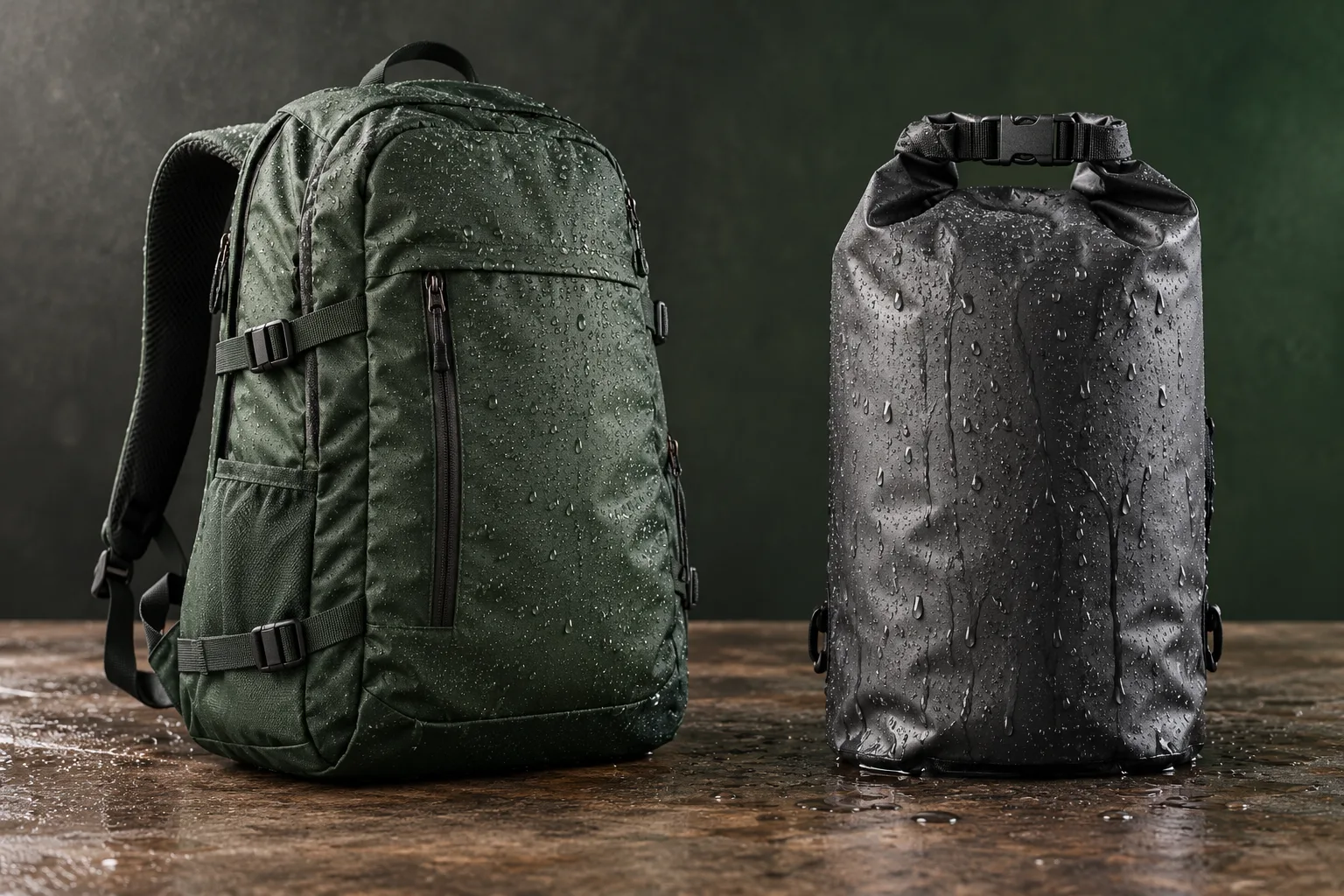
A DWR-treated gym bag may shed a splash; a coated commuter backpack may withstand its specified rain exposure; a validated dry bag may offer greater protection when correctly closed. Their appearance cannot establish those capabilities. Compare specifications and evidence, rather than treating water resistant vs water repellent as a guaranteed ranking.
| Property | Water-Repellent | Water-Resistant | Waterproof |
|---|---|---|---|
| Basic meaning | Reduces surface wetting | Limits penetration | Prevents specified penetration |
| Protection mechanism | Surface chemistry | Weave or finish | Continuous barrier system |
| Typical exposure | Droplets | Brief rain or splashes | Defined tested exposure |
| Under pressure | Beading is insufficient | May admit water | Depends on tested limit |
| Materials or treatments | DWR finishes | Dense weave, light coating | Films, coatings, membranes |
| Bag applications | Treated gym shell | Commuter backpack | Validated dry bag |
| Main limitations | Wear and contamination | Time and pressure | Closure and exposure limits |
How Waterproof and Water-Resistant Materials Work
Fiber, weave, finish, and barrier each have a different job. The textile supplies structure; a finish changes wetting; a coating or membrane can block liquid water. Assembly then determines whether the bag preserves that protection.
Water-Resistant Fabrics
Tightly woven polyester and nylon reduce open pathways between yarns. DWR helps droplets leave the surface, while light polyurethane (PU) coatings can add resistance. None of these descriptions defines a finished bag's performance without a specification.
Abrasion at the base, repeated folding, and everyday contamination can change resistance. When comparing water resistant fabric, ask whether evidence describes new material or material conditioned to represent use.
Waterproof Fabrics
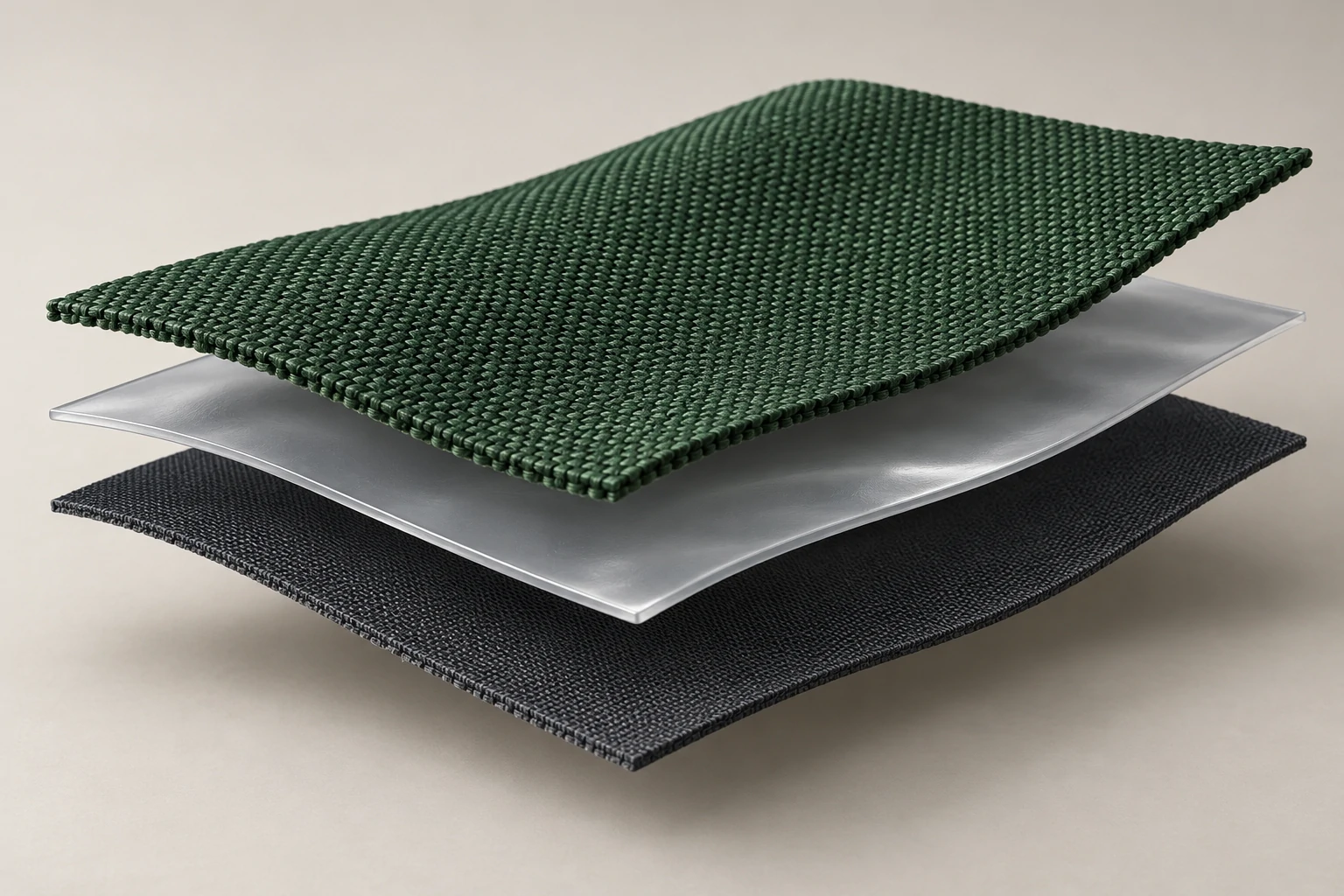
Coated and laminated fabrics add a continuous barrier. Options include thermoplastic polyurethane (TPU) laminates, PVC-coated textiles, waterproof membranes, and barrier films. Their flexibility, thickness, adhesion, and joining requirements vary with the particular formulation.
“Waterproof polyester” and “waterproof nylon” normally describe a fabric system, not a special inherently waterproof fiber. A panel may pass a water-pressure test while the bag made from it leaks through sewing holes.
Why Fabric Construction Matters
Weave density affects pathways through the textile. Thickness and coating quality affect barrier continuity; pinholes or poor lamination can create weak points. Greater hydrostatic pressure challenges those weaknesses. A heavier fabric is not automatically more waterproof.
Breathability is a separate question. Some membranes manage water vapor while resisting liquid water; other films provide a largely closed barrier. A waterproof bag can still hold moisture introduced by wet clothing or humid air. Keep internal moisture management separate from claims about water entering from outside.
| Material / Treatment | Main Function | Water Protection Potential | Typical Bag Application | Key Limitation |
|---|---|---|---|---|
| Polyester | Structural textile | Depends on finish | Sports duffel shell | Weave remains permeable |
| Nylon | Structural textile | Depends on finish | Outdoor backpack shell | Fiber is not a seal |
| PU coating | Coated barrier | Formulation dependent | Coated commuter fabric | Damage or aging |
| TPU laminate | Bonded film | Continuous liquid barrier | Dry bag panels | Adhesion and joins |
| PVC-coated fabric | Coated composite | Continuous liquid barrier | Protective duffel | Weight and formulation |
| DWR finish | Surface repellency | Reduced wetting | Rain-exposed shell | Not a sealed barrier |
Polyester and nylon are fiber categories; PU, TPU, and PVC describe coating or barrier materials. They are not interchangeable alternatives. Our nylon vs polyester guide explains the underlying fiber comparison.
Waterproof Ratings and Testing Methods
A useful waterproof rating identifies the specimen, method, conditioning, and result. Marketing adjectives cannot substitute for those details. Start by asking whether the report tested a flat fabric or the complete bag.
What Is Hydrostatic Head?
Hydrostatic head measures fabric resistance to penetration under increasing water pressure, commonly expressed in millimeters of water column. A 5,000 mm result describes pressure equivalent to that water-column height under the test procedure. It does not permit taking a backpack five meters underwater.
| Rating | General Interpretation | Important Limitation |
|---|---|---|
| Below 1,000 mm | Lower pressure resistance | No whole-bag protection promise |
| 1,000–5,000 mm | Greater pressure resistance | Does not define rain duration |
| 5,000–10,000 mm | Higher pressure resistance | Seams remain separate variables |
| Above 10,000 mm | Still higher measured resistance | Not an immersion certification |
These broad ranges are illustrative, not universal international pass/fail categories. Compare results only with compatible procedures, pressure conditions, test duration, and material condition. A high initial value does not establish retained performance after wear.
When reviewing a report, identify which face contacted water, how pressure increased, and the endpoint used to report penetration. Check whether the stated number represents an individual specimen or a summarized result. Different test setups can produce different numbers without either laboratory necessarily being wrong.
Common Water-Resistance Testing Standards
- ISO 811 assesses water penetration using hydrostatic pressure.
- AATCC TM127 is a hydrostatic-pressure water-resistance method.
- ISO 4920 evaluates resistance to surface wetting with a spray test.
- AATCC TM22 evaluates water repellency by spray testing.
Surface wetting and through-penetration are different observations. A spray grade cannot be converted directly into a hydrostatic-head value. Request the method version and actual report rather than treating a standard's name as a certification.
What Do IP Ratings Mean?
In the IEC 60529 system, IPX4 concerns splashing water; IPX7 concerns temporary immersion under standardized conditions. The X means no solids-protection rating is specified. These are categories for suitable tested enclosures or products, not generic fabric grades.
Never assign an IP rating to an ordinary backpack without valid, applicable product-level testing. It is not interchangeable with hydrostatic head, and immersion protection does not automatically establish protection against powerful jets. See the IEC IP rating guide.
Why Waterproof Fabrics Can Still Leak
A waterproof fabric protects its intact surface. Every hole, joint, and opening introduces another route to the interior. Mapping those routes is essential when developing waterproof bags.
Stitched Seams
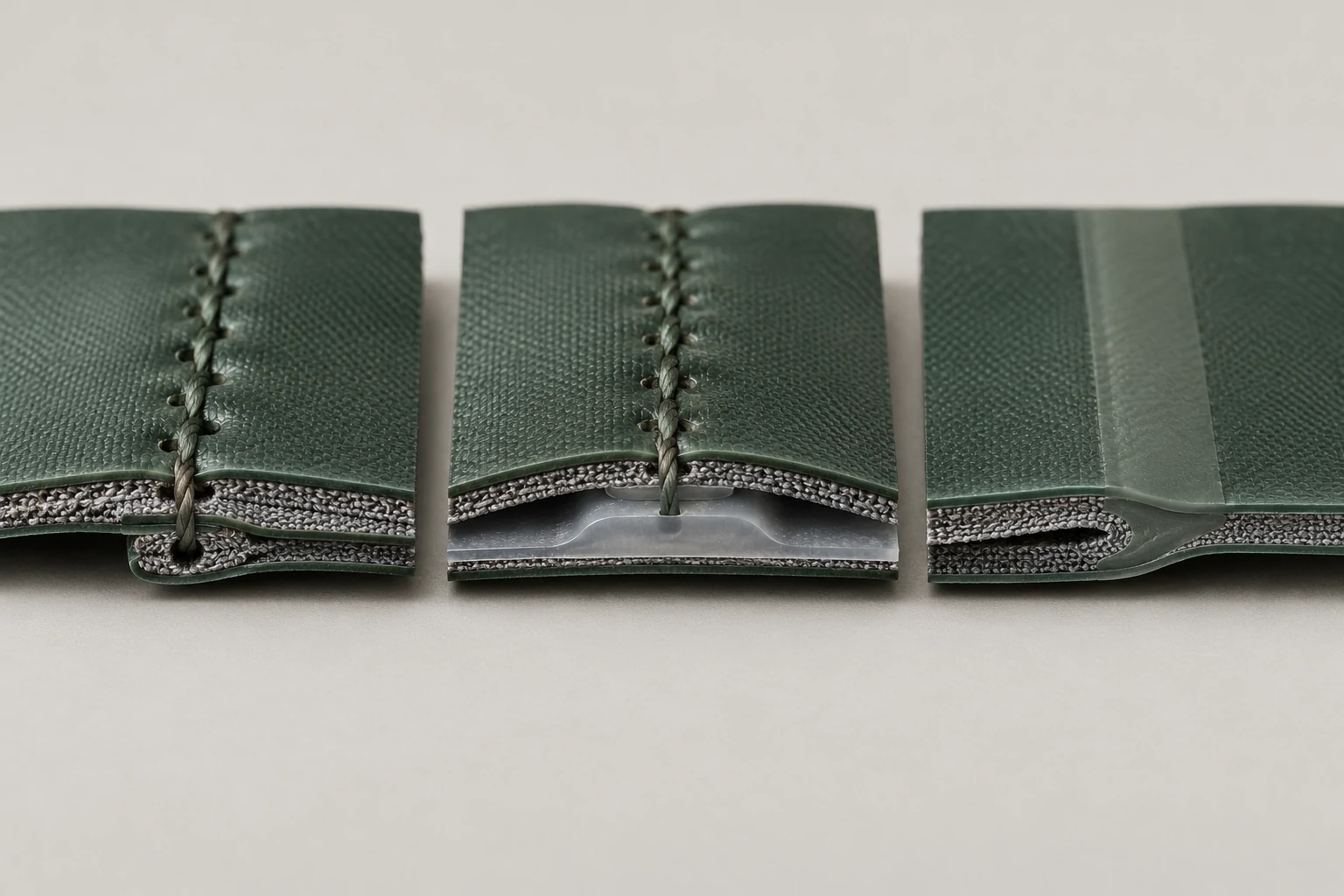
A sewing needle punctures the barrier. Water may pass through those holes or wick along thread and layered seam allowances. Strong stitching and tidy binding improve assembly, but unsealed stitching alone does not establish waterproof seams.
Sealed and Welded Seams
Compatible seam tape can cover stitched holes. Heat sealing, radio-frequency welding, and hot-air welding can join suitable thermoplastic layers without an open needle path. The correct process depends on material chemistry, thickness, geometry, and validated settings.
Correctly engineered and tested taped seams can form part of a waterproof product; welding is not the only route. Tape edges, weld corners, and multi-layer intersections still need inspection.
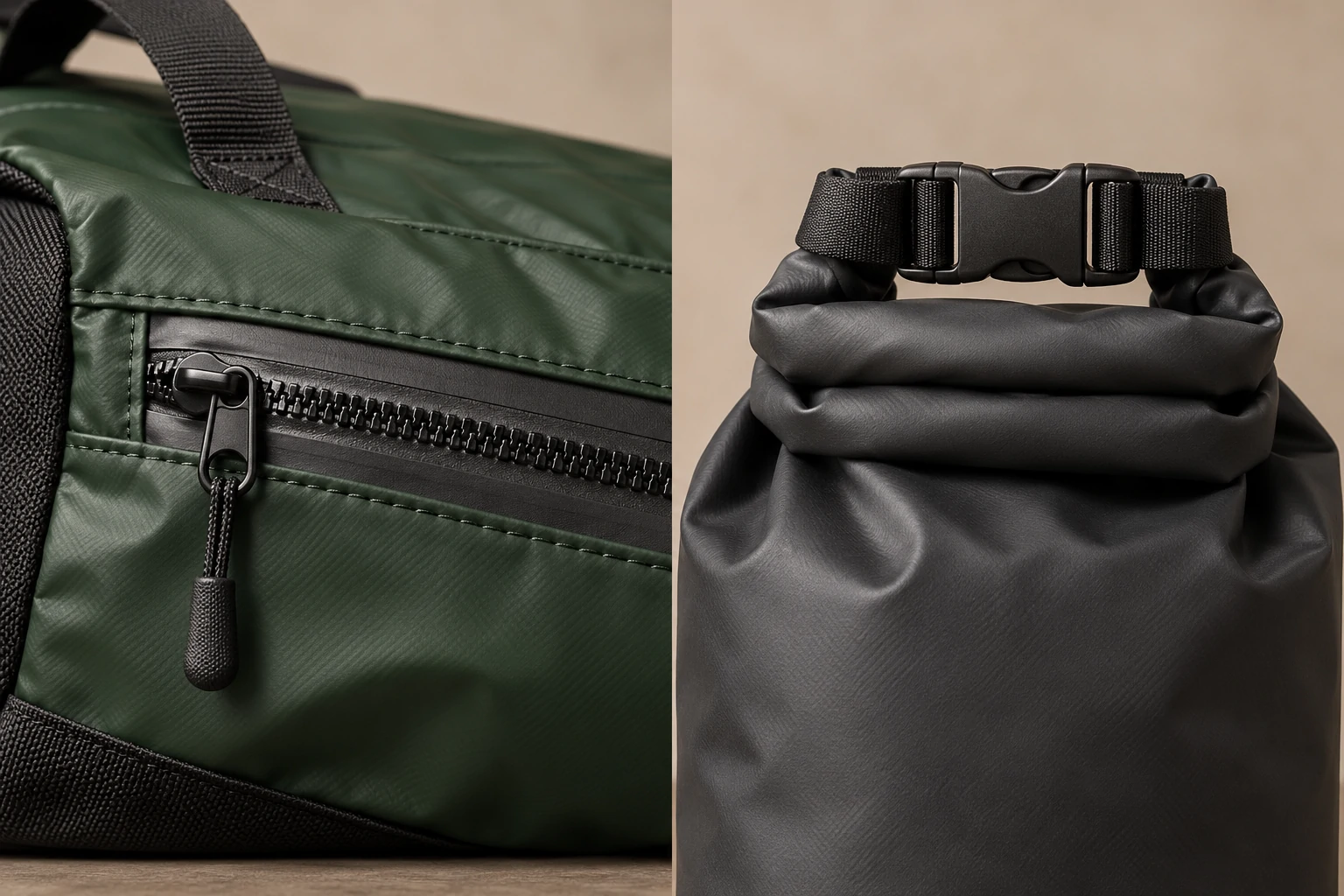
Zippers and Closures
Standard zippers leave paths around teeth, tape, and sliders. Coated water-resistant zippers and storm flaps improve rain shielding but do not automatically seal the opening. YKK AquaGuard is explicitly water-resistant, not watertight.
Specialized watertight zippers require suitable installation and care. Roll-top closures depend on the specified folds, available headroom, and correct fastening. Their performance must be demonstrated in the intended bag configuration.
Other Potential Leakage Points
Handle attachments, strap stitching, pockets, embroidered logos, and cable openings may cross the protected boundary. Overfilling or incorrectly closing a roll-top can defeat an otherwise sound design. Evaluate the final branded sample, including every accessory.
A useful design review follows a drop of water from the outside toward the protected compartment. Inspect corners where several seams meet and the transition between closure tape and shell. A hidden leak path beneath a decorative patch can matter more than the large, intact fabric panels.
| Construction Feature | Water-Resistant Approach | Higher-Protection Waterproof Approach | Potential Failure Point |
|---|---|---|---|
| Panel joins | Sheltered stitching | Validated tape or weld | Holes or incomplete bond |
| Opening | Coated zipper, flap | Validated sealed closure | Ends, folds, slider |
| Strap anchors | Reinforced stitching | Isolated or sealed attachment | Barrier punctures |
| Branding | Conventional application | Barrier-preserving application | Needle or heat damage |
Waterproof vs Water Resistant for Different Bags
Choose protection by exposure and contents. Two bags in the same category may need different designs because their owners use them differently.
Court and racquet sport bags benefit from heavy water-resistant 900D polyester or coated TPU. Bags like our tour-level padel racket bags and pickleball tournament bags utilize water-repellent DWR coatings paired with sealed zipper garages to protect expensive carbon paddles and gut strings from rain squalls.
Gym and Sports Bags
A water-resistant exterior often suits short rainy commutes and locker-room splashes. Damp clothing calls for separation from dry belongings. A wet compartment needs its own leak-control specification; exterior rain protection does not prove internal liquid containment.
Backpacks and Laptop Bags
A water resistant backpack may handle its specified everyday rain exposure. Check the top opening and zipper ends. Sensitive electronics benefit from an additional protective sleeve or sealed liner; ordinary padded laptop sleeves may provide cushioning without water protection.
Pickleball and Tennis Bags
Paddles, rackets, grips, spare clothing, and electronics need protection during travel to outdoor courts. For typical brief exposure, prioritize sheltered compartments and reliable closures. Extreme wet-weather use requires stronger evidence than a material label on a pickleball bag.
Outdoor and Hiking Bags
Prolonged rain challenges seams and access points. Covered zippers, a compatible rain cover, and internal liners can improve protection. Covers may leave the back panel exposed; evaluate the entire carry arrangement, especially where straps contact wet clothing.
Dry Bags and Water Sports Bags
Dry bags combine barrier panels, sealed joins, and controlled closures. Follow manufacturer-defined limits for rain, splashing, and immersion. A roll-top appearance is not proof of submersibility; kayakers should verify the actual exposure rating before relying on one.
Travel and Duffel Bags
Travel buyers balance price, easy access, flexibility, durability, and water protection. A wide zip opening is convenient during packing but creates a long protection boundary. Consider a protective inner pouch when only a few items require stronger isolation.
Separate the protected zone from convenient external storage. A mesh bottle pocket or ventilated shoe compartment may intentionally admit or release water. Its behavior need not invalidate a clearly defined protected main compartment, but product descriptions should explain that boundary so buyers do not assume every pocket stays dry.
| Bag Type | Typical Exposure | Recommended Protection Approach | Important Construction Features |
|---|---|---|---|
| Gym / sports | Brief splashes | Specified resistance | Separated wet storage |
| Laptop backpack | Commuting rain | Rain protection plus liner | Shielded opening |
| Racket bag | Court-side showers | Match outdoor exposure | Protected gear compartments |
| Hiking pack | Extended rainfall | Enhanced rain system | Seams, cover, liner |
| Water sports | Spray; possible immersion | Validated specified protection | Sealed joins and closure |
| Travel duffel | Transit showers | Exposure-based specification | Base and zipper shielding |
Waterproof vs Water Resistant: Which Is Better?
Waterproof is not automatically better for every product. The better choice is the construction that provides adequate protection for its intended use. Start with water exposure, then consider how people pack and open the bag.
Assess amount, duration, pressure, and immersion risk alongside the value and sensitivity of contents. Weight, flexibility, compartment access, manufacturing complexity, material cost, durability, and repairability also matter. A demanding seal that users cannot close reliably may undermine the intended benefit.
| Consideration | Water-Resistant Construction | Waterproof Construction |
|---|---|---|
| Main advantage | Can suit ordinary exposure with convenient access | Can prevent entry within validated conditions |
| Main limitation | Prolonged exposure may exceed protection | Closure discipline and maintenance remain essential |
| Design flexibility | Often easier to add pockets | Every penetration needs engineering |
| Cost and repair | Often simpler assembly | Specialized joins may complicate repair |
- Choose water-resistant construction for typical everyday exposure when specifications support it.
- Choose enhanced rain protection for repeated wet-weather use.
- Choose properly validated waterproof construction when preventing entry is essential.
- Require explicit immersion evidence when submersion is expected.
Translate end-user expectations into a requirement before comparing quotes. Consumers expecting protection for electronics need clearer limits than buyers seeking a shell that merely sheds occasional droplets.
Access frequency also changes the decision. Opening a sealed bag in rain exposes its contents directly, regardless of panel performance. A small, separately protected pocket may help organize frequently needed items. Review that arrangement with the intended users before accepting additional closures or a more complicated packing routine.
How to Specify Water Protection for Custom Bags
For brands, importers, distributors, and OEM developers, a shared specification makes quotations and sample reviews more meaningful. “Please make it waterproof” leaves critical decisions unresolved.
Define the Actual Use Case
Describe rain or spray direction, expected duration, relevant pressure, and any immersion scenario. Identify which compartment must stay dry, what it carries, and the allowed ingress. Include realistic opening and closing behavior.
Select Materials and Coatings
Request the full construction for coated polyester, coated nylon, TPU laminates, or PVC-coated materials. Record base textile, barrier identity, thickness or coating specification, and supplier material reference. Agree how substitutions will be reviewed.
Specify Seams and Zippers
State the compatible sealing process and complete closure design, including zipper ends, roll-top instructions, and attachment penetrations. A generic zipper description is insufficient. Confirm that seam and closure choices work with the selected barrier material.
Request Samples and Performance Evidence
Review fabric reports and product-level evidence separately. Match each report to the sample revision, materials, conditioning, and test method. Evaluate the assembled prototype, then decide whether relevant abrasion, folding, or cleaning should precede repeat testing.
Agree how the inside will be inspected and how water on the outside will be removed before opening. Otherwise, handling can introduce droplets that confuse the assessment. Record sample loading and closure procedure so another evaluator can reproduce the same conditions instead of relying on an informal splash demonstration.
Match Claims to Test Results
Approve wording that reflects verified conditions. A shell-fabric result should not become an unrestricted waterproof-backpack claim. Record care limitations and user closure steps alongside the approved performance statement.
Keep the approved sample and its specification linked. A different zipper, embroidery position, or coating supplier may change the water pathway even when the bag looks similar. Review such changes before reusing an earlier claim, and define which changes require a new product evaluation.
B2B RFQ checklist
- Bag type and intended use
- Exposure scenario
- Target material specification
- Coating or laminate specification
- Fabric test standard and target result
- Seam construction
- Zipper or closure specification
- Finished-product test method
- Required acceptable water ingress
- Sample approval criteria
- MOQ and production quantity
- Branding and packaging requirements
Example sourcing request: “Develop a sports backpack for repeated rainy commutes, excluding immersion. Propose compatible coated fabric, sealed critical seams, and protected closures. Submit a fabric hydrostatic report and a finished-bag rain-test proposal. Agree exposure duration, orientation, loading, and a dry-main-compartment acceptance criterion before sample approval. Quote MOQ and quantity options separately.”
This example asks the supplier to propose a testable solution. It does not imply an existing factory capability or a verified result.
How to Maintain Water-Resistant and Waterproof Bags
Protection can change with dirt, abrasion, repeated folding, improper cleaning, coating damage, seam-tape lifting, and aging. Inspect the base, closure folds, and high-flex areas before wet-weather use.
- Follow the specific manufacturer's care instructions.
- Remove dirt using approved mild cleaning methods.
- Avoid harsh detergents and aggressive scrubbing where prohibited.
- Inspect seam tape, coatings, and closures for damage.
- Reapply compatible DWR only where recommended.
- Let the bag dry appropriately before storage.
- Check restrictions before machine washing or drying.
Renewing DWR can restore surface repellency where appropriate. It cannot repair a torn barrier, leaking seam, or damaged closure. Stop relying on the original protection claim when those features fail; seek a compatible repair or replace the affected component.
Store the bag with its interior dry, following the maker's instructions for closures and folding. Avoid forcing sharp creases into a coated panel or trapping grit inside a roll-top. Small routine checks help identify wear before the bag carries moisture-sensitive equipment on a wet trip.
Questions, answered
Frequently Asked Questions
Assess performance against the intended conditions, not the label alone.
Is waterproof better than water resistant?
Only when the application needs it. Validated waterproof construction can offer stronger protection under its stated conditions, but may affect cost, access, weight, or flexibility. Water-resistant construction can be sufficient for ordinary brief exposure when the product specification supports that use.
Can water-resistant bags handle heavy rain?
Some can handle a defined rain exposure, but the term alone does not establish heavy-rain performance. Duration, wind-driven water, seams, and closures matter. Check product-level evidence and use a suitable cover or internal protection when the expected conditions exceed the stated limits.
Does waterproof mean a product can be submerged?
No. A product may be designed for rainfall or splashing without being suitable for immersion. Submersion adds pressure and exposes every opening. Require explicit depth, duration, closure instructions, and relevant finished-product evidence before treating any waterproof bag as suitable for underwater exposure.
Is polyester waterproof or water resistant?
Polyester is a fiber category, not a waterproof classification. Woven polyester may offer limited resistance depending on construction and finish. A continuous coating or laminate can provide a waterproof fabric barrier, but the bag still needs appropriate seams and closures.
Is nylon naturally waterproof?
No. Nylon fabric contains spaces between yarns, and the fiber name does not define resistance to penetration. Dense weaving, repellency treatments, and barrier coatings can improve performance. Evaluate the finished material specification and assembled bag rather than assuming nylon keeps contents dry.
Are water-resistant zippers waterproof?
Usually they should not be described that way. Coated zippers reduce exposure but may still admit water at openings or ends. YKK AquaGuard, for example, is water-resistant rather than watertight. Specialized watertight closures require their own specifications and suitable installation.
What does a 5,000 mm waterproof rating mean?
It refers to fabric resistance at a pressure equivalent to a 5,000 mm water column under a specified test. It does not establish how long a complete bag withstands rain, and it does not authorize five-meter immersion. Check the method and specimen condition.
Can a water-resistant backpack become waterproof?
A compatible treatment may improve surface repellency, but cannot automatically seal seams, zipper openings, or attachment holes. A properly closed waterproof liner can protect selected contents within its limits. Converting the whole backpack requires construction changes and validation of the resulting product.
How long does water-resistant coating last?
There is no universal lifespan. Formulation, use, abrasion, storage, cleaning, and aging affect different finishes differently. Inspect for reduced beading, cracking, peeling, or leakage. Follow product-specific maintenance advice and distinguish a worn surface finish from damage to the underlying barrier.
How can I tell if a bag is truly waterproof?
Look for a precise exposure claim supported by relevant testing of the complete product. Check seams, closure instructions, care limits, and which compartments are protected. A fabric-only report, attractive droplet photograph, or waterproof label is insufficient evidence of whole-bag protection.
The takeaway
Waterproof vs Water Resistant: Final Verdict
The most useful distinction is what happens under the expected exposure. Water-repellent finishes help droplets bead and run off. Water-resistant construction limits penetration during limited exposure. Waterproof construction should prevent entry within specified, verified conditions.
- Surface: beading describes repellency, not a complete seal.
- System: fabric, seams, and closures must work together.
- Evidence: match the claim to the actual application and test.
Neither the strongest adjective nor the highest fabric number automatically identifies the right bag. Consider sensitive contents, access, maintenance, and realistic weather alongside the protection requirement. An everyday sports bag and a water-sports dry bag can reasonably prioritize different features.
Before selecting OEM materials and construction, define the protected compartment, exposure scenario, and acceptance criteria. That shared brief helps buyers evaluate samples and compare proposals without relying on vague advertising terminology.
Start with your application
Request an OEM Waterproof Bag Solution
As an advanced sports and racquet bag manufacturer, Racquet Bag provides precision waterproof and water-resistant bag engineering for international brands. Whether your project requires high-frequency welded seams, waterproof TPU laminations, or rain-guard covers on padel racket bags, tennis duffel bags, or pickleball tournament bags, our factory delivers reliable wholesale production with rigorous in-line hydrostatic pressure testing. Consult our manufacturing team for waterproof bag solutions.
You can also email Racquet Bag with your project brief.