
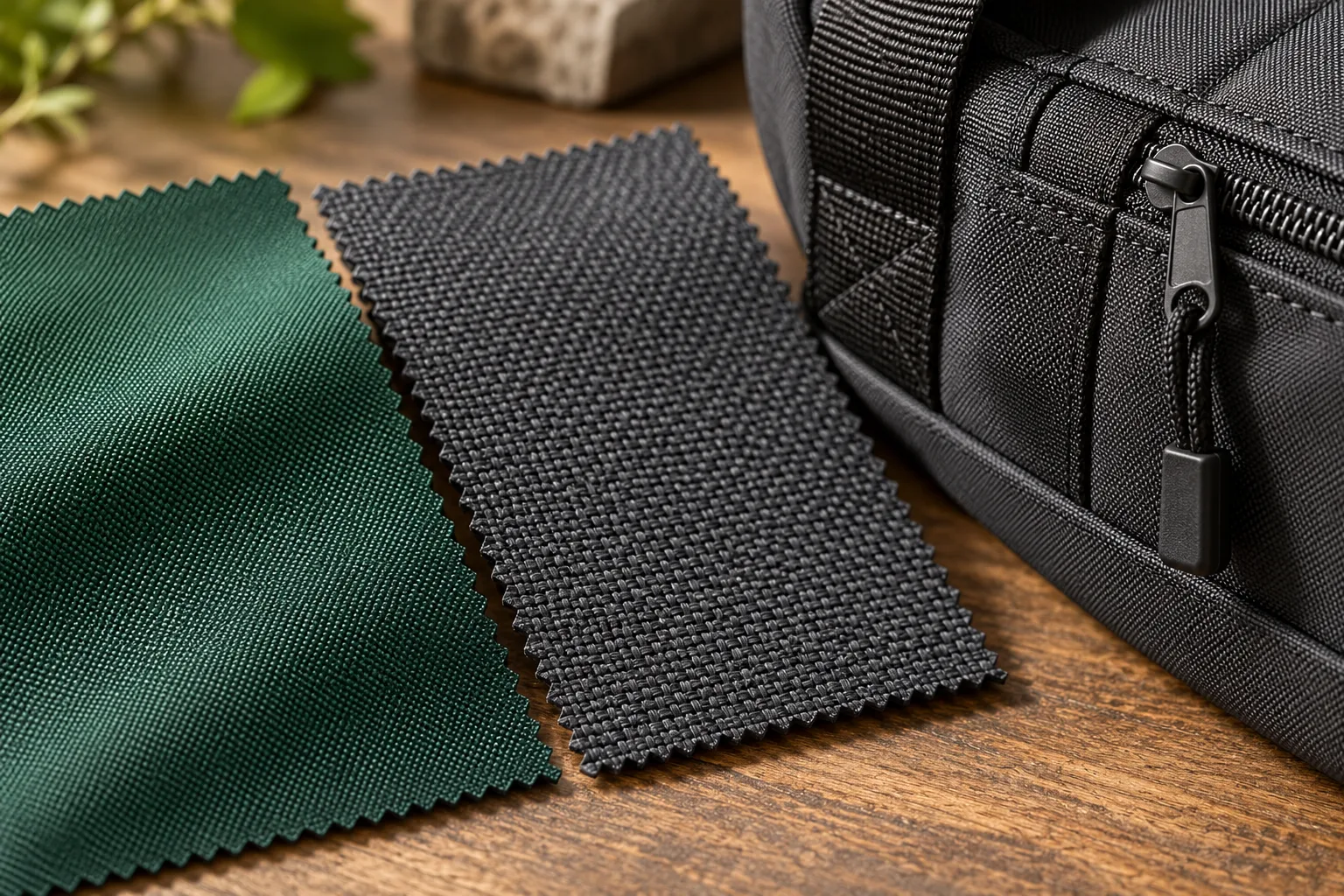
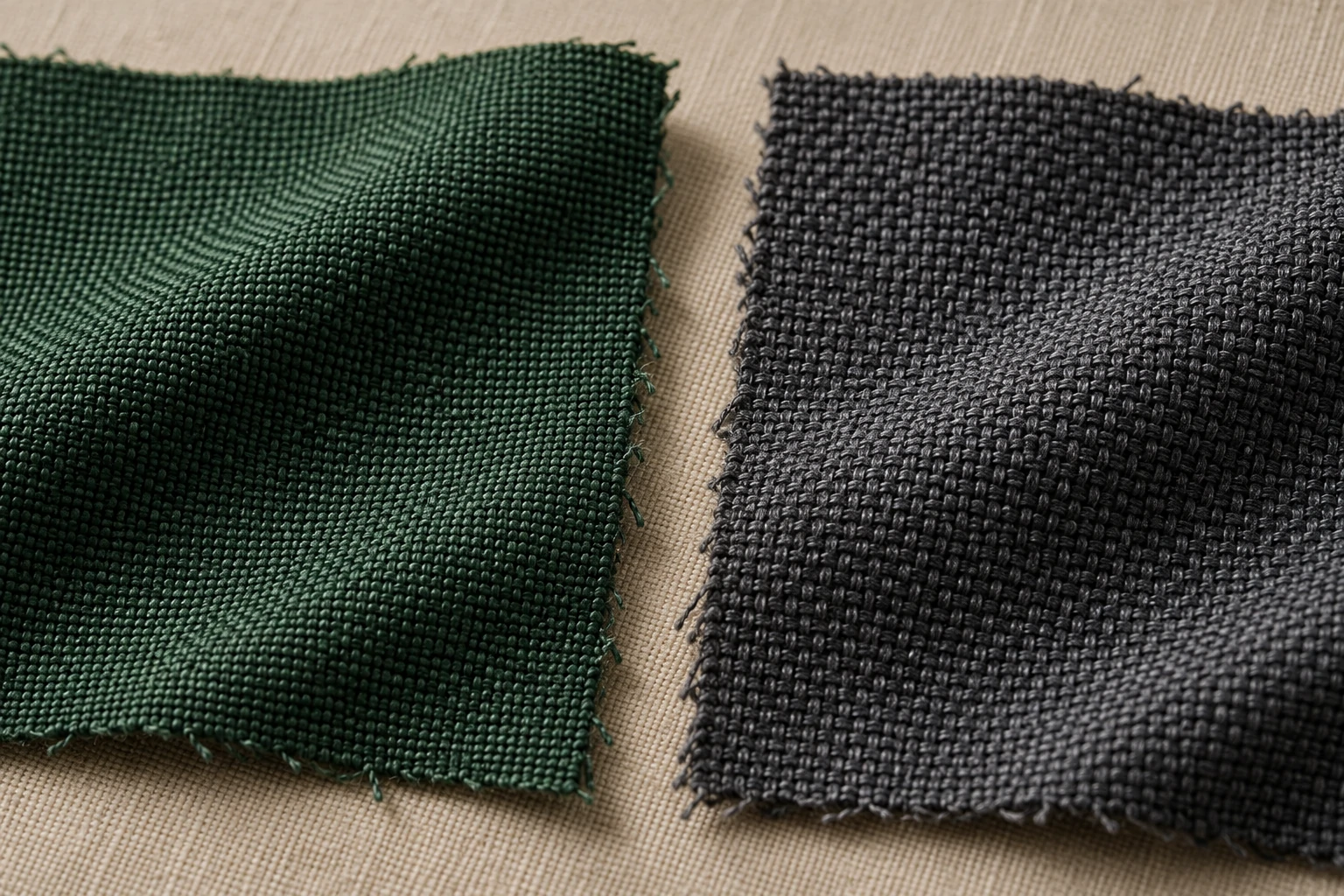
The material comparison
What Is Nylon Fabric?
Nylon fabric uses polyamide yarns, including nylon 6 and nylon 6,6. These are related materials, not interchangeable specifications. Buyers should identify the actual fiber grade and yarn construction rather than assuming that every textile sold as “nylon” delivers the same abrasion resistance, strength or surface appearance.
For example, CORDURA Classic fabric uses high-tenacity nylon 6,6 yarns and offers different weights and finishes. It illustrates how a named textile system is more specific than a generic fiber. This reference does not mean that Racquet Bag products use that branded fabric.
- Abrasion potential: shortlist suitable nylon constructions for repeated rubbing.
- Flexible feel: review drape and panel shape with the chosen backing.
- Weight options: compare finished fabric mass, not fiber reputation.
- Limitations: evaluate sunlight, moisture, coating life and the actual quotation.
A premium backpack may combine a lighter main shell with stronger material at its base and strap anchors. That allocation can be more useful than making every panel heavier. Ask the sample reviewer to examine where equipment presses against the shell and where carry loads enter the seams.
What Is Polyester Fabric?
Polyester bag fabrics commonly use PET yarns. They appear in everyday duffles, team bags, promotional collections and racket bags. A 600D polyester shell is a familiar sourcing reference, but the label leaves weave density, filament type, coating, finished weight and manufacturing quality unspecified.
Polyester can be considered where dimensional stability, outdoor color performance and an accessible material budget matter. Conventional and recycled versions are available. Quality varies substantially: a low-cost fabric with a weak backing should not define the entire fiber category, and a heavy fabric is not automatically a reliable one.
- Program fit: a practical candidate for many team and club collections.
- Appearance: compare texture, sheen and color under agreed lighting.
- Branding: approve ink, transfer or embroidery on the actual finished fabric.
- Construction: specify backing quality and reinforcement as carefully as the shell.
A logo method must suit the substrate. Sublimation is commonly associated with suitable polyester fabrics, while screen printing, transfers and embroidery require their own trials. A coating, dark ground color or heat-sensitive assembly can change the outcome. Approve a decorated sample rather than relying on a plain swatch.
Key Performance Differences
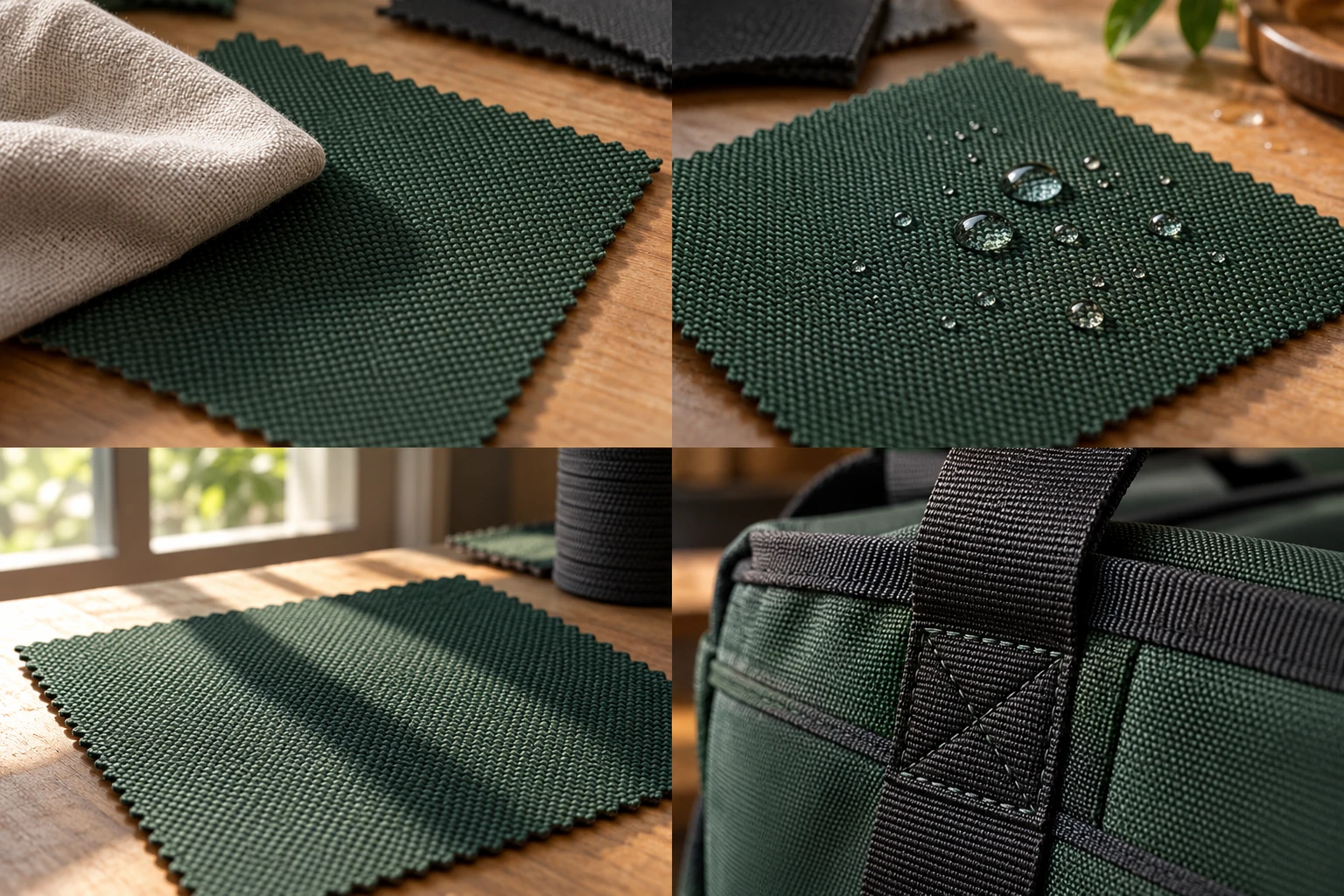
Use the same conditions when comparing candidate fabrics. A coated, densely woven nylon and a loosely woven, uncoated polyester differ in several ways simultaneously. Results from those samples cannot isolate the fiber effect. Record the complete construction, sample condition and method before drawing conclusions.
Durability and Abrasion
Nylon is often shortlisted for abrasion-intensive bags, but rubbing performance belongs to a particular textile construction. Yarn, weave, finish and the contact surface all matter. Inspect both visible damage and coating wear; a shell can look acceptable while its backing or seam area has already deteriorated.
- Compare equivalent test conditions and defined damage criteria.
- Include the base, corners and racket-contact areas in prototype reviews.
Tear Strength and Carry Loads
Tear resistance and load capacity answer different questions. A fabric may resist a small tear while a poorly designed handle seam fails under repeated lifting. Specify seam construction, reinforcement area and hardware attachment separately. Evaluate a loaded sample with representative equipment instead of deriving a carry rating from yarn denier.
- Review strap anchors, handle attachment and seam slippage.
- Agree a finished-bag loading protocol and acceptance criteria.
Weight and Flexibility
Nylon can offer useful strength at a modest fabric weight, but a finished bag also contains foam, boards, zippers and lining. Compare complete sample weights at the same size and feature level. A softer fabric may improve packing flexibility while a structured tournament bag needs support to hold its intended shape.
- Request finished GSM and complete sample weight.
- Check whether the loaded bag maintains shape without excessive stiffening.
Water Exposure and Drying
Polyester fiber generally absorbs less moisture than nylon fiber. That does not guarantee that a polyester bag dries sooner: water can remain between yarns, behind coatings, in padding or inside pockets. Compare complete constructions after a defined exposure and drainage period, especially when bags carry shoes or damp towels.
- Separate fiber absorption from water trapped in the assembly.
- Assess drainage, accessible cleaning and compartment ventilation.
UV Exposure and Color
Polyester is often considered for repeated outdoor exposure, yet dye chemistry, pigments and stabilization affect fading and retained strength. Thread also matters: Sailrite’s thread material guide distinguishes polyester and nylon behavior outdoors. Thread guidance is not a substitute for testing the selected shell fabric.
- Request relevant lightfastness evidence for the actual color.
- Review webbing, thread and printed logos alongside the shell.
Price and Total Value
Polyester is often a cost-conscious starting point, while some nylon constructions carry a premium. These are sourcing tendencies, not live prices. Quote the same dimensions, features, finish, quantity and packaging. Saving on the main shell may have little value if it increases sample revisions, returns or replacement costs.
- Compare total bag cost against the same approved brief.
- Include reinforcement, decoration and quality checks in the quotation.
| Requirement | Nylon candidate | Polyester candidate | Buyer action |
|---|---|---|---|
| Repeated rubbing | Often shortlisted | Check yarn and weave | Compare abrasion evidence |
| Load-bearing seams | Needs reinforcement | Needs reinforcement | Test finished attachments |
| Light carry weight | Review lighter options | Review lighter options | Weigh complete samples |
| Wet conditions | Check barrier system | Check barrier system | Review seams and closures |
| Outdoor color | Verify actual color | Often a starting point | Check lightfastness |
| Target price | Quote specified grade | Quote specified grade | Compare the same brief |
420D Nylon vs 600D Polyester
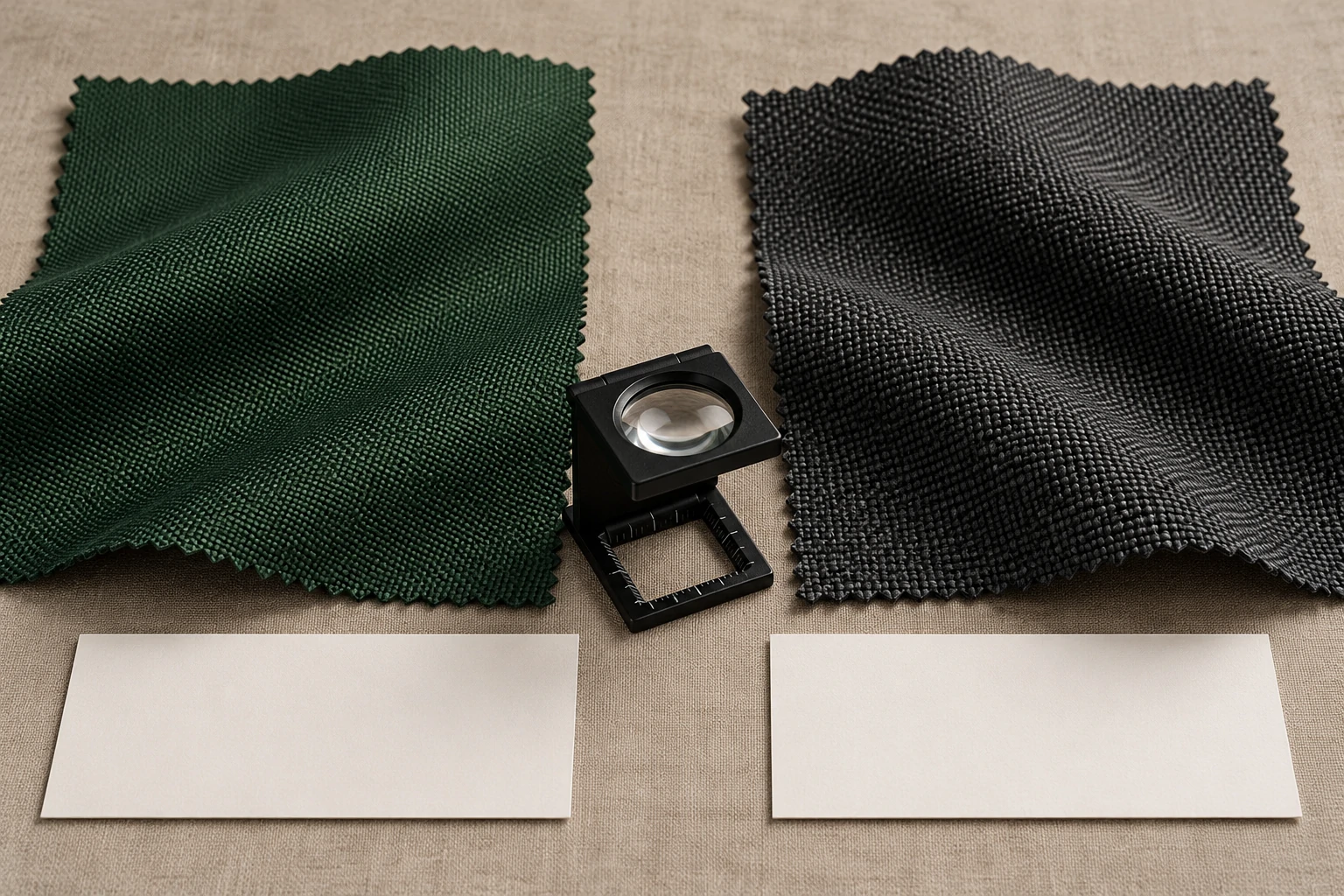
Denier describes yarn linear density: the mass in grams of 9,000 meters of yarn, as defined in this government handloom technology reference. It does not directly state fabric thickness, finished GSM or service life. A 600D polyester fabric therefore cannot be declared stronger than 420D nylon simply because its denier number is larger.
Fabric mass also depends on the number of yarns, weave and applied finishes. Compare finished GSM, tear and abrasion evidence, coating quality and sewn samples. The examples below are sourcing categories to discuss, not Racquet Bag stock specifications or a universal ranking of suitable bag materials.
| Example material | Possible starting application | What to verify |
|---|---|---|
| 210D nylon | Lining or lightweight panels | Snagging, seam stability and backing |
| 420D nylon | Flexible backpack shell | GSM, abrasion and coating |
| 500D nylon | Performance-oriented shell | Yarn grade and woven construction |
| 600D polyester | Team or everyday bag shell | Density, hand feel and backing |
| 900D polyester | Structured shell candidate | Weight, stiffness and sewability |
| 1000D nylon | Reinforcement or heavier shell | Added weight versus actual need |
“Ballistic” also requires clarification. A 1680D fabric may be described that way because of its construction or marketing position, but the number does not prove impact protection or a particular fiber. Specify composition and weave explicitly, and review whether a heavier construction improves the customer’s actual use case.
When comparing 420D nylon with 600D polyester, ask each supplier to complete the same material sheet. Include finished weight, usable width, backing, color reference and proposed tests. If one sample is noticeably stiffer, determine whether the cause is its coating or construction before attributing that difference to the polymer itself.
Fabric for Different Sports Bags
Begin with the way the bag is carried and the equipment inside it. Paddle edges, racket heads, shoe compartments and tournament accessories create different wear points. The following suggestions are development starting points. Final material choices need sampling, and protective features depend on the whole bag design.
Racket sports bags — including tennis racquet bags, badminton backpacks, and squash packs — demand high tensile strength to carry multiple framed racquets. Our manufacturing facility combines 900D/1680D nylon exterior abrasion resistance with polyester interior liners to optimize weight and factory wholesale costs.
| Bag type | Material starting point | Construction priority |
|---|---|---|
| Pickleball backpack | Nylon or polyester | Paddle sleeves and carry comfort |
| Pickleball sling | Light nylon or polyester | Accessible storage and balanced strap |
| Pickleball tote | Structured polyester or nylon | Base support and secure pockets |
| Pickleball duffle | Coated polyester or nylon | Handles, shoes and packed volume |
| Pickleball tournament bag | Reinforced nylon or polyester | Compartment layout and base wear |
| Padel racket bag | Nylon or polyester | Racket fit and protective padding |
| Tennis racquet bag | Nylon or polyester | Racket capacity and handle clearance |
| Badminton racquet bag | Nylon or polyester | Frame support and organized storage |
| Gym duffle | Polyester or nylon | Cleaning, damp gear and carry points |
| Team equipment bag | Durable polyester or nylon | Repeated loading and reinforced seams |
Thermal lining, padded protection and ventilation are design choices rather than automatic benefits of either fiber. Discuss the equipment, separation needs and expected environment before choosing them. Start with the Pickleball Bags collection, then compare individual carry formats against a consistent material brief.
- Pickleball Backpacks for organized hands-free carry.
- Pickleball Sling Bags for compact court essentials.
- Pickleball Duffle Bags for larger training loads.
- Pickleball Tote Bags for open-format everyday access.
- Pickleball Tournament Bags for multi-compartment event use.
Coatings and Fabric Construction
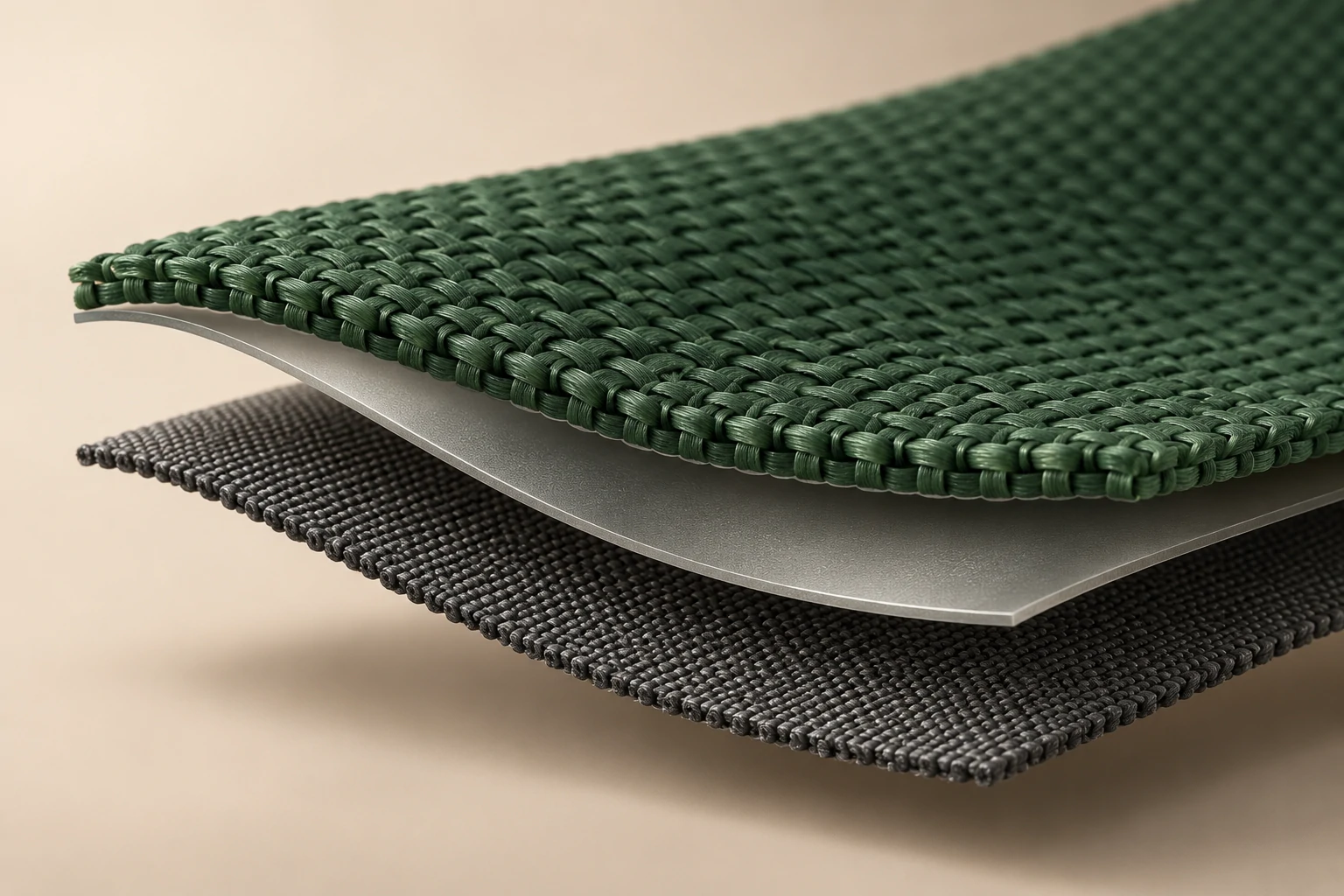
A water-repellent finish helps droplets bead on the face; a PU coating or suitable TPU laminate can provide a barrier behind the woven shell. These treatments perform different jobs. Ottertex’s ripstop specifications show both nylon and polyester versions with different finishing systems, illustrating why fiber alone is an incomplete description.
A fabric barrier does not automatically make a sewn bag waterproof. Needle holes, zipper openings, seams and untreated areas can admit water. A ventilated shoe pocket may deliberately exchange air. Define whether the brief concerns brief splashes, rain exposure or a more demanding condition, then evaluate the complete bag accordingly.
- Record the face finish and reverse-side coating or laminate.
- Inspect coating consistency, adhesion and flexibility after handling.
- Identify seams and closures within the intended exposure area.
- Consider cleaning instructions, storage conditions and damp compartments.
- Use a defined fabric method and a separate finished-bag protocol.
ISO 811 addresses fabric resistance to water penetration under hydrostatic pressure. A result belongs to the tested material and conditions; it does not establish a waterproof rating for every finished bag made from that material. Avoid translating a fabric report directly into a whole-product promise.
Ask for care instructions compatible with the complete assembly. Wiping a shell, washing a removable liner and cleaning a padded compartment are different operations. A proposed cleaning method should account for adhesives, prints, foam and hardware. Keep those instructions consistent with the sample reviewed and the conditions described to the end customer.
Choose Fabric for Custom Sports Bags
A clear development brief makes supplier comparisons more useful. Describe what the user carries, how often the bag travels and which failure would matter most. Ask for two well-defined material alternatives when trade-offs are uncertain. Review them on the same bag pattern rather than comparing unrelated showroom samples.
- Define use: record equipment dimensions, carry conditions and cleaning needs.
- Set weight priorities: distinguish empty weight from expected packed load.
- Specify construction: identify fiber, denier, GSM, weave and reinforcement.
- Approve appearance: review coating, color and decorated panels together.
- Review a prototype: check fit, seams, zippers and loaded comfort.
- Compare total economics: include sampling, packaging, documentation and agreed checks.
Choose tests with the material and laboratory. ASTM D3884 concerns rotary-platform abrasion. ISO 12947-2 addresses Martindale specimen breakdown and excludes coated or laminated fabrics; its scope directs coated-surface assessment to the ISO 5470 series. Do not compare cycle counts across incompatible methods.
Include These Items in an RFQ
- Bag format, dimensions, quantity and destination market.
- Shell fiber, yarn denier, finished GSM, weave and coating.
- Lining, padding, zippers, webbing and reinforced attachment areas.
- Color reference, logo artwork and application method.
- Sample approval, test criteria, packaging and required documentation.
Keep the approved sample and written specification connected. Record substitutions before production, including changes to the backing or yarn source that may be difficult to see. Ask which documents support the exact selected material. A generic supplier certificate cannot establish every performance or compliance claim for a finished custom bag.
For repeat orders, retain a reference swatch and decorated panel as well as the complete sample. Agree how color, feel and coating differences will be assessed. Photograph key reinforcement areas and record component identities. These simple records make it easier to discuss a change without relying on memory or an ambiguous fabric name.
Recycled Materials and Sustainability
Recycled nylon and recycled polyester both exist. CORDURA’s re/cor material range, for example, identifies recycled nylon and PET options. Availability of an identified textile elsewhere does not establish availability, certification or recycled content for a particular Racquet Bag project; confirm the proposed material and supporting records.
Assess the whole product, including useful life, repairable components, material combinations and expected care. Recycled content alone does not prove lower impact in every situation, and neither conventional fiber should be called biodegradable without appropriate evidence. Avoid “eco-friendly” or carbon-neutral claims that the project documentation cannot substantiate.
| Claim or priority | Evidence to request |
|---|---|
| Recycled content | Composition percentage and relevant material records |
| Verified chain of custody | Applicable scope and transaction documentation |
| Chemical requirements | Destination-specific documentation for selected materials |
| Longer useful life | Agreed durability and component review |
| Public environmental claim | Claim wording supported by the actual evidence |
The Recycled Claim Standard concerns recycled input verification and chain of custody; it does not by itself verify all chemical, social or environmental attributes. Check current Textile Exchange claims requirements before using certification names or marks. Certification must match the material, organization, supply chain and claim being made.
Define the boundary of a recycled-content statement. A shell fabric claim may exclude lining, foam, straps and hardware; a bag-level statement needs a different calculation. Ask the supplier to state what is included and retain the relevant evidence. Do not transfer a fabric-level percentage to the complete product without checking its basis.