
Material Guides
600D Polyester for Sports Bags Guide | Racquet Bag
Learn what 600D polyester is, how durable and water-resistant it is, its common uses, and how it compares with nylon and other bag fabrics.
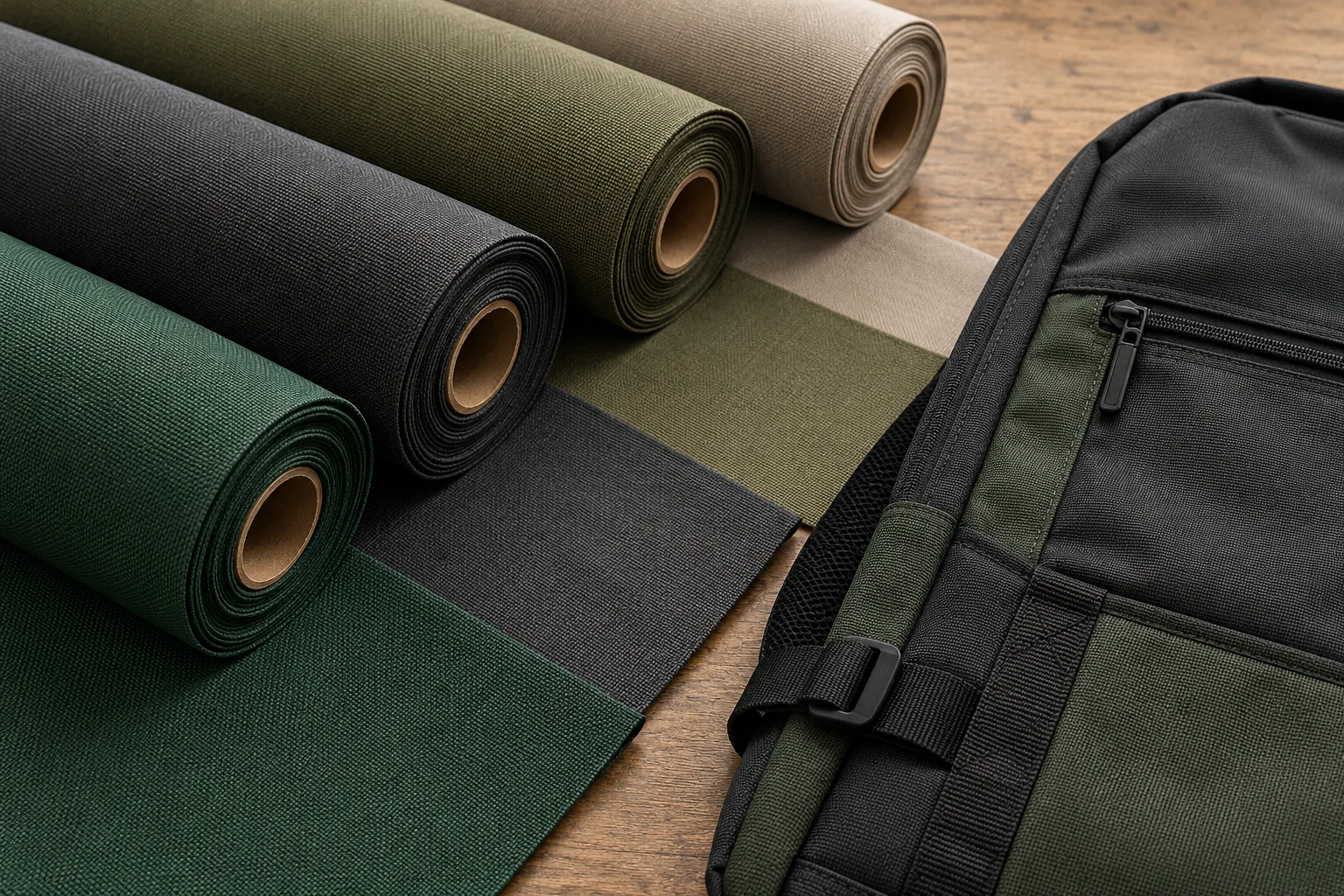
On this page
Overview / A useful material label
Understanding 600D Polyester Fabric
Polyester is a synthetic fiber family used in yarns and textiles. Manufacturers form polyester polymer into filaments or staple fibers, turn these into yarn, and interlace yarns on a loom to create woven fabric. A 600D label describes the linear mass of the yarn, while weave and finishing describe other parts of the fabric.
Bag makers often consider 600D polyester for everyday backpacks, gym bags and travel accessories because it can provide useful structure without requiring a very heavy shell. It is available in many colors and textures, and compatible versions can receive a PU or PVC backing. These are broad sourcing reasons, not a performance guarantee for every roll of 600D fabric.
Two fabrics both called “600D polyester” can differ in filament construction, warp and weft yarn, yarn density, weave, finished GSM, thickness, backing and color. An Oxford weave changes the surface structure, while a coating changes the back or face. None of those details is captured by denier alone.
Why Is 600D Polyester Popular?
- Practical durability for many everyday applications.
- Cost options suited to commercial bag programs.
- Compatibility with common water-resistant coatings.
- Useful structure across many sewn bag designs.
- Availability in a wide range of colors and finishes.
These are useful starting points for material selection, not claims that 600D always outperforms a lighter or heavier alternative. Ask for a written construction specification and assess an actual sample.
What Does 600D Mean in Polyester?
D stands for denier, a unit of yarn linear density. One denier equals a mass of one gram per 9,000 meters. A 600-denier yarn therefore weighs 600 grams per 9,000 meters. It identifies yarn mass relative to length; it is not a finished fabric weight or a direct strength test.
Denier does not by itself measure fabric thickness, GSM, tear strength, tensile strength, abrasion resistance, or finished-bag lifespan. Those properties also depend on filament count and construction, warp and weft arrangement, weave density, finishing and test conditions. The fabric label should be read as one material detail among several.
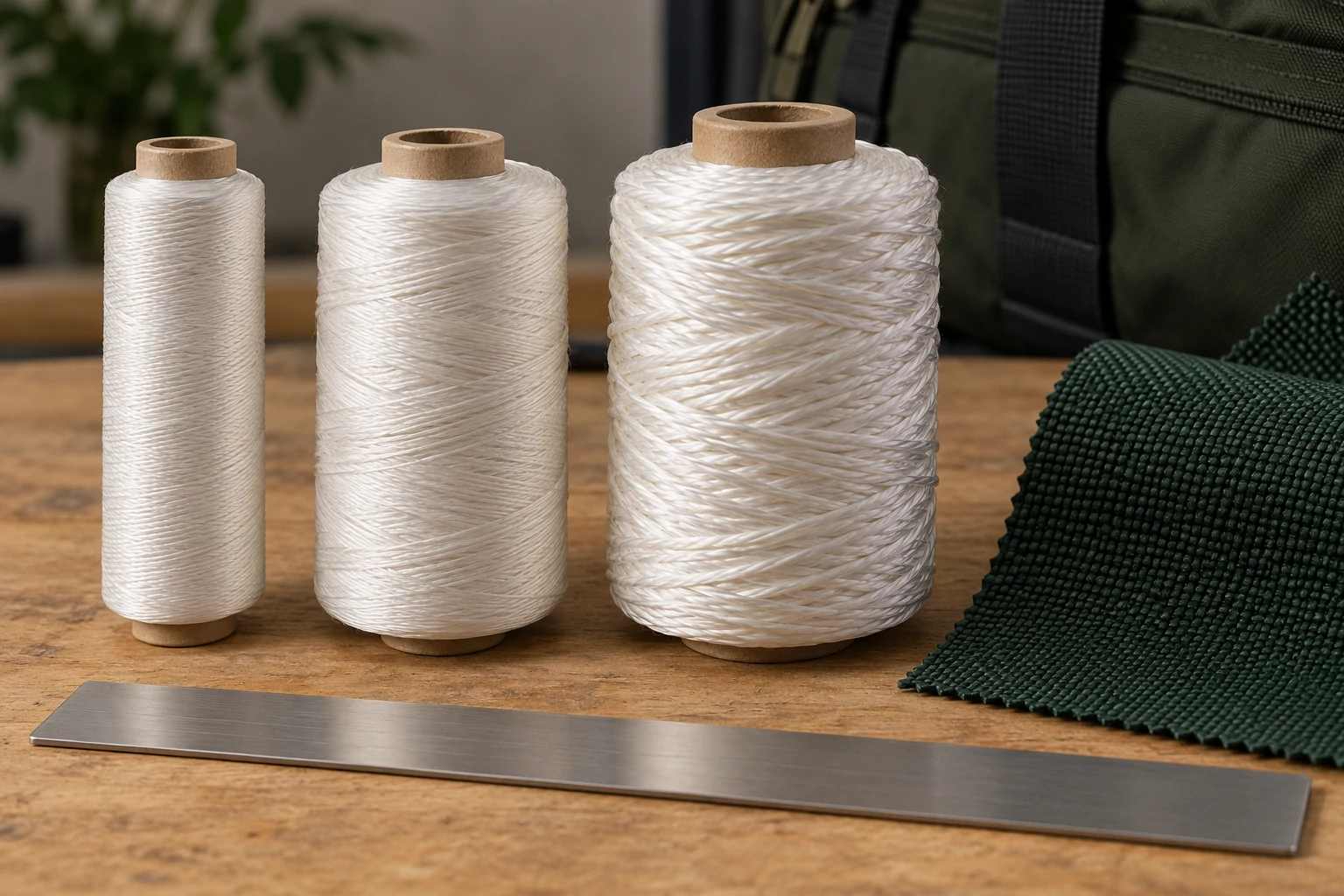
| Denier | General Characteristics | Common Applications |
|---|---|---|
| 210D | Lightweight yarn | Linings and lightweight bags |
| 300D | Relatively lightweight | Promotional bags and pouches |
| 420D | Mid-range yarn | Daypacks and sports accessories |
| 600D | Medium-to-heavier yarn option | Backpacks and sports bags |
| 900D | Heavier yarn option | Travel and equipment bags |
| 1680D | Heavy yarn option | Selected luggage and gear bags |
These product examples are common tendencies, not rules. A balanced decision considers the entire fabric and bag construction. A higher denier number alone does not guarantee a stronger finished bag.
Key Properties of 600D Polyester
600D polyester describes yarn size and fiber type; properties of the finished cloth are consequences of the complete textile design. For bag buyers, distinguish each kind of stress instead of using “durable” as a single universal result.
Abrasion Resistance
Abrasion is surface wear from repeated rubbing against a floor, clothing, equipment, or another bag. Yarn construction, weave density, face texture and any coating can all change how a 600D fabric responds. A smooth coated fabric and a textured woven surface may wear differently even if both list the same denier.
Tear and Tensile Strength
Tear strength concerns how a cut or small opening propagates when the fabric is pulled. Tensile strength concerns the force needed to pull a specimen apart. A bag can need both, especially near strap anchors, but a result for one property cannot stand in for the other.
Dimensional Stability
Woven polyester bags can retain useful shape in ordinary handling, though stability also depends on weave, backing, lining and pattern. Heat, load, repeated folding or unsuitable washing may change a particular finished product. Follow its care instructions rather than assuming all polyester construction behaves identically.
Water Resistance
The polyester fiber is not a watertight barrier. A dense weave or surface finish may resist brief moisture, while a PU or PVC backing may add a more substantial barrier to the cloth. Stitching and closures still govern water entry into a finished bag.
Color and Surface Finish
Polyester is available in varied colors and face textures. A project may specify color references, sheen, hand feel, printing compatibility and colorfastness evidence. The exact dye and surface finish should be checked on production-representative material.
Weight and Flexibility
Finished weight reflects yarns per area, weave, coating and backing. A coating can make fabric heavier or stiffer. Denier gives no fixed GSM value, so record finished fabric mass separately when weight matters to the bag design.
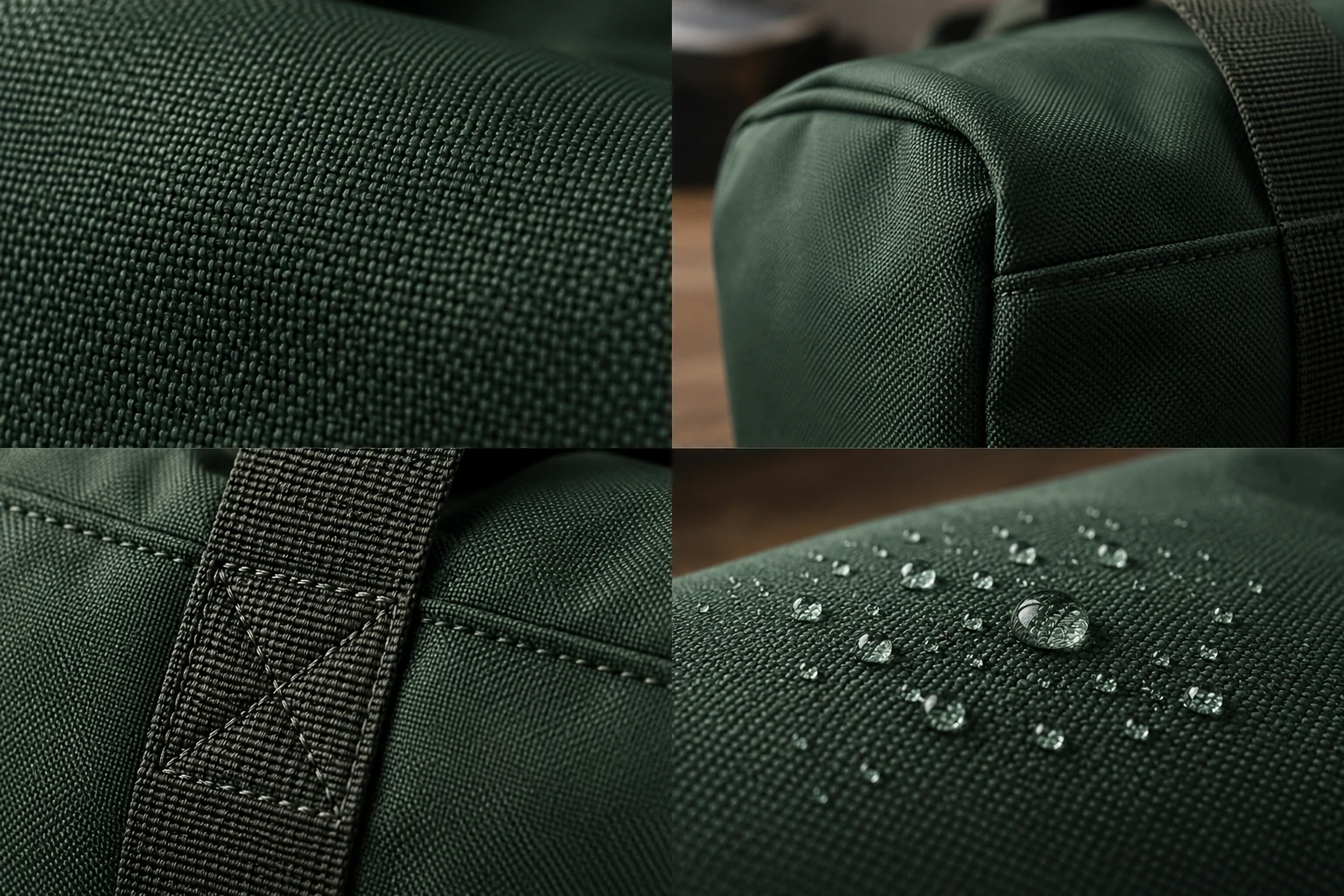
| Property | Why It Matters for Bags |
|---|---|
| Abrasion resistance | Helps manage regular surface contact |
| Tear strength | Helps limit propagation of fabric cuts |
| Tensile strength | Relates to pulling forces on textile panels |
| Dimensional stability | Helps maintain intended product shape |
| Water resistance | May reduce moisture entry under defined exposure |
| Flexibility | Affects handling and everyday use |
How Durable Is 600D Polyester?
600D polyester can provide good durability for everyday backpacks, gym bags and travel accessories when the fabric is appropriately woven, coated and assembled. The description alone cannot predict how long a particular product will last. Compare its construction and evidence with the load and type of wear it will encounter.
Abrasion occurs at the base and corners; tear resistance matters when a sharp edge catches a panel; tensile performance relates to pulling. Seam strength, coating adhesion, zipper function and handle attachment are separate considerations. Reinforced stress points and sensible load distribution can materially affect the finished bag even when the shell is unchanged.
| Use Condition | Suitability of 600D Polyester | Review Point |
|---|---|---|
| Daily commuting | Generally suitable | Base abrasion and opening |
| School backpack | Generally suitable | Load and strap reinforcement |
| Gym and sports bag | Generally suitable | Wet compartment and zipper use |
| Casual travel | Generally suitable | Handling and luggage wear |
| High-abrasion industrial use | May need added reinforcement | Application-specific testing |
| Severe outdoor exposure | Requires application-specific evaluation | Weather, load and wear together |
ISO 12947-2 specifies a Martindale fabric-abrasion endpoint for applicable uncoated textiles; coated surfaces use a different method series such as ISO 5470. ISO 13934-1 covers maximum force and elongation with a strip method on applicable woven fabrics, while ISO 13937-1 describes an Elmendorf tear method. These standards answer different questions, and ISO 13934-1 is not normally applicable to coated fabrics. Request reports with sample construction, conditioning, and method identified; the standard name alone does not prove a product result.
Is 600D Polyester Waterproof?
600D polyester is not automatically waterproof. Its resistance to water depends on the fabric coating, construction, seams and closures. Polyester fiber may absorb less moisture than some alternatives, but the gaps in a woven textile and the bag's assembly remain relevant water paths.
A water-repellent finish helps surface droplets bead and run off. PU backing or PVC backing can add a barrier behind the weave. Coating quality, thickness, coverage, adhesion and damage affect the result. Water may still pass at a needle hole, zipper, pocket seam, logo, strap attachment or poorly closed opening.
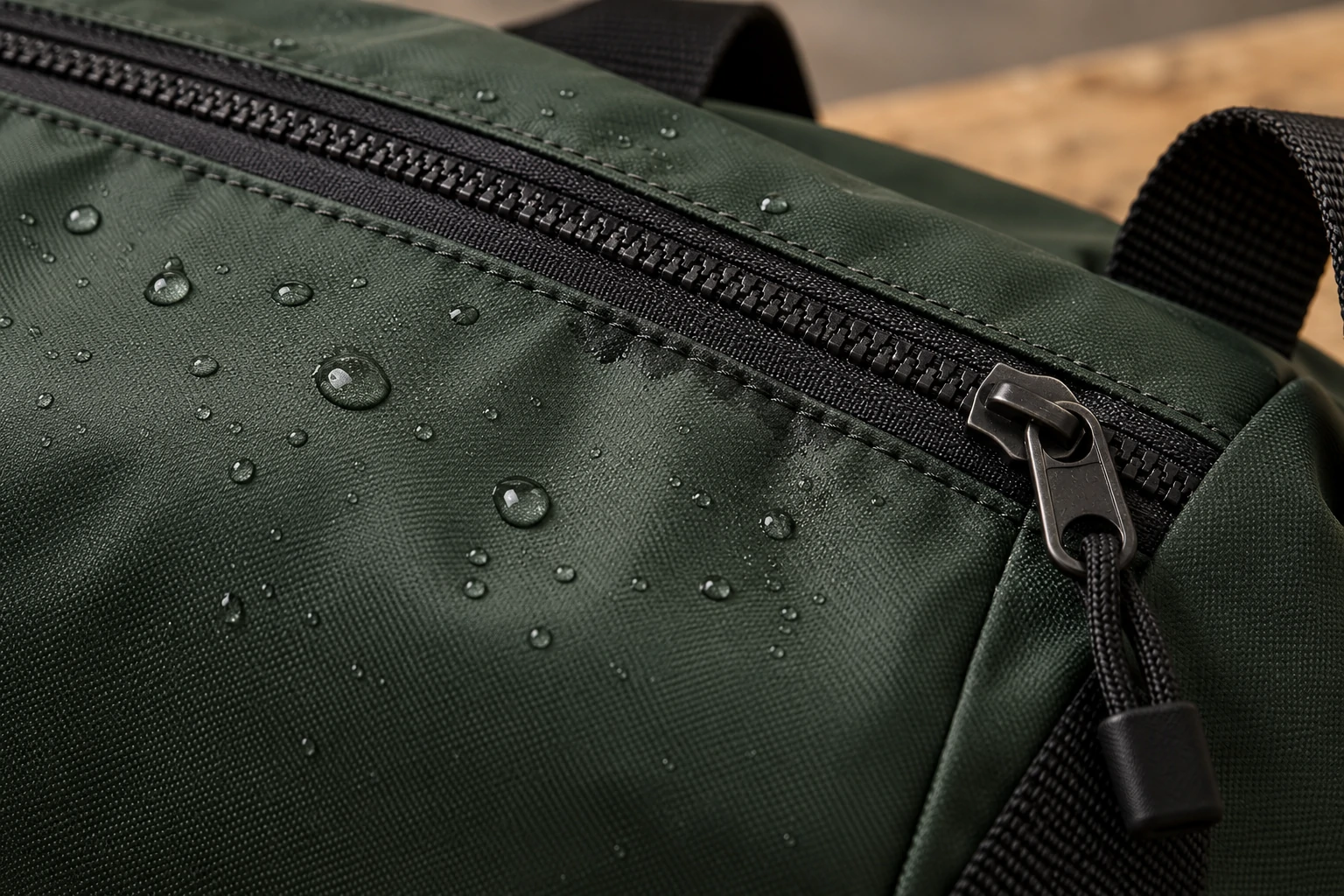
| Fabric Construction | Water Protection | Key Limit |
|---|---|---|
| Uncoated 600D polyester | Limited protection through the weave | Open yarn pathways |
| Water-repellent finished polyester | Helps shed light surface moisture | Finish does not seal seams |
| PU-coated 600D polyester | Can improve fabric water resistance | Depends on coating and condition |
| PVC-coated 600D polyester | Barrier performance varies | Depends on coating integrity |
| Laminated cloth with sealed seams | Can support waterproof construction | Requires appropriate engineering and testing |
A coated panel can resist water while a finished bag leaks at stitching or closures. A waterproof claim should match evidence for the complete product and defined conditions. “600D polyester waterproof” is not a complete material specification.
600D Polyester Coatings: PU vs PVC
Backing coatings can help stabilize a woven fabric or provide a more continuous water barrier. PU and PVC each come in different formulations; the family name alone does not tell a buyer the coating thickness, hand feel, durability or test result.
PU-Coated 600D Polyester
Polyurethane coating is used on many bag fabrics and can provide a flexible backing with useful moisture resistance. Suitability depends on formulation, application and care conditions. Buyers should review adhesion, surface feel and compatibility with the planned seam construction and printing.
PVC-Coated 600D Polyester
Polyvinyl chloride coatings can produce a more substantial, wipe-clean surface for utility bags and covers. A PVC coating may add weight or stiffness, though actual feel varies. The word PVC is not proof that the resulting panel or bag is waterproof.
| Feature | PU Coating | PVC Coating |
|---|---|---|
| Flexibility | Often flexible | Depends on formulation |
| Added weight | Can be relatively light | Can add more weight |
| Water resistance | Depends on specification | Depends on specification |
| Typical applications | Backpacks and sports bags | Utility bags and protective covers |
| Main consideration | Performance and aging | Weight, flexibility and formulation |
Neither coating name establishes environmental preference or guaranteed barrier performance. Ask for the exact backing specification and evaluate the finished material sample.
Common Uses of 600D Polyester
600D polyester is considered in many commercial bag categories because it offers a useful woven shell option with broad finish and color possibilities. Whether it suits a product depends on its expected load, abrasion, weather exposure and construction detail.
In sports bags, 600D polyester is the industry standard shell material. Our manufacturing lines use 600D fabric extensively for agile court bags like pickleball sling bags and stylish tennis tote bags, providing excellent resistance to court scuffs while keeping wholesale manufacturing costs competitive.
Backpacks
School, commuter and everyday backpacks often use midweight woven fabrics for their main panels. Check shoulder-strap anchors, base panels, padding and zipper protection as part of the whole bag.
Gym and Duffel Bags
Training and general sports duffels benefit from a fabric that can provide structure and carry organization. Damp clothing may call for a separate compartment with an independently defined containment requirement.
Pickleball and Racket Bags
Pickleball backpacks, paddle bags and selected racket-bag panels may use 600D fabric. Evaluate paddle protection, reinforcement, grips, electronics and outdoor court exposure when setting the design brief.
Tote and Promotional Bags
Reusable branded totes and promotional merchandise bags can use polyester fabrics where color and decoration are important. Printing and heat-transfer methods require compatibility checks with the exact face or coating.
Travel and Luggage Accessories
Travel organizers and selected soft-sided luggage components may use 600D fabrics. Review wear at corners, handle attachment points and areas exposed to rough handling.
Protective Covers and Equipment Bags
Equipment covers and utility bags can use coated 600D constructions when the selected fabric meets the actual environmental and cleaning needs. Severe exposure requires a product-specific review.
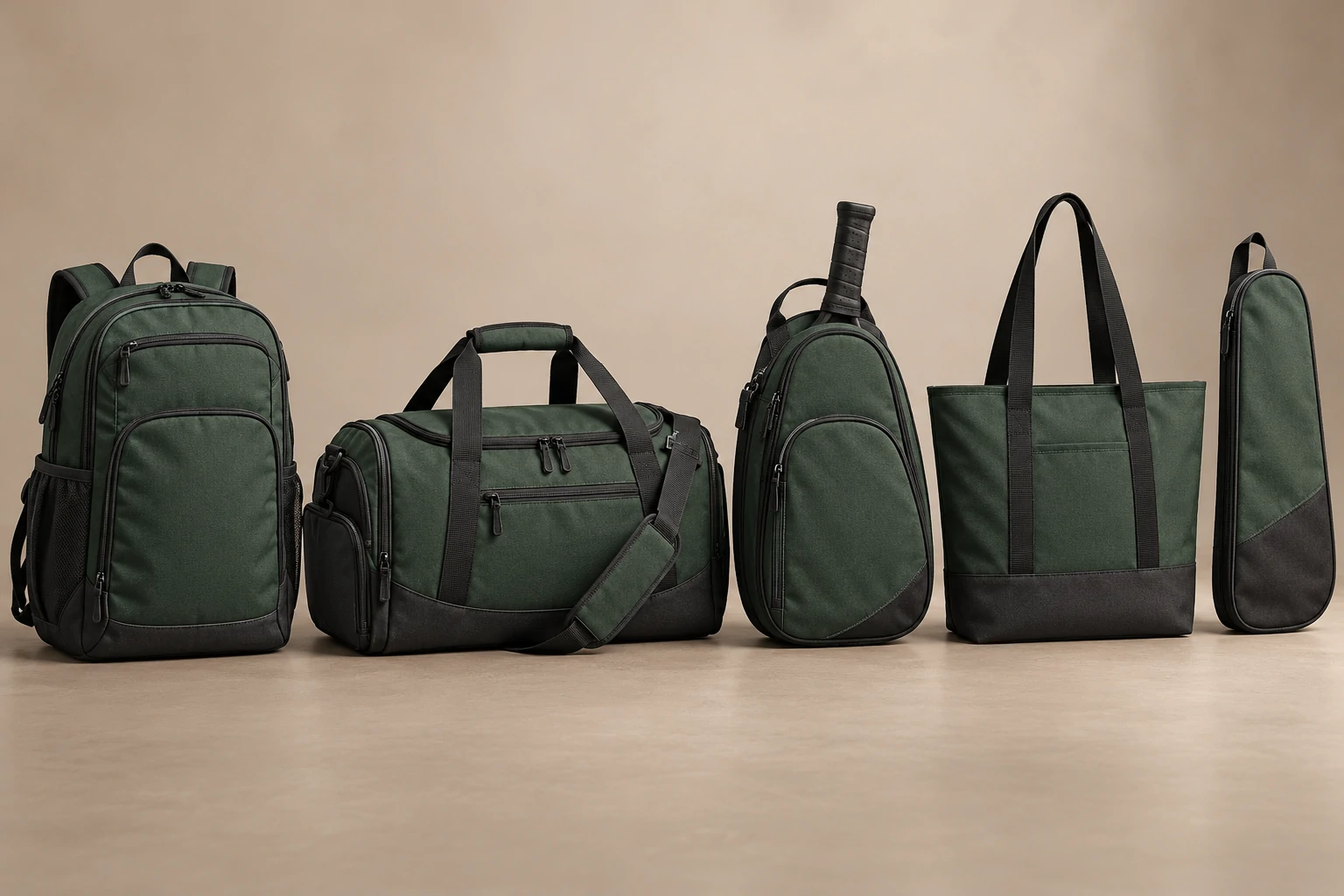
| Product Category | Reason to Consider 600D | Design Check |
|---|---|---|
| Backpacks | Useful shell structure and color options | Stress points and closures |
| Gym / duffel bags | Versatile woven panels | Wet storage and base wear |
| Pickleball / racket bags | Candidate for selected outer panels | Load, padding and weather exposure |
| Totes | Branding and finish variety | Print compatibility |
| Travel accessories | Flexible organization formats | Corner and handle wear |
| Equipment covers | Coated variants are available | Cleaning and exposure limits |
For OEM and wholesale projects, select fabric alongside the pattern, reinforcement, lining and intended retail claim. A material that suits a promotional tote may not meet a loaded equipment bag's stress or weather needs.
Benefits and Limitations of 600D Polyester
Main Benefits
For many projects, 600D polyester balances practical structure, weight and material cost. It is available in varied colors and surface finishes, can be compatible with common sewn-bag methods, and has coated versions. Some faces accept screen printing, heat transfer, embroidery or other decoration when the finish and process are compatible.
Main Limitations
It may not be appropriate by itself for unusually high abrasion or severe outdoor exposure. Water protection is not guaranteed, and coatings can age or sustain damage. Polyester can be affected by high heat. Denier alone cannot predict bag quality. Conventional synthetic fibers also raise sourcing and end-of-life considerations that brands should address accurately.
| Potential Advantages | Limitations to Review |
|---|---|
| Practical structure for many everyday bags | Not a universal heavy-duty choice |
| Many colors and finishes | Color and finish require sample approval |
| Coated options are available | Coating does not seal an assembled bag |
| Compatible decoration options | Method depends on surface compatibility |
| Cost and weight can suit commercial programs | Actual values vary by construction |
| Commonly used in sewn designs | Synthetic fiber end-of-life requires consideration |
It is a practical option when its complete construction matches the use. Compare a specification and representative sample before substituting another fabric based on a denier label.
600D vs 900D vs 1680D Polyester
600D polyester is commonly used for everyday bags, while heavier-denier fabrics may be selected for different needs in structure, abrasion exposure, or reinforcement. Higher yarn linear density often contributes to fabric weight, but the full construction controls what a bag feels and how it performs.
| Feature | 600D | 900D | 1680D |
|---|---|---|---|
| Yarn linear density | 600 denier | 900 denier | 1680 denier |
| Typical fabric weight | Generally lighter | Generally intermediate | Generally heavier |
| Flexibility | Often more flexible | Varies | Can feel stiffer |
| Common use | Everyday bags | Travel / equipment bags | Selected heavy-use gear |
| Material cost | Often lower | Often intermediate | Often higher |
| Main consideration | Balance | Added structure | Weight and actual wear needs |
These are typical tendencies, not a controlled ranking. Weight, abrasion performance, strength and cost vary with filament count, weave, density, backing, supplier and test conditions. If a base fabric and heavy reinforcement are being compared, ask for completed material details for both.
Choose 600D for a project when the sample meets its load and wear needs. Consider 900D or 1680D where a heavier construction is justified by application-specific evidence. Heavier cloth may add stiffness and weight without improving the features that actually limit a design.
600D Polyester vs Nylon
Polyester and nylon are different polymer families. Comparing them at “600D” controls only one yarn-mass label; it does not make the yarn structure, weave, thickness, backing or test results equivalent.
Polyester generally absorbs less moisture than nylon, though fabric wetting and drying depend on the complete construction. UV and color behavior depend on polymer grade, dye, finish, exposure and testing. Nylon is often selected for performance-oriented applications, but it is not always stronger. Both abrasion and tensile performance must be compared using compatible constructions and test methods.
| Comparison | 600D Polyester | Comparable-Denier Nylon |
|---|---|---|
| Fiber type | Polyester | Nylon (polyamide) |
| Moisture absorption | Generally lower | Generally higher |
| Strength | Depends on yarn and construction | Depends on yarn and construction |
| Abrasion | Construction-dependent | Construction-dependent |
| Cost | Often more economical | Can be more costly |
| Typical uses | Everyday bags and accessories | Performance bags and technical gear |
A meaningful sourcing comparison uses matched fabric weights or agreed specifications, compatible finishes and relevant results. Compare like with like rather than assuming one fiber family always wins.
What Is 600D Polyester Oxford Fabric?
Oxford describes a woven structure; 600D describes yarn linear density. “600D polyester Oxford” combines a fiber type, yarn-size description and weave description. Oxford is not a separate polymer, and the term alone does not specify the coating or finished fabric weight.
Oxford-style cloth is recognized by a basket-like woven appearance, though exact weave and hand feel vary. Plain and Oxford constructions can produce different textures and panel behavior. Manufacturers may add PU or PVC backing to either construction when suitable. Specify these properties separately to avoid substitutions that share only a product label.
| Term | Meaning |
|---|---|
| Polyester | Fiber material |
| 600D | Yarn linear density |
| Oxford | Weave description |
| GSM | Fabric mass per square meter |
| PU / PVC | Coating or backing type |
When buying, request the yarn details, weave, finished GSM, color and backing. The face texture in a swatch helps confirm appearance but cannot establish strength or water performance by itself.
How to Choose 600D Polyester for Custom Bags
Brands, distributors, retailers and OEM buyers can reduce ambiguity by turning “600D” into a full material specification. Start with product use and contents, then state the textile and performance details relevant to that application.
Fabric Weight and Construction
Specify fiber composition, warp and weft denier where available, weave, finished GSM, color and coating. GSM records fabric mass per square meter; it is distinct from yarn denier. Consider backing and lining along with finished-product weight.
Intended Product Application
Daily backpacks, sports bags, pickleball bags and heavier equipment bags place different demands on base abrasion, load-bearing points and compartment design. Define the anticipated load, frequency of use, contact surface and expected environment before selecting the fabric.
Water Protection Requirements
Describe expected moisture exposure, protected compartments and acceptable results. If water resistance matters, identify the relevant fabric or finished-bag evidence. Coated fabric does not by itself establish sealed seams or waterproof product performance.
Color and Branding Requirements
Provide a color reference and approve a production-representative swatch. Agree whether printing, heat transfer, embroidery or another branding method is appropriate for the fabric face and backing. A decoration test should represent the actual finish.
Quality Testing
Ask for relevant reports tied to the exact material construction and test conditions. Approve the prototype's seams, reinforcement, handles and zippers; then confirm production materials match the signed-off sample and written specification.
Buyer checklist
- Confirm yarn composition and warp / weft denier.
- Specify weave and finished GSM.
- Identify PU, PVC or other backing requirements.
- Request relevant abrasion and strength results.
- Confirm water-resistance specifications where needed.
- Evaluate prototype seams and reinforcement.
- Approve color and branding on actual samples.
- Verify production matches the approved specification.
Example material request: “600D polyester Oxford fabric, with specified finished GSM, coating type, color reference, and agreed performance test requirements.”
This structured specification provides the supplier with explicit technical parameters while leaving project-specific commercial targets open for agreement. Request samples and written specifications instead of making a purchase decision from denier alone.
Clear answers to common questions
Frequently Asked Questions About 600D Polyester
Material labels work best when read with the complete specification.
What does 600D mean in polyester?
600D means the yarn has a linear density of 600 denier: 600 grams per 9,000 meters. It describes yarn mass relative to length. It does not directly specify fabric thickness, GSM, strength, abrasion results, or finished-bag quality.
Is 600D polyester durable?
It can be durable for many everyday bags when the weave, finish, and assembly suit the use. Abrasion, tear, tensile force, seams and stress-point reinforcement are different factors. Review the actual construction and relevant evidence before assuming a lifespan.
Is 600D polyester waterproof?
No, not automatically. A finish may shed droplets and a backing may improve the fabric barrier, but water can enter through stitching, zippers or open pockets. Waterproof performance requires appropriate whole-product construction and evidence for defined conditions.
Is 600D polyester good for backpacks?
It is commonly considered for school, commuter, and everyday backpacks. Suitability depends on carried load, base wear, strap anchors, openings and weather exposure. A buyer should assess lining, reinforcements and sample quality alongside the shell fabric.
Is 600D polyester suitable for sports bags?
It can suit general fitness duffels and many sports or racket bags. Consider wet clothing separation, equipment weight, zipper use, abrasion and rain expectations. Technical or severe-use applications may need additional reinforcement or another construction based on evaluation.
Is 600D polyester better than nylon?
Neither is always better. Polyester generally absorbs less moisture, and may be a more economical starting point; nylon may suit some demanding applications. Meaningful comparison requires equivalent construction, coating, weight, test method, and intended use.
What is the difference between 600D and 900D polyester?
900D yarn has greater linear density than 600D yarn. It may contribute to a heavier fabric, but total weight and performance depend on weave, density, coating and filament design. Application and sample results matter more than the number alone.
What is the difference between 600D polyester and Oxford fabric?
Polyester identifies the fiber, 600D identifies yarn linear density, and Oxford describes a weave construction. A 600D polyester Oxford is one combination of these properties. Its backing, GSM and performance need separate specifications. An Oxford weave is not necessarily coated.
Can 600D polyester be customized with logos?
Often, yes, using methods such as screen printing, heat transfer or embroidery, tailored to the fabric face and coating characteristics. Approve a production-like decorated sample to assess adhesion, appearance, and any effect on barrier or stitching.
How do you clean 600D polyester bags?
Check the product care label first. Where allowed, spot-clean gently with a mild cleaner and avoid excessive heat. Coatings and trim may have specific limits, so do not assume machine washing, strong detergents or tumble drying is safe.
Material selection / In brief
Is 600D Polyester the Right Fabric for Your Bag?
600D describes polyester yarn linear density, not a complete performance grade. The fabric is widely used in everyday bags and accessories because a woven shell can balance structure, weight and material cost across many projects.
- Durability depends on weave, backing, assembly and reinforcement.
- Water resistance depends on finish and finished-product construction.
- Compare specifications and relevant evidence rather than denier alone.
For custom backpacks, sports bags, duffels or pickleball bags, match fabric and construction to the actual application, contents, expected wear and weather. Define those needs before approving material samples. A clear brief helps a brand or wholesale buyer compare proposals and agree the features that matter to its users.
If you are developing a private-label bag, share your application and material preferences with the team to discuss suitable options.
Custom bag material inquiry
Ask About 600D Polyester Wholesale Bag Manufacturing
As a high-volume sports and racquet bag manufacturer in China, Racquet Bag leverages premium 600D polyester to deliver exceptional durability and cost efficiency for commercial brands. We produce custom 600D pickleball sling bags, versatile tennis tote bags, and spacious padel duffel bags with low factory MOQ, full sublimation printing, and fast 5-7 day sample turnaround. Inquire with our manufacturing team today.
Prefer email? Send your project brief to Racquet Bag.