
Material Guides
1680D Ballistic Nylon for Sports Bags | Racquet Bag
Discover what 1680D ballistic nylon is, its durability, weave, water resistance, common uses, and how it compares with Cordura and polyester.
On this page
Overview / Understand the label
Understanding 1680D Ballistic Nylon
The name combines several different ideas. Nylon identifies a polymer family. Denier describes the linear mass of its yarn. Ballistic generally refers to a rugged basketweave style inspired by historical nylon textiles, but it is not a universal performance grade. Each part of that description needs confirmation on a material specification.
What Does 1680D Mean?
Denier is the mass in grams of 9,000 meters of yarn. A 1680D yarn has a linear mass of 1,680 grams over that length. The number does not mean 1,680 threads, 1,680 GSM, a stated abrasion result or a certified strength level. Warp and weft yarns may differ, so ask for both.
Why Is It Called Ballistic Nylon?
During the Second World War, heavy nylon cloth was used in layered aircrew garments intended to reduce injuries from some fragments. That history explains the name; it does not make a modern bag fabric bullet resistant. Contemporary ballistic-style cloth is used as a heavy textile for civilian luggage and equipment bags, not as certified protective equipment. The word describes a historical inspiration, not a safety claim.
| Term | Meaning for a bag buyer |
|---|---|
| Denier | Yarn linear mass |
| Basketweave | Interlacing pattern; exact repeat should be specified |
| High-tenacity nylon | Supplier yarn descriptor to support with a material specification |
| GSM | Finished fabric mass per square meter |
| DWR | Surface finish intended to reduce wetting |
| PU backing | Polyurethane coating on one side of the fabric |
| Abrasion resistance | Behavior under a stated rubbing test and procedure |
“Ballistic” can appear in commercial product names for nylon and for polyester that imitates a similar heavy weave or surface. A polyester version is not nylon. Read the fiber content and full fabric construction instead of assuming the marketing term guarantees a recipe.
How Is 1680D Ballistic Nylon Made?
Manufacturers melt-process a nylon polymer into filaments, combine filaments into yarns, and weave those yarns into cloth. They may twist or ply yarn, set a basketweave, dye the cloth, and add finishes or a backing. These are possible construction steps, not a single mandatory recipe for every fabric called 1680D ballistic nylon.
Nylon Fibers and Yarn Construction
Nylon 6 and Nylon 6,6 are distinct polyamide polymers. Either material designation needs supplier documentation; neither follows automatically from “ballistic.” Filament count, yarn twist, ply and processing affect appearance and handling. State the fiber and yarn construction explicitly when they matter to the project.
The Basketweave Structure
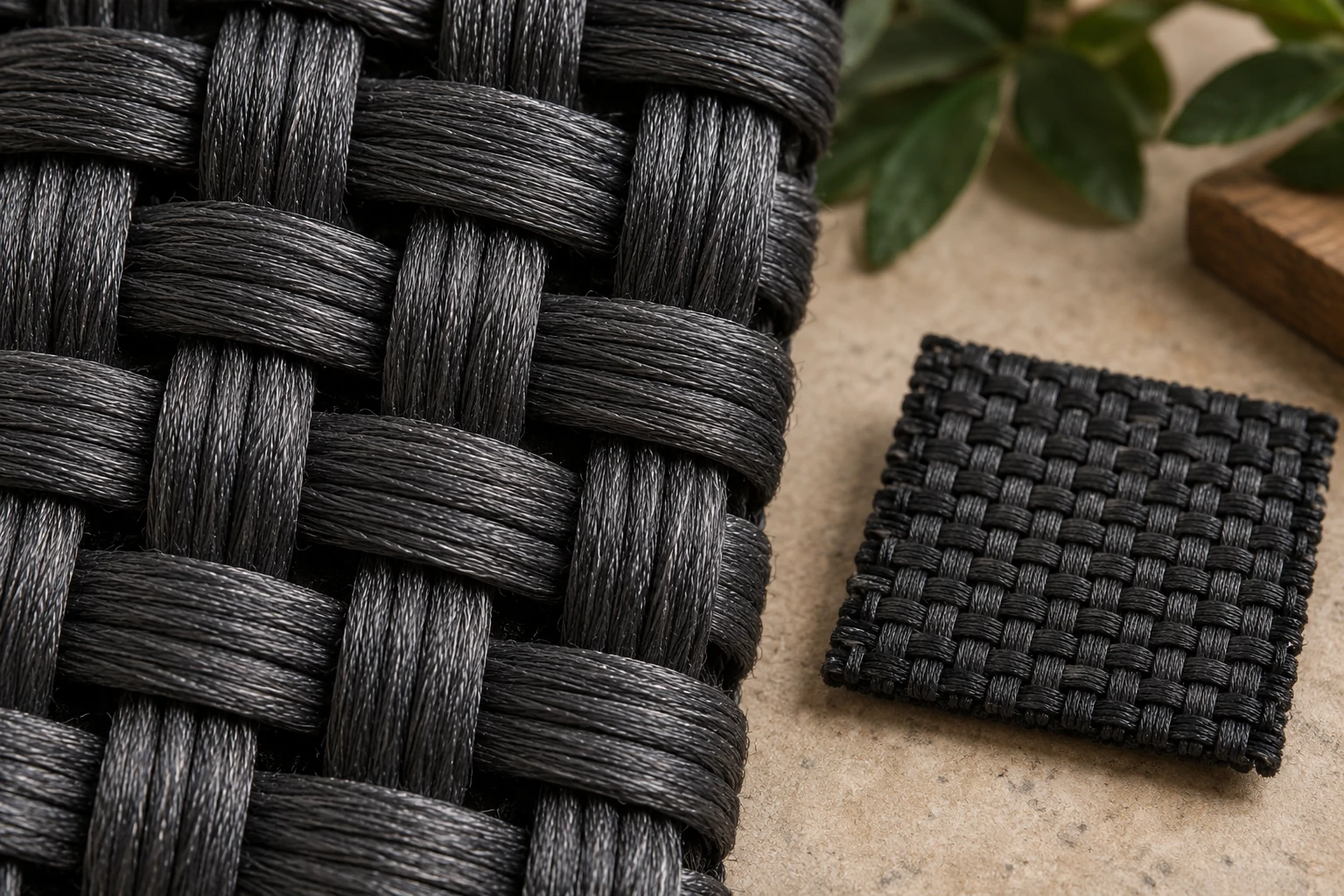
A basketweave groups yarns so that interlacing repeats across multiple warp and weft ends. A 2×2 pattern, for example, interlaces groups of two; actual repeat and yarn directions vary. Compared with a basic one-over-one plain weave, the grouped surface can have a visibly blockier texture and a different hand. Performance still depends on tightness and yarns.
Finishing and Coating
A DWR finish can reduce surface wetting. A polyurethane coating or other backing can add a barrier and change fabric hand, weight and sewing behavior. Coating continuity and adhesion matter. The coated material's result does not prove the assembled bag will be waterproof.
| Component | Function | What buyers should verify |
|---|---|---|
| Nylon polymer | Forms textile filaments | Nylon type and content |
| Yarn | Builds warp and weft | Denier, ply, filament construction |
| Weave | Creates fabric structure | Pattern, density and direction |
| Dye / finish | Changes color or surface behavior | Color reference and test scope |
| Coating / backing | Can modify hand and water resistance | Material, side, weight and adhesion |
Request the written specification and an approved swatch. If a brand needs a particular Nylon 6,6 yarn, coating or weave, record it instead of relying on the shorthand name.
Key Properties of 1680D Ballistic Nylon
A 1680D basketweave is often chosen for a substantial feel and a rugged surface. The label alone does not prove the following characteristics for a particular product. Test method, weave, yarn, finishing and assembly shape the result.
Abrasion Resistance
Abrasion describes surface wear after rubbing against other materials. Results depend on yarn texture, weave, finish, specimen and test procedure. Textured Cordura fabrics can outperform ballistic nylon in particular abrasion comparisons; branding and denier alone cannot settle the question. Cordura describes a brand family of engineered fabrics, including high-tenacity textured nylon 6,6 products in several deniers, rather than one single material specification. See CORDURA Classic fabric details.
Tear Resistance
Tear resistance concerns propagation after a tear begins. Yarn mobility, weave and tear direction affect outcomes. It differs from breaking strength under a pulling load: the two tests answer different questions.
Tensile Strength
Tensile testing measures the force a fabric withstands under a defined pull. A high-denier yarn label is not itself a tensile result, and fabric breaking force should not be confused with the strength of an individual yarn.
Puncture Resistance
Puncture resistance describes how a specimen responds to a penetrating point under a specified setup. It is not implied by the word ballistic. If a design faces puncture risk, define and test that use case; do not infer body armor performance.
Flexibility
A thick, dense or coated fabric may feel firm and can be less pliable than a lighter weave. The exact hand depends on finish and yarn. Flexibility can affect packing, pattern turning, stitching and comfort against the body.
Weight
1680D describes yarn, not GSM. Thread count, warp and weft, weave, coating and backing determine area weight. Added mass may be worthwhile at a high-wear base, but less suitable for an ultralight pack.
Shape Retention
Structure may help a bag keep its form, particularly alongside foam, lining or reinforcements. Those supporting materials and the pattern contribute too; shape retention cannot be guaranteed from denier alone.
Water Resistance
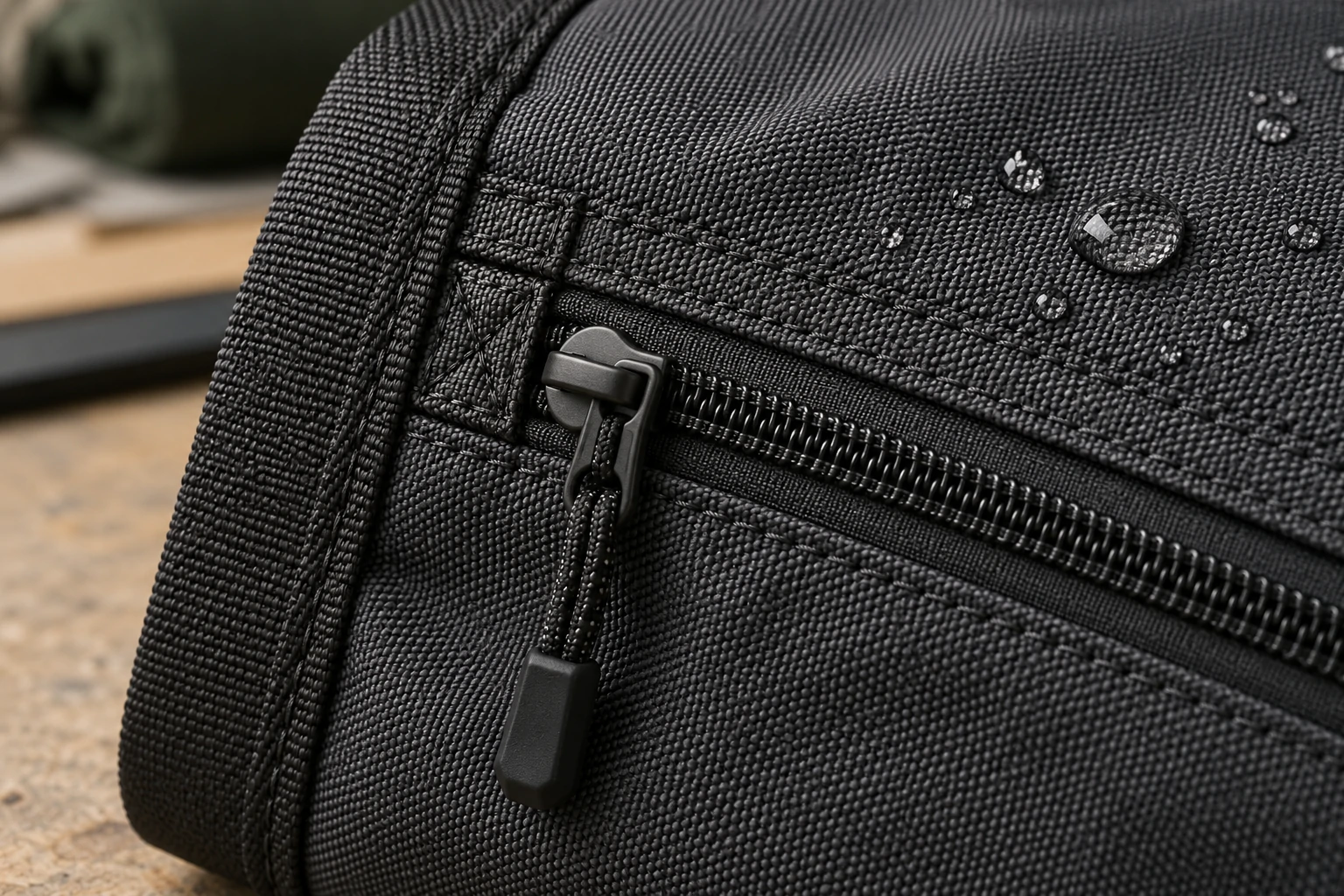
Raw woven fabric can pass water between yarns. DWR may shed surface drops and a backing may resist water penetration through the panel. Seams and closures still require separate assessment.
Appearance
Ballistic-style basketweaves often have a pronounced, substantial surface. Color, sheen and texture vary by yarn, dye and finish. Approve a swatch in the intended color before choosing decoration or branding methods.
| Characteristic | Possible practical benefit | Trade-off | Verification |
|---|---|---|---|
| Abrasion resistance | May suit rough contact | Test-dependent | Agree method and conditioning |
| Tear resistance | May help resist tear growth | Not tensile strength | Test direction and specimen |
| Breaking strength | Relates to pull loads | Not an individual yarn result | Specify test procedure |
| Structure | Substantial hand and form | Weight and stiffness | Review finished sample |
| Water protection | Finish may reduce wetting | Seams may still leak | Test fabric and finished bag separately |
For context, ISO 12947 covers Martindale abrasion for applicable textiles but excludes coated or laminated fabrics; coated surfaces are assessed using the relevant ISO 5470 method. Ask a supplier which face and exact construction the report covers.
Advantages and Limitations of 1680D Ballistic Nylon
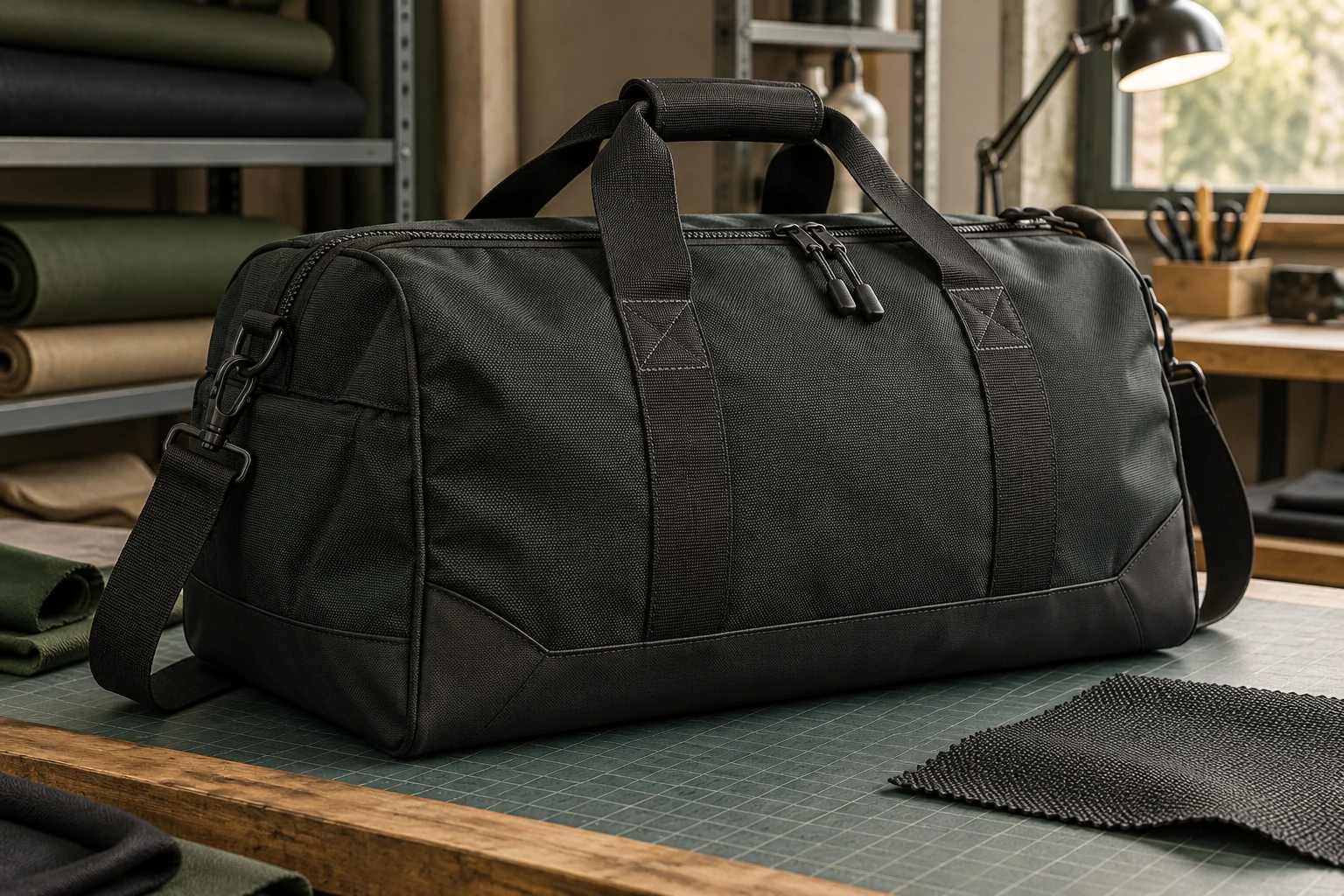
When the intended product needs a pronounced, structured outer fabric, 1680D ballistic nylon can be a candidate. A strong design still requires matching the shell to hardware, lining, handles, seam work and use. No fabric choice is universally best.
Potential advantages
- Substantial structure for selected bags and cases.
- Rugged feel suited to rough-handling use cases.
- Basketweave surface with a distinctive professional appearance.
- Can be paired with suitable finishes and backings.
- Can support a long useful life when correctly specified and cared for.
Trade-offs to consider
- More mass than lighter pack fabrics may be undesirable.
- Stiff hand can complicate tight pattern details.
- Material and sewing costs vary by specification and project.
- Coatings can deteriorate, peel or change with use.
- Thick layers can be challenging at seams and corners.
- Less suitable for a weight-sensitive ultralight design.
Higher area weight can add load that a customer carries every day. Put reinforcement only where the pattern and use need it, then test the complete sample. Evaluate the bag's carrying points and how it handles in practice before selecting the heaviest option by default.
Common Uses of 1680D Ballistic Nylon
Commercial bag designs may use this material for a full shell, a base panel or localized wear zones. Each use involves a different balance of weight, structure and protection. The fabric name alone cannot establish load limits or safety performance.
Tournament racquet bags carry significant weight — up to a dozen racquets, footwear, clothing, and re-stringing tools. In our manufacturing facility, we engineer 1680D ballistic nylon racquet bags and tournament badminton bags designed to endure constant airline baggage handling and rough abrasive court surfaces.
Travel Luggage and Rolling Bags
A firm woven surface may suit selected luggage panels and reinforcement areas that see handling. Review corners, wheel housings, handles and seams, where forces concentrate. Heavier cloth should be justified by expected travel wear and the finished bag's total weight.
Business Backpacks and Laptop Bags
It may provide a structured outer look for commuter products. Laptop protection depends on separate padding and compartment design. Consider back-panel comfort, weight, stitching, zipper access and whether the surface matches the target user's expectations.
Duffel and Sports Bags
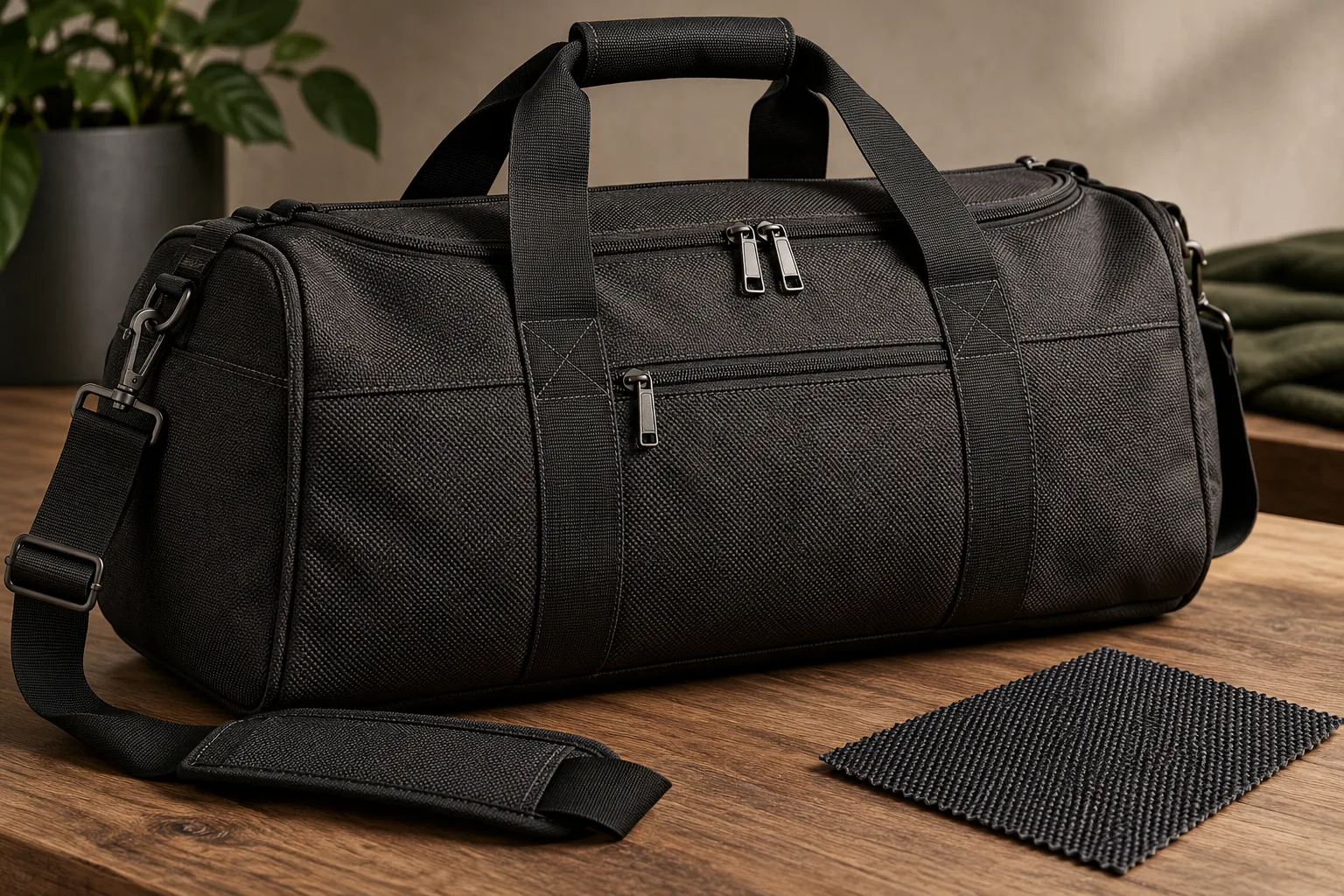
A robust shell may be appropriate for equipment duffels that contact floors and gear. Reinforce shoulder-strap anchors and base corners. For custom sports bags, compare the carry weight with the abrasion exposure and use panels selectively when that better fits the specification.
Tool Bags and Industrial Carrying Cases
Tool bags may benefit from structured fabric, though sharp tools create puncture and localized load needs of their own. Industrial cases need suitable padding, internal organization and fastening. Specify and test those requirements separately.
Camera and Protective Equipment Cases
The shell can provide a durable cover, while impact protection comes from designed padding, dividers and construction. Sensitive gear should not rely on a textile label as a drop-protection or moisture rating.
Tactical-Style and Utility Bags
Utility formats may prioritize tough face fabric and attachment zones. “Tactical style” describes an aesthetic or layout, not certification, ballistic resistance or an end-user safety rating.
Reinforced Panels and Covers
Base panels, abrasion patches and selected protective covers can use a heavy weave where repeated contact is expected. Check the joins between the patch and lighter shell, plus the extra stiffness that patching creates.
| Product | Reason to consider the fabric | Key consideration |
|---|---|---|
| Travel luggage | Structured panel or wear-zone option | Corner and handle construction |
| Business backpack | Substantial exterior appearance | Weight, comfort and padding |
| Sports duffel | Selected equipment-carrying shell | Load points and base wear |
| Tool bag | Structured utility outer | Puncture protection is separate |
| Camera case | Protective-looking shell option | Padding and dividers supply impact control |
| Base reinforcement | Localized wear panel | Panel seam and extra stiffness |
| Protective cover | Heavy woven surface | Exposure and cleaning requirements |
1680D Ballistic Nylon vs Other Fabrics
Compare complete constructions rather than selecting by a number. Fiber type, yarn ply, weave, density, finish and coated weight can differ even when products share a denier or “ballistic” label.
1680D vs 1050D Ballistic Nylon
1680D indicates greater yarn linear mass than 1050D when both describe comparable yarn measurements. It does not prove higher tear strength or abrasion life. Yarn structure and weave can differ: one supplier may use plied yarn while another uses a different build. Ask for the exact specification and sample.
1680D Ballistic Nylon vs 1000D Cordura
Cordura is a brand and family of textile products, not a single universal specification. A 1000D Cordura item and 1680D ballistic nylon can differ in fiber, texture, yarn, weave, finish and area weight. Some Cordura fabrics may perform better in a specified abrasion test; results cannot be generalized to every product.
1680D Ballistic Nylon vs 600D Polyester
600D polyester uses different fiber chemistry and a lower denier yarn label. It is often considered for everyday bag shells where lighter handling and cost matter, while heavier nylon constructions may be considered for more demanding use. Verify both samples; the comparison depends on construction and application.
1680D Nylon vs 1680D Polyester
Identical denier labels do not make yarns the same polymer or give the fabrics equal mass and strength. Filament design, weave, density and coatings change performance. A polyester fabric sold as “ballistic” is ballistic-style marketing language; it is not ballistic nylon.
| Material | Fiber / label | Possible profile | Main trade-off | Buyer action |
|---|---|---|---|---|
| 1050D ballistic nylon | Nylon; verify yarn and weave | Heavy-duty woven option | Performance varies by construction | Compare actual weight and tests |
| 1680D ballistic nylon | Nylon; verify formulation | Substantial shell candidate | Mass and stiffness | Review approved sample |
| 1000D Cordura | Branded textile range | Product-specific constructions | Brand name is not a single recipe | Identify product and test scope |
| 600D polyester | Polyester | Everyday bag candidate | Not equivalent by denier | Match specification and use |
| 1680D polyester | Polyester | Heavy ballistic-style alternative | Not nylon | Confirm fiber content explicitly |
Use matched samples, finished weight and agreed testing conditions when the choice matters. Request evidence for the actual material lots or construction being considered instead of comparing arbitrary marketing names.
Is 1680D Ballistic Nylon Waterproof?
No, the base fabric is not automatically waterproof. Water repellency describes how water behaves on the surface. Water resistance refers to limiting penetration under some conditions. A waterproof fabric uses a continuous barrier evaluated using an applicable method; a waterproof bag also needs appropriate seams and closures.
DWR can make drops bead, while PU or PVC backing can resist water crossing a fabric panel. Neither surface behavior nor coated-face resistance seals sewing holes. A water-resistant zipper, storm flap or covered opening can help with rain but should not be assumed watertight. Hydrostatic head reports a fabric pressure test, not a blanket finished-bag claim.
| Construction | What it may provide | What still needs checking |
|---|---|---|
| Untreated woven cloth | Surface fiber and weave only | Water can pass through the weave |
| DWR-treated cloth | Reduced surface wetting | Finish condition and seams |
| Coated fabric | Panel water resistance per specification | Coating integrity, holes and closures |
| Engineered waterproof bag | Can prevent water entry under defined tests | Complete-product results and exposure limits |
Do not describe a coated bag as “fully waterproof” without relevant finished-product evidence. Define exposure, duration, closure procedure and allowed ingress before choosing a test or publishing a claim.
How Durable Is 1680D Ballistic Nylon?
It may suit demanding textile applications, but durability is an outcome of the material, assembly, use and maintenance together. A bag rubbed against rough concrete encounters different wear from a soft business backpack. Exposure to loaded bending, dirt, moisture, ultraviolet light and heat can also matter.
Testing can compare defined material specimens; it does not automatically certify the finished bag or promise a service life. ASTM D3884 guides rotary-platform abrasion assessment. ISO 12947-2 applies to suitable uncoated textiles, while coated faces have relevant ISO 5470-2 methods. ASTM D2261 measures tongue tear; ASTM D5034 measures breaking strength and elongation, not tear strength.
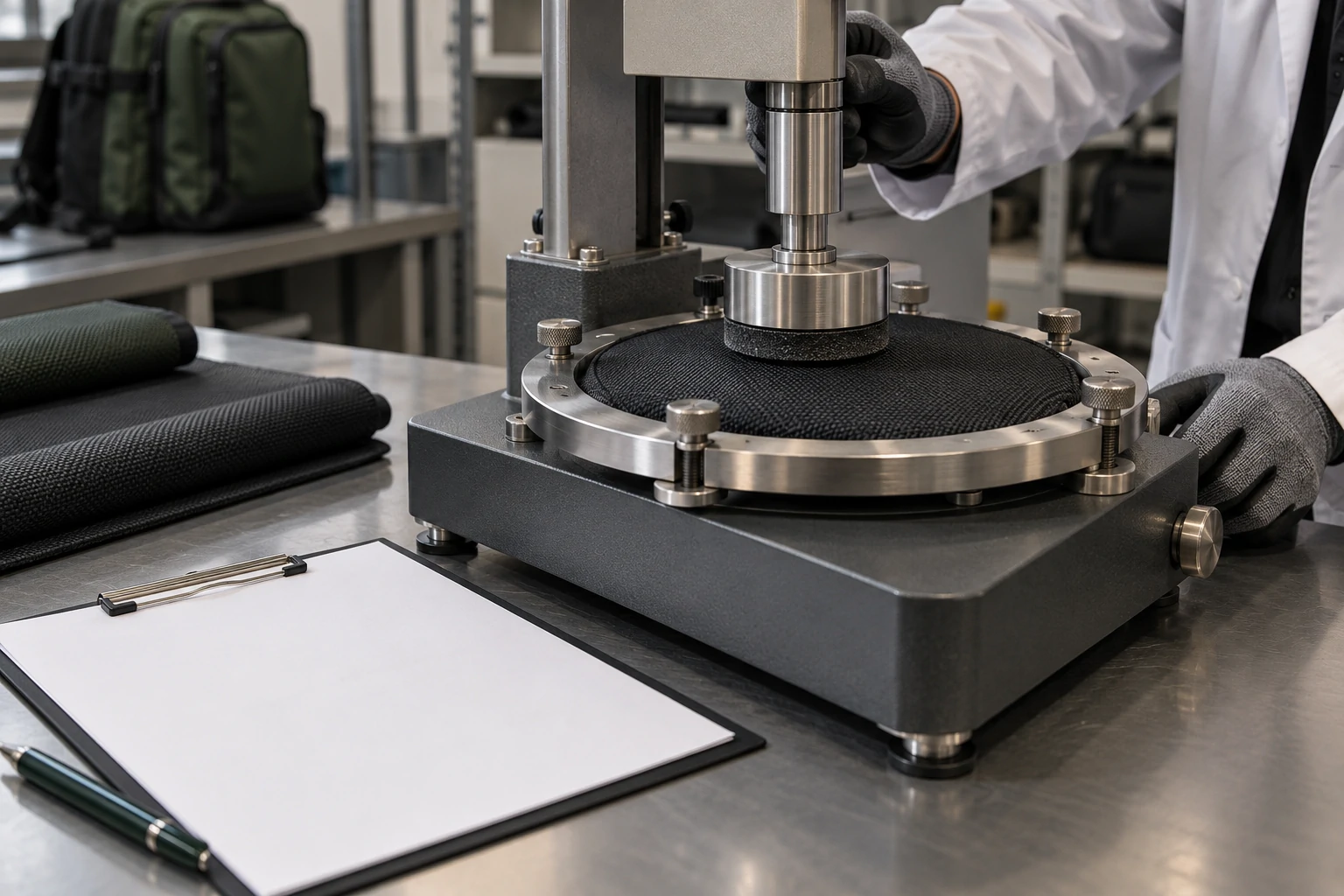
For a sourcing review, identify the sample and ask:
- Which polymer, denier in warp and weft, yarn construction and weave were tested?
- Was the coating included, and which face was exposed?
- Which test method, version, conditioning and endpoint were used?
- Does the result describe a fabric sample or a finished bag?
- How will seams, handles and closures be evaluated separately?
- What retest is needed after a material or construction change?
Hydrostatic-head testing uses an identified method to measure resistance to water penetration under pressure; ISO 811 is one such method. It should not be presented as an abrasion result or full-bag immersion rating. Ask a supplier to explain test scope, rather than interpreting a standard name as proof that a product passed.
How to Choose 1680D Ballistic Nylon for Bag Manufacturing
For OEM and private-label programs, start with what the bag must carry and how it will be used. A structured heavy fabric may suit a luggage base, but be unnecessarily heavy for a commuter pack. Specify a complete construction and review a representative sample before approving its material claim.
Confirm Fiber and Yarn
Record nylon type, yarn linear density in warp and weft, and yarn construction or ply when relevant. Ask whether “ballistic” describes a specified weave or a supplier's product name. Confirm GSM separately; it is fabric mass per unit area.
Specify Weave, Coating and Color
State weave pattern and density, coated side and backing type, color reference, and any finish. Request applicable colorfastness or coating evidence for the planned use. Approve an actual swatch for texture and decoration compatibility.
Test the Intended Bag
Build a sample with the real zipper, lining, handles, seams, pockets and reinforcement. Evaluate carry comfort and weight. If performance claims matter, agree the test method, conditioning and acceptance criteria on the complete product, as well as any material-level tests.
| Product | 1680D nylon consideration | Alternative direction |
|---|---|---|
| Travel luggage | Use where structure or localized wear justifies mass | Compare lighter body with reinforced zones |
| Sports bag | Check carry weight and seam handling | Use 600D shell with selected wear panels |
| Commuter backpack | Assess stiffness and daily comfort | Consider lighter shell constructions |
| Tool bag | Check pocket layout and point loads | Specify abrasion and puncture evidence |
| Ultralight design | Often a weight trade-off | Evaluate lightweight alternatives |
Procurement checklist
- Confirm nylon polymer and content.
- Record warp and weft denier and yarn construction.
- Specify weave and finished GSM.
- Identify coating, finish and color.
- Request relevant sample-level test reports.
- Review sewn seams and stress points.
- Approve the actual decorated prototype.
- Match bulk material to approved documents.
A clear request might read: “1680D nylon ballistic-style basketweave; confirm polymer, warp/weft yarn construction, finished GSM, backing and color. Provide available applicable test reports and a sample in the intended bag pattern for review.” This wording asks for evidence without inventing a universal standard.
Questions answered clearly
Frequently Asked Questions About 1680D Ballistic Nylon
Confirm the complete fabric specification before judging a product label.
What is 1680D ballistic nylon made of?
It is a woven nylon fabric with yarn described as 1680 denier and often a basketweave construction. The exact nylon type, yarn ply, density, finish and coating vary by supplier. Check the technical specification rather than assuming a particular Nylon 6 or 6,6 recipe.
What does 1680D mean in fabric?
Denier is grams of yarn per 9,000 meters, so 1680D means 1,680 grams over that length. It does not mean 1,680 GSM, a fixed thread count, a measured strength grade or a guarantee of abrasion life.
Is 1680D ballistic nylon waterproof?
No, not by default. Untreated woven fabric can let water pass through the weave. A DWR finish or coating may change surface wetting or panel resistance, while bag seams, zippers and closures still need separate assessment under defined conditions.
Is 1680D ballistic nylon stronger than 1050D?
Not necessarily. The denier values describe yarn linear mass, while strength depends on yarn construction, weave, finishing and the test used. Compare the actual materials using matching methods and specimen conditions instead of ranking fabrics by denier alone.
Is ballistic nylon better than Cordura?
Neither term alone settles the comparison. Cordura is a brand and textile family with multiple constructions, while ballistic nylon also varies by product. Compare fiber, weave, finished weight, intended use and relevant test reports for the exact fabrics.
What is the difference between 1680D nylon and polyester?
Nylon and polyester are different polymer families. Matching 1680D labels do not ensure matching yarn structure, fabric weight, strength or abrasion performance. Confirm fiber content, weave, coating and test results before substituting one for the other.
Is 1680D ballistic nylon good for backpacks?
It can be considered where structure and wear resistance justify a heavier shell. Compare carried weight, back-panel comfort, strap anchors and daily handling with lighter options. Padding and product design, rather than fabric denier alone, protect electronics.
Can ballistic nylon stop bullets?
No. The historical name refers to earlier fragment-protection applications in layered garments, not a modern bullet-resistance claim. A bag fabric is not certified protective equipment. Do not rely on it for ballistic or personal safety protection.
Is 1680D nylon suitable for outdoor use?
It can be used in selected outdoor bags, but suitability depends on coating, UV exposure, moisture, construction and care. A heavy woven nylon is not automatically waterproof or weatherproof. Match material and product testing to the planned environment.
How do manufacturers test ballistic nylon durability?
They can use appropriate abrasion, tear and breaking-strength methods on identified fabric specimens. Tests measure different properties and do not certify all uses or predict an exact bag lifespan. Request the actual method, conditions, sample details and result.
Key takeaways
Is 1680D Ballistic Nylon the Right Material?
1680D ballistic nylon is a heavy woven nylon option considered for structured bags, luggage and equipment cases. Its denier identifies yarn linear mass; it does not establish strength, abrasion life or water protection on its own.
- Verify polymer, yarn construction, weave and finished GSM.
- Balance wear needs with weight, stiffness and sewing complexity.
- Assess coatings, seams and the complete bag against its intended use.
The best textile depends on application, sample results, assembly, target carry weight and budget. For a custom sports or equipment bag, comparing documented samples can clarify whether a heavy shell or selective reinforcement fits the project.
Custom bag material inquiry
Ask About 1680D Ballistic Nylon OEM Manufacturing
As a leading tournament sports and racquet bag manufacturer, Racquet Bag incorporates genuine 1680D ballistic nylon into high-stress exterior panels, base wear surfaces, and pro tour collections. We manufacture tour-grade 9-12 racquet bags, heavy-duty badminton tournament bags, and rugged padel backpacks for leading sporting brands. Contact our OEM factory team for 1680D material swatches and wholesale quotations.
Prefer email? Send your project brief to Racquet Bag.