
Tennis Guides
Complete Tennis Equipment List & Bag Guide | Racquet Bag
Use this complete tennis equipment list to choose the racquet, balls, shoes, clothing, bag, accessories, and court essentials every player should consider.
On this page
Overview / Keep the first purchase simple
What Equipment Do You Need to Play Tennis?
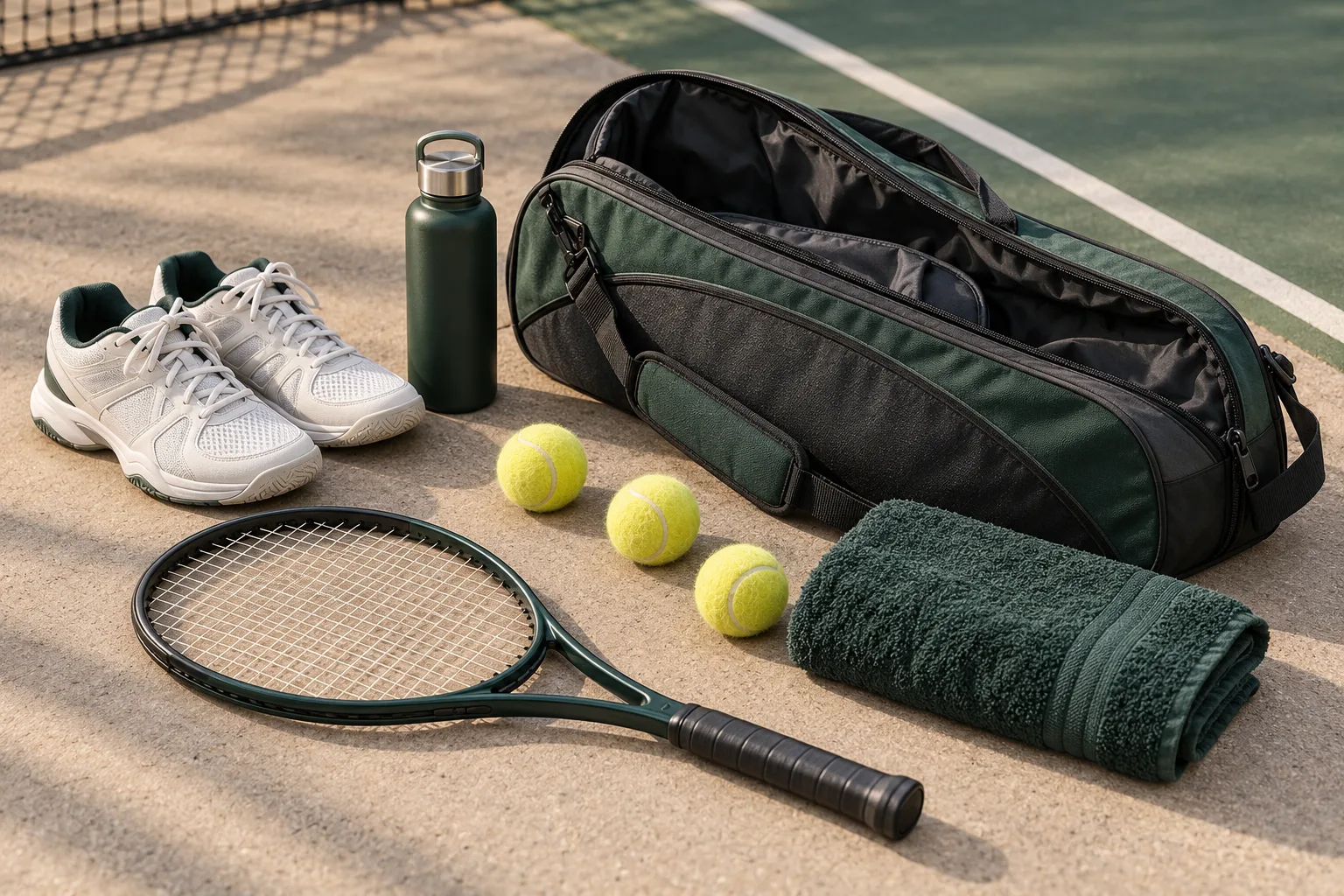
The true minimum tennis equipment list is short. A racquet lets you hit, balls make practice possible, tennis shoes suit court movement, athletic clothing supports comfortable motion, and water helps you prepare for the session.
Essential Tennis Equipment
- One suitable tennis racquet
- Tennis balls appropriate for the session
- Tennis-specific court shoes
- Comfortable athletic clothing and socks
- A practical hydration solution
Useful Equipment as You Play More Often
- Tennis bag, overgrips, replacement strings, and a towel
- Hat or visor, sunscreen, spare socks, and spare clothing
- A backup racquet for regular matches
- Training accessories for structured practice
Buy according to frequency, skill level, surface, climate, and whether you mostly hit casually, attend lessons, or play matches. That approach protects a beginner budget while leaving room for the tennis accessories that later become genuinely useful.
Think of this as a priority order rather than a shopping list. If a local court provides balls for a lesson, the next sensible purchase may be shoes rather than another can of balls. If you walk or cycle to court, compact bag storage may become useful sooner than a second racquet.
| Category | Examples | When you need it |
|---|---|---|
| Must-have | Racquet, balls, shoes | First session |
| Practical | Bag, grips, towel | Regular practice |
| Match preparation | Backup racquet, extra clothing | League or tournament play |
| Optional | Dampener, training tools | Preference or targeted drills |
The complete tennis gear checklist
1. Tennis Racquet: The Main Piece of Tennis Equipment
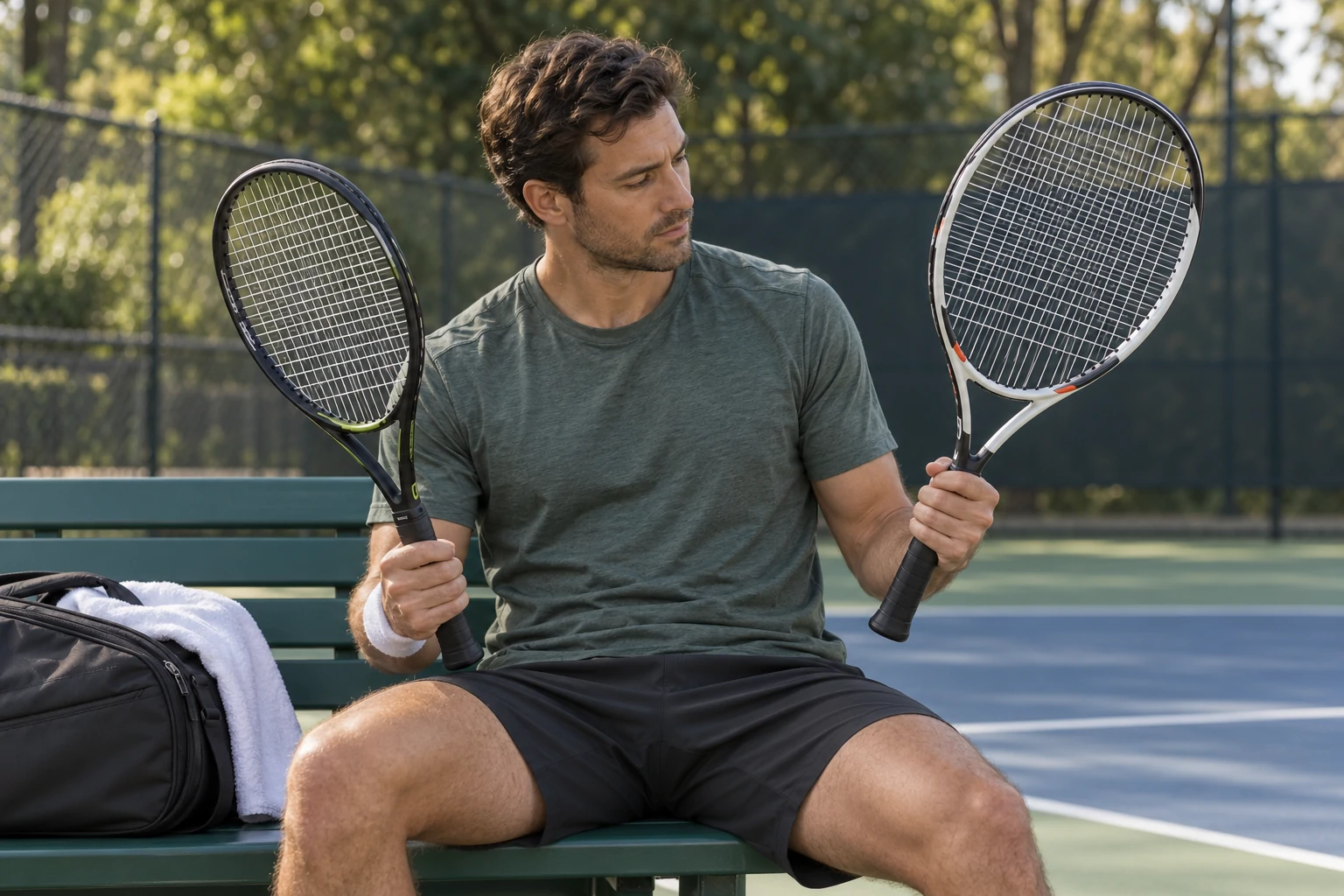
Your racquet is the core hitting tool, so it deserves more attention than any accessory. There is no single frame that is best for every player; a useful choice is one you can swing comfortably and control consistently.
For many tennis equipment for beginners purchases, a relatively lightweight, forgiving frame is easier to manage than a demanding player-oriented racquet. Junior players should use an appropriately sized junior racquet rather than automatically moving to an adult length.
| Feature | Beginner priority | Why it matters |
|---|---|---|
| Head size | Larger / forgiving | Provides a larger hitting area |
| Weight | Manageable | Easier to swing consistently |
| Grip size | Correct fit | Supports comfortable handling |
| Length | Appropriate for player | Changes reach and maneuverability |
| Balance | Player dependent | Changes swing feel |
| String pattern | Secondary at first | Influences feel, spin, and durability |
Racquet Buying Checklist
- Can the player swing it comfortably through a full practice?
- Does the grip feel appropriate in the hand?
- Is the head size forgiving enough for the current level?
- Does the frame suit the player's strength and experience?
- Is it already strung, or will strings be needed separately?
When possible, hold or demo a racquet before committing. The listed specifications help narrow choices, but the practical test is whether the player can prepare the racquet, make contact, and keep swinging without the frame feeling unwieldy. A coach or experienced stringer can help translate a player's experience into a sensible short list.
Racquet selection also changes over time. A frame that makes the first months enjoyable may no longer match a stronger, more consistent swing later, and that is normal. Keep the first choice focused on present needs rather than attempting to predict every future adjustment. Preserve the grip size and length decision as carefully as the advertised weight, because those are the details a player notices every time the racquet is picked up.
2. Tennis Balls: Match the Ball to the Session
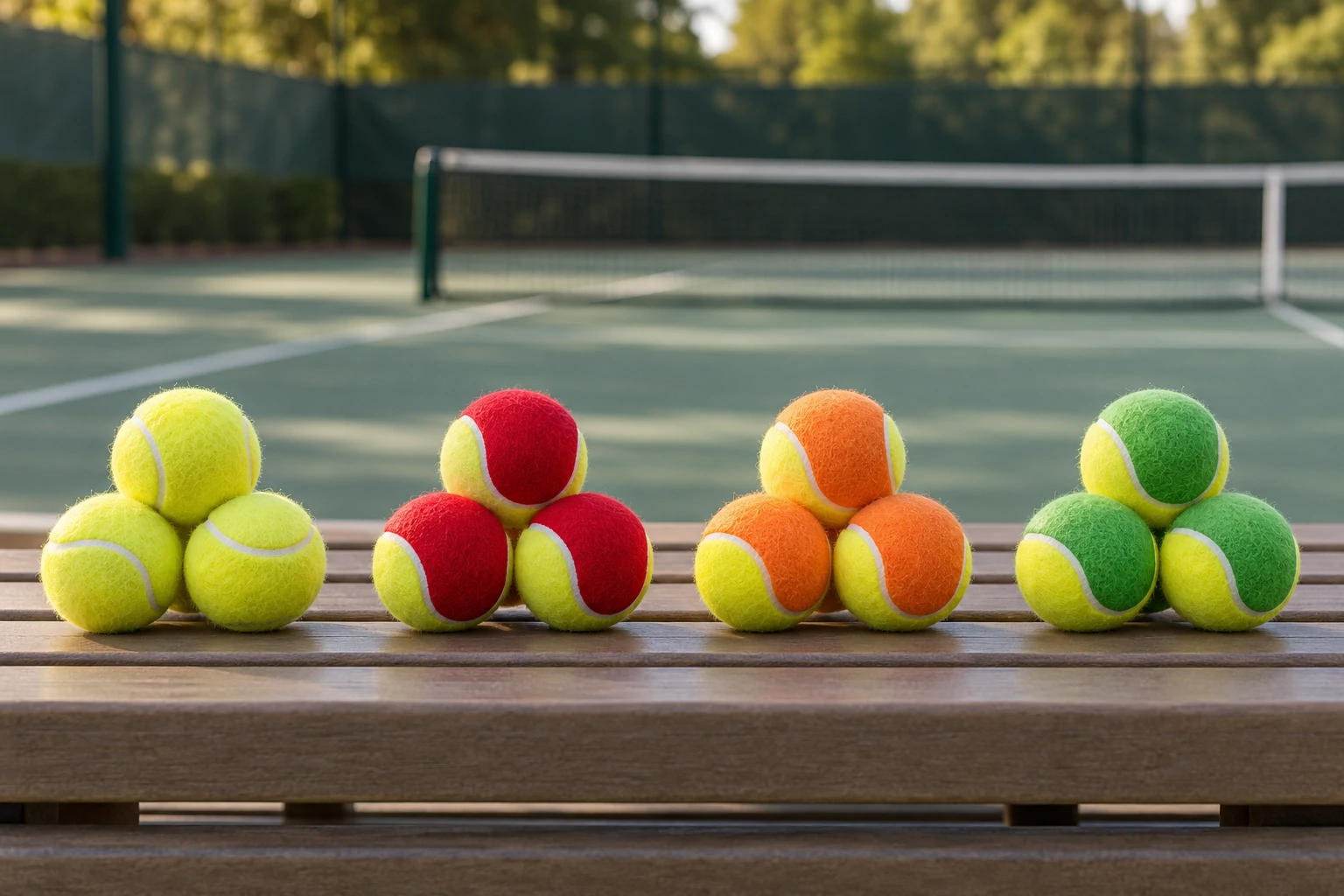
Not all tennis balls are identical. Standard pressurized balls offer the familiar match-like feel many players expect, while pressureless balls are often selected for repetitive practice or ball machines because their usable life can be longer.
Surface, player age, skill level, practice format, and competition rules all affect the sensible choice. Low-compression red, orange, and green progression balls slow the pace and control bounce for learning; they are not simply inferior versions of a standard ball.
| Ball type | Best use | Main characteristic |
|---|---|---|
| Standard pressurized | Matches and regular play | Familiar match-like feel |
| Extra-duty | Many hard-court situations | More durable felt |
| Regular-duty | Often softer surfaces | Lighter felt construction |
| Pressureless | Practice and machines | Longer usable life |
| Red / orange / green | Junior and beginner development | Slower pace and controlled bounce |
How Many Tennis Balls Should You Carry?
- Casual hitting: carry enough to keep a short rally moving if one rolls away.
- Lessons: the coach may provide balls, but check before arriving.
- Practice: more balls reduce collection time during drills.
- Matches: bring the format or fresh supply required by the event.
- Basket training: use a ball hopper or basket only when drills justify it.
Store balls where they are easy to reach but unlikely to roll loose in transit. A simple outer pocket can work for a casual player, while a dedicated compartment or hopper makes more sense for repetitive serving or feeding drills. Replace or separate balls when their bounce and felt no longer suit the purpose of the session.
3. Tennis Shoes: Built for Court Movement
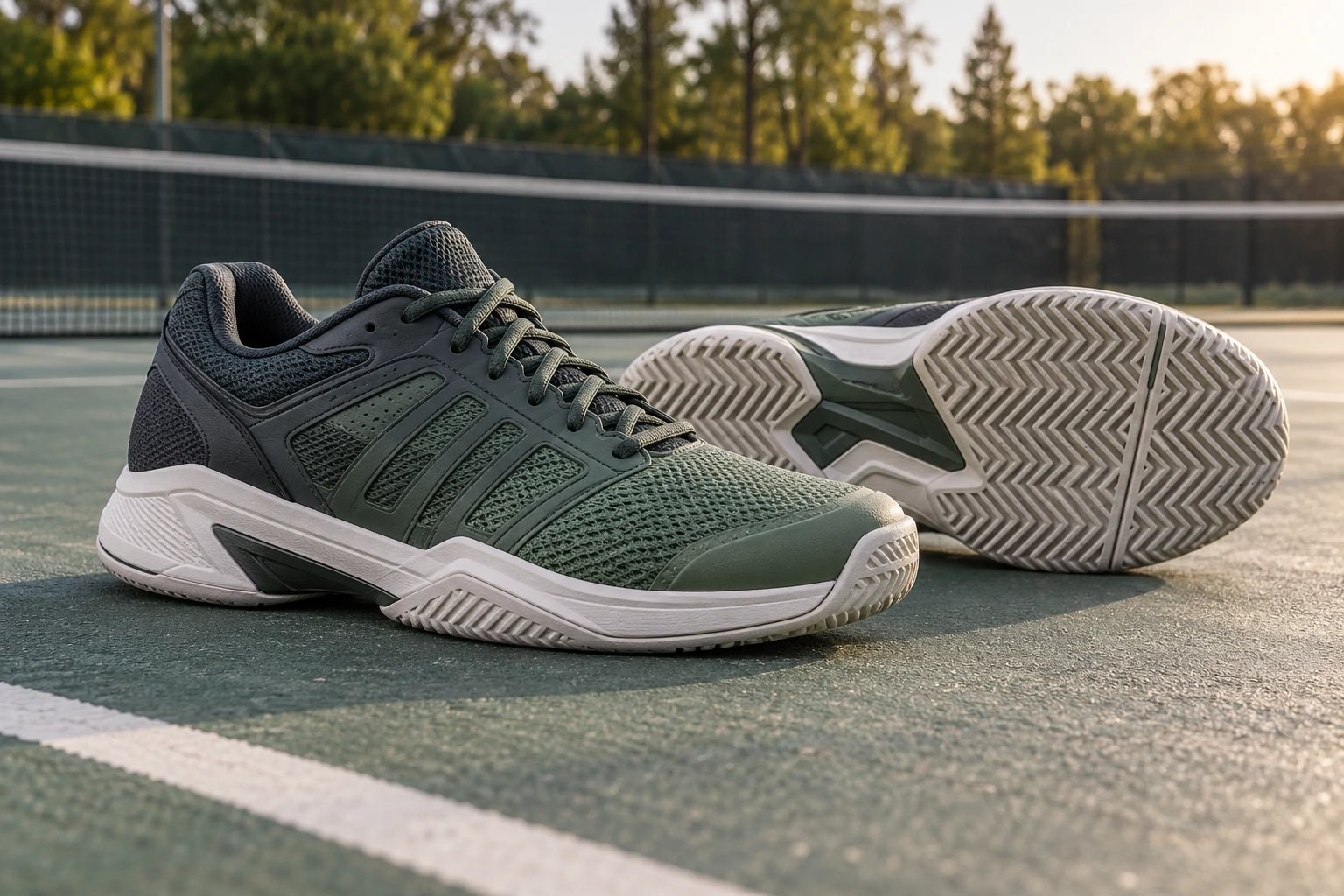
Tennis includes lateral movement, quick changes of direction, acceleration, stopping, and repeated court contact. Tennis shoes are designed around those multidirectional demands; running shoes are generally designed around forward travel.
This does not mean every tennis shoe feels the same. Fit, cushioning preference, ventilation, durability, and the court you use most often still deserve comparison.
| Feature | Tennis shoes | Running shoes |
|---|---|---|
| Primary movement | Multidirectional | Primarily forward |
| Lateral support | Higher priority | Usually lower priority |
| Outsole | Designed for court movement | Designed for running surfaces |
| Side reinforcement | Common | Less emphasized |
| Court suitability | Tennis-specific | Not specifically designed for tennis |
Choosing Shoes by Court Surface
Hard-court shoes often prioritize durable outsoles. Clay shoes usually use tread intended to work with loose clay, while grass-court options can follow venue rules or specialized traction needs. All-court shoes are a practical compromise for players who use more than one surface, but no outsole is perfect everywhere.
Before Buying Tennis Shoes, Check
- Correct fit and usable toe space
- Lateral stability and a secure heel feel
- Outsole suited to the usual court
- Cushioning and ventilation preferences
- Durability requirements and frequency of play
Try shoes with the socks you normally wear on court and allow time to walk, turn, and change direction in them. A close fit should not create pressure points, while a loose fit can make lateral movement feel uncertain. If you play on a club's primary surface most of the time, let that surface guide the outsole decision before considering a secondary court.
4. Tennis Clothing: Comfortable, Flexible, and Weather-Ready
Expensive tennis-specific clothing is not a requirement for casual beginners. A useful outfit allows unrestricted movement, manages heat and sweat reasonably well, fits comfortably, and suits the weather.
Warm-Weather Tennis Clothing
- Performance shirt with shorts, skirt, or dress
- Breathable socks and court shoes
- Hat or visor and sun protection for outdoor sessions
- Pockets for balls when that is useful during serving practice
Cool-Weather Tennis Clothing
- Lightweight layers that are easy to remove
- A warm-up jacket for arrival and changeovers
- Flexible pants or tights that do not restrict footwork
- A spare dry layer when conditions are damp or windy
| Priority | Recreational practice | Match play |
|---|---|---|
| Movement | Comfortable range of motion | Reliable fit through longer play |
| Moisture | Breathable material | Spare shirt or socks can be useful |
| Weather | Dress for the session | Plan for changing conditions |
| Storage | Optional pockets | Ball-friendly pockets may help |
Keep the clothing decision practical. One versatile outfit, a light warm-up layer, and dry socks are often more useful than a wardrobe designed around labels. Players who compete should also check any team, club, or event dress expectations before match day.
5. Tennis Bag: Organize What You Actually Carry
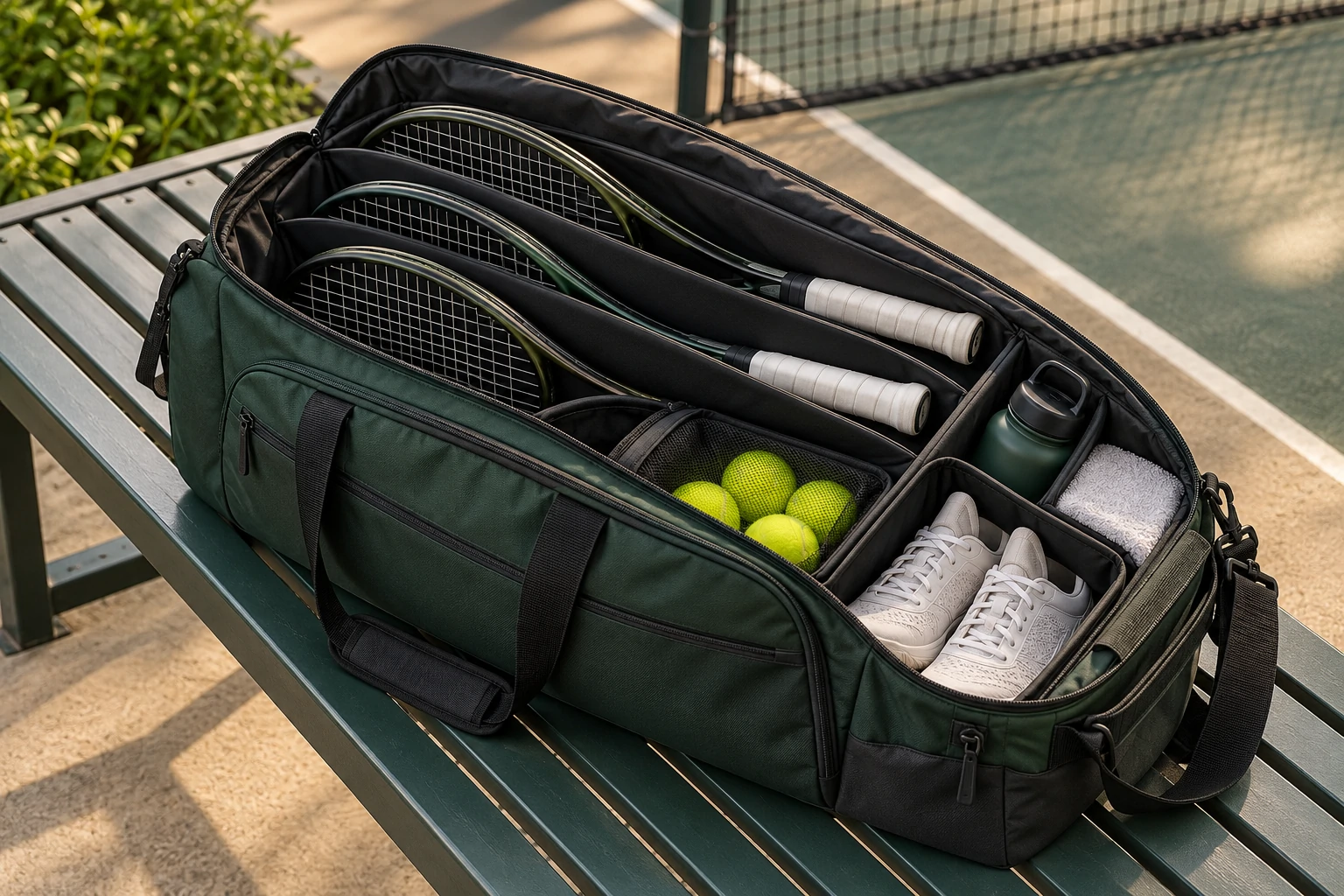
Someone with one racquet and a short local session may not need a large tennis bag immediately. As a player starts carrying racquets, balls, shoes, water, towels, clothing, and small accessories, a bag makes setup and transport noticeably easier.
A proper tennis bag is not just luggage; it is equipment protection. As an expert tennis bag manufacturer, Racquet Bag engineers bag formats tailored to every player tier: compact 3 racquet tennis bags for daily drills, dual-compartment 6 racquet tennis bags for club players, and tour-grade 9-12 racquet bags featuring multi-layer isothermal foil. Commuting players frequently prefer ergonomic tennis backpacks with dedicated racquet sleeves.
Choose capacity around your normal load, not the largest possible number. The right tennis bag should make equipment easier to find and protect, without becoming unnecessarily bulky for the trip to court.
| Bag type | Typical player | Best for |
|---|---|---|
| Tennis backpack | Beginner / commuter | One or two racquets and daily essentials |
| 3-racquet bag | Recreational player | Compact regular practice setup |
| 6-racquet bag | Frequent player | Racquets, apparel, accessories |
| 9-racquet bag | Competitive player | Larger training and match load |
| 12-racquet bag | Tournament player | Multiple racquets and extensive gear |
| Tennis duffel / tote | Training or casual player | Flexible daily storage |
Features to Compare
Useful bag features can include racquet compartments, a shoe compartment, accessory pockets, bottle storage, padded shoulder or backpack straps, durable zippers, ventilation, water-resistant materials, and clear internal organization. The value of each feature depends on how you travel and pack.
What Should Be in a Tennis Bag?
- Racquet and balls
- Water bottle and towel
- Overgrip and personal essentials
- Spare clothing and socks when needed
- Sunscreen, cap or visor for outdoor play
- Snack only when the session length makes it practical
Pack the items used first in the easiest-to-reach place. Separating shoes from clean clothing, keeping grips dry, and putting small items in one consistent pocket can save time before a lesson or match. After several sessions, remove anything you never use; an organized bag is easier to carry and easier to check before leaving home.
Capacity labels are helpful starting points, but they do not describe the entire carrying experience. Two bags with the same racquet capacity can differ in shoe storage, accessory pocket layout, strap comfort, and the amount of space left once the racquet compartments are full. Consider how the bag travels as well: commuting by public transport, walking to a club, and driving to weekend matches each favor a different balance of compactness and organization.
6. Tennis Strings: The Racquet Component That Contacts the Ball
Strings are easy to overlook because they are part of the racquet, yet they are the component that meets the ball. Material, tension, string pattern, playing frequency, and hitting style all influence the response a player feels.
Beginners do not need to chase a complicated setup. A simple, suitable stringing option and a clear replacement plan are often more useful than selecting a specialized material without knowing the practical trade-offs.
| String type | General character | Often considered by |
|---|---|---|
| Synthetic gut | Simple and versatile | Beginners and recreational players |
| Multifilament | Comfort-oriented feel | Players prioritizing comfort |
| Polyester | Control and durability characteristics | Experienced players with developed swings |
| Natural gut | Premium feel and elasticity | Specialized or experienced users |
| Hybrid | Combines string characteristics | Players customizing response |
There is no universal replacement interval or tension that suits everyone. Instead, notice broken strings, a major change in feel, frequency of play, and the manufacturer or stringer's recommendations.
Keep string selection in proportion to playing level. A player who is learning basic timing will usually gain more from a racquet that fits, usable balls, and regular court time than from an elaborate string experiment. As strokes become more repeatable, a stringer can explain the practical differences between materials without treating any one setup as mandatory.
7. Replacement Grips and Overgrips
A replacement grip is the main cushioning layer installed directly on the racquet handle. An overgrip wraps over that layer and is designed to be replaced more often.
| Item | Installed where | Main purpose |
|---|---|---|
| Replacement grip | Directly on handle | Main cushioning and grip layer |
| Overgrip | Over existing grip | Replaceable outer gripping surface |
An overgrip can help with sweat absorption, tackiness, a fresh handle surface, and minor grip-size adjustment. Replace it when the surface becomes slippery, visibly worn, less comfortable, or no longer manages sweat the way you prefer.
Keep one or two spare overgrips in the bag rather than waiting until the handle becomes uncomfortable mid-session. The small cost and size make this one of the more practical tennis accessories for regular players. Choose a texture and thickness you can hold consistently, then avoid changing the handle setup merely because another player prefers something different.
8. Water, Towels, and Sun Protection
Small tennis bag essentials can have a large effect on whether a practice feels organized. Bring sufficient water for the expected session, weather, and available refill points; no single amount applies to every player or condition.
Outdoor Tennis Checklist
- Water bottle
- Towel
- Sunscreen
- Hat or visor
- Sunglasses if preferred
- Spare shirt and extra socks
Towels are particularly useful during humid conditions, long practices, and changeovers. They can also help keep the hand and handle dry. Outdoor protection is a practical part of match preparation, not merely an accessory category.
Check the forecast alongside the session format. A shaded evening hit may call for very little beyond water, while a long midday outdoor practice can make a visor, sunscreen, spare shirt, and extra socks useful additions. Pack them before leaving rather than relying on the club shop or a nearby store; court time is easier to enjoy when the small essentials are already handled.
9. Useful Tennis Accessories: Solve a Real Need
Tennis accessories should earn their place in your bag. A vibration dampener can change impact feel and sound, while wristbands, headbands, ball clips, scorekeepers, and smart sensors suit some players but are not universal essentials.
| Accessory | Priority | Typical use |
|---|---|---|
| Overgrip | Recommended | Grip maintenance |
| Towel | Recommended | Sweat management |
| Dampener | Optional | Changes impact feel and sound |
| Ball hopper | Practice accessory | Repetitive drills |
| Training cones | Practice accessory | Footwork drills |
| Smart sensor | Optional | Performance tracking |
| Scorekeeper | Optional | Match convenience |
Ball baskets, cones, and suitable resistance bands may support planned practice routines. They are not replacements for coaching or a reason to buy equipment before you know what the session needs.
For example, a player who frequently serves alone may benefit from a hopper, while a player who only rallies with a partner may not. A scorekeeper can simplify an informal league match, but it will not change the quality of a short social hit. Treat every accessory as a response to a repeated friction point, not an automatic upgrade.
10. Tennis Equipment by Player Level
A good tennis equipment checklist changes with playing frequency. The difference is usually not that a competitive player needs every gadget; it is that backup options, fresh consumables, and dependable organization matter more when court time and match commitments increase.
| Equipment | Beginner | Recreational player | Competitive player |
|---|---|---|---|
| Racquet | One suitable racquet | Primary racquet | Primary plus backup |
| Balls | Small supply | Regular fresh supply | Match and practice supply |
| Court shoes | Essential | Essential | Essential; surface considered |
| Bag | Simple carry option | Organized bag | Capacity for match load |
| Strings / grips | Basic maintenance | Keep replacements | Planned maintenance |
| Accessories | Only useful basics | Need-led additions | Match and practice specific |
Start with the core five items, then let actual play expose the next priority. That keeps beginner tennis gear useful and prevents a bag from filling with accessories that never leave the pocket.
Regular players can also use this section as a pre-match check. Verify that shoes are packed, grips feel usable, balls meet the session's needs, and water is ready before departure. Competitive players may add a backup racquet and a clearer string plan because an equipment interruption has a greater effect when there is a scheduled match.
Questions, answered
Tennis Equipment FAQ
Clear answers to common tennis essentials and tennis bag checklist questions.
What equipment do you need to play tennis?
Most players need a tennis racquet, tennis balls, proper court shoes, comfortable athletic clothing, and water. A tennis bag, overgrips, spare strings, towels, and accessories become more useful as playing frequency increases.
What should a beginner buy first for tennis?
Start with a suitable racquet, balls, tennis-specific shoes, athletic clothing, and water. Add a small bag, overgrips, and other extras after you know what you carry and how often you play.
Do beginners need tennis shoes?
Tennis shoes are a core item because tennis uses lateral movement and quick changes of direction. Choose a pair that fits well and is appropriate for your usual court surface.
How many racquets should a player carry?
One suitable racquet can be enough for a beginner or casual hit. Regular match players may value a backup in case strings break or a racquet becomes unavailable during play.
Do I need a tennis bag?
Not necessarily for the first short session. A tennis bag becomes practical when you routinely carry racquets, shoes, balls, water, towels, clothing, and small accessories.
Are vibration dampeners necessary?
No. A dampener is optional and mainly changes perceived vibration feel and sound. It is a personal preference rather than essential tennis equipment.
Which tennis balls are best for beginners?
Low-compression red, orange, or green balls can support age-appropriate learning and controlled bounce. Standard balls may also suit beginners depending on the lesson format and coach guidance.
What should I bring to a tennis match?
Bring your racquet or backup, match-appropriate balls if required, tennis shoes, water, towel, weather protection, and any change of clothing you expect to need. Check the event's own rules before packing.
The takeaway
Build Your Tennis Equipment List Around Real Play
The essential answer is straightforward: begin with a racquet, balls, tennis shoes, comfortable clothing, and water. Select those items for your body, court, and schedule rather than buying an oversized collection of accessories.
- Start lean: core gear covers the first session.
- Upgrade with purpose: add bags, grips, strings, and training items as play becomes regular.
- Prepare for conditions: match shoes, clothing, hydration, and outdoor protection to the court and weather.
A well-planned tennis gear checklist is not the longest one. It is the set of equipment you can comfortably use, carry, and maintain whenever you step onto court.
Tennis bag inquiry
Custom Tennis Bag Manufacturing & Wholesale Supply
As an industry-leading tennis bag manufacturer in China, Racquet Bag supplies tennis academies, sports brands, and retail distributors worldwide with wholesale custom tennis bags. All models feature tournament-grade climate protection, isolated shoe tunnels, and full private-label customization with rapid 5-7 day sample turnaround. Contact our tennis bag sourcing specialists to receive a factory quote.
You can also email Racquet Bag with your project brief.