
Material Guides
Oxford Fabric: Properties, Types and Uses in Bags
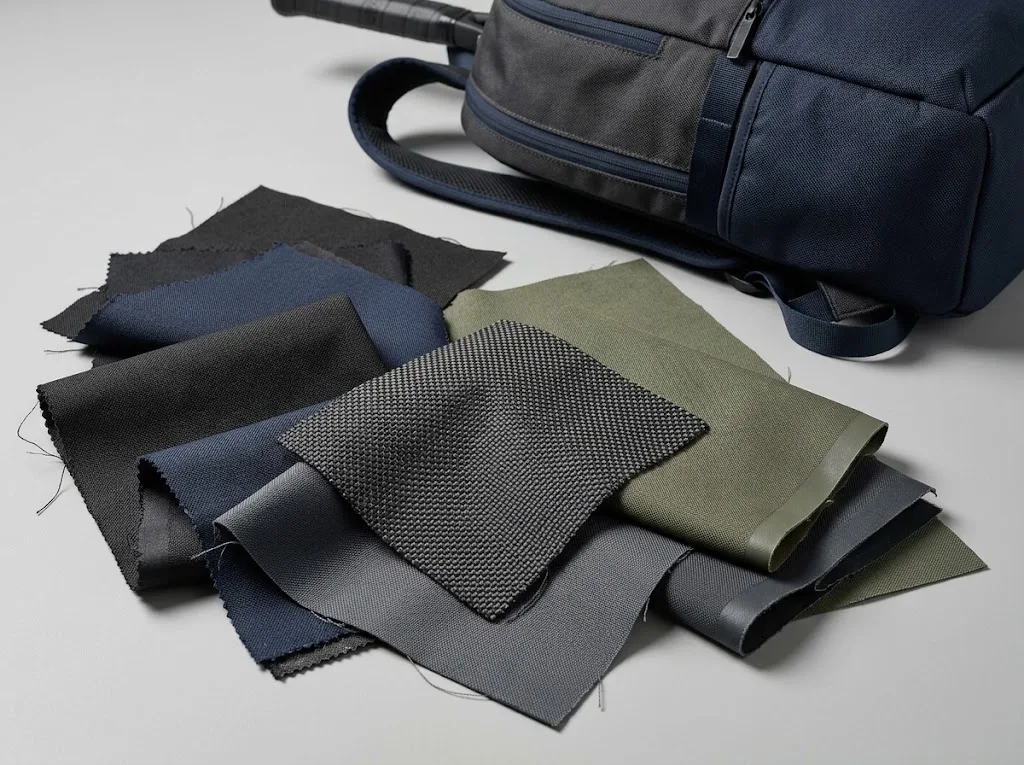
Oxford fabric is a woven textile commonly associated with a basket-like weave. Modern bag-grade versions often use polyester or nylon yarns. Their properties depend on fiber, construction, and finishing, which is why Oxford fabric appears in backpacks, sports bags, luggage, and protective covers with very different performance requirements.
On this page
At a glance
Oxford Fabric Quick Reference
- Fabric type
- Woven textile; commonly polyester or nylon in bags
- Common specifications
- 210D, 420D, 600D, 900D, 1680D
- Key properties
- Durability, abrasion resistance, versatility
- Water resistance
- Depends on construction and coating
- Common uses
- Backpacks, sports bags, luggage, covers
General descriptions, not guarantees for every Oxford fabric.
Overview
What Is Oxford Fabric?
Oxford fabric is a woven textile traditionally associated with a basket-weave variation of plain weave. Originally popular in clothing, especially shirts, the name now covers a broad commercial family used in bags, luggage, outdoor equipment, and industrial products. Bag-grade Oxford commonly uses polyester or nylon yarns.
Oxford describes a fabric construction or commercial category, not one specific fiber. The name alone cannot tell a buyer the fiber blend, coating, finished weight, or tested performance. Some bag textiles sold as Oxford also differ from traditional shirt cloth in their exact weave.
Its appeal for bags is flexibility: multiple yarn weights and constructions, useful abrasion resistance, many colors and textures, and compatibility with selected coatings or finishes. This gives designers choices across price and performance levels. The actual result still depends on the complete fabric specification and the way the bag is assembled.
Material guide / Main article
How Is Oxford Fabric Made?
Oxford Weave Structure
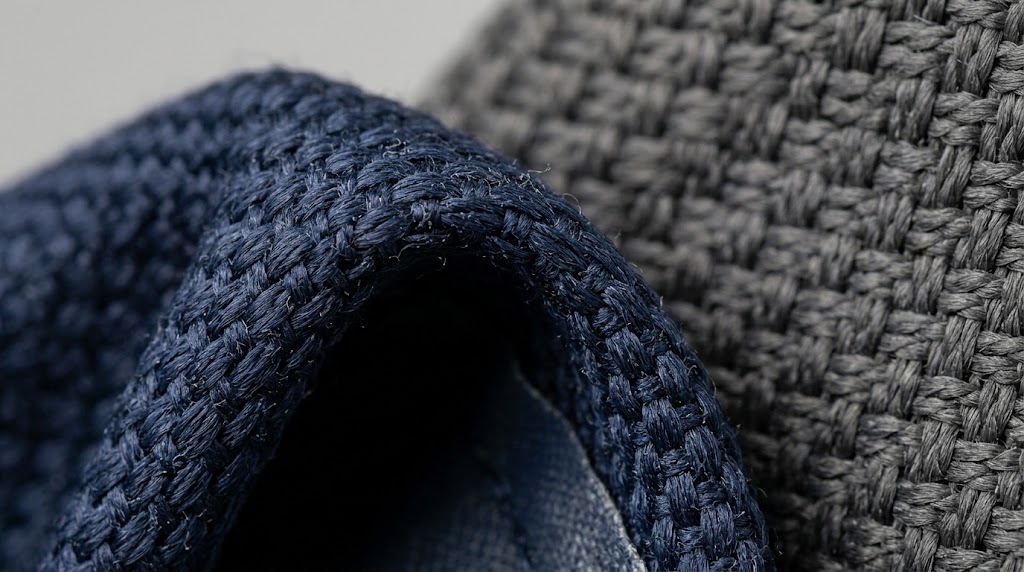
Traditional Oxford cloth has a basket-like surface. A basket weave is a variation of plain weave in which yarns may be grouped rather than interlaced one by one. The lengthwise yarns are the warp; the crosswise yarns are the weft. Their arrangement creates the recognizable texture, although the fabric sold for bags does not always follow the same weave recipe as apparel Oxford.
Yarn size and shape, spacing, and fabric density influence flexibility, appearance, and resistance to wear. A tighter, heavier construction may behave differently from a loose, light one even when both carry the Oxford label. Weave contributes to mechanical behavior, but fiber choice, finishing, and assembly also affect strength.
Fibers, Weaving and Finishing
Production starts by selecting polyester, nylon, cotton, or blended yarns. The yarns are woven, then the fabric may be dyed, heat set, or otherwise finished. A manufacturer may add a coating or lamination, inspect the finished material, and prepare it for cutting and sewing. Coating is optional; it is not part of the definition of Oxford fabric.
For a sports bag, a coated polyester Oxford might be considered for the outer shell, with a lighter woven fabric inside. That selection is a design example, not a universal recipe. The supplier's construction details and samples determine whether either material meets the intended use.
Key Properties of Oxford Fabric
Oxford fabric properties depend on fiber composition, yarn denier, weave density, coating, and manufacturing quality. The same material name can therefore describe fabrics with very different behavior.
| Property | Technical Explanation | Why It Matters for Bags |
|---|---|---|
| Abrasion resistance | Resistance to surface wear from friction | Bases, corners, high-contact panels |
| Tear resistance | Resistance to a cut or tear continuing under force | Stressed equipment-bag panels |
| Tensile strength | Resistance to pulling force across intact fabric | Load-bearing sections |
| Water resistance | Resistance to moisture penetration under defined conditions | Outdoor and sports bags |
| Weight | Changes with yarn, construction, and coating | Carrying comfort and finished weight |
| Flexibility | Changes with construction and finishing | Foldability and handling |
| Colorfastness | Resistance to fading or color transfer | Branded appearance over time |
| Shape retention | Depends on fabric and supporting construction | Stability of larger panels |
Tear and tensile strength answer different questions: one concerns the growth of an existing tear, while the other concerns an intact sample under a pulling load. Neither can be inferred reliably from denier alone. A thicker fabric may resist some wear but add weight and stiffness.
For a tennis backpack, a heavier shell could improve resistance where the bag rubs against floors, yet a lighter construction may be more comfortable to carry. Material choice balances durability, finished weight, flexibility, appearance, and cost with reinforcement at the areas that need it.
Common Types of Oxford Fabric
Oxford fabrics are commonly described by both fiber and yarn specification. Those labels are useful starting points, not standardized performance grades.
Polyester Oxford vs Nylon Oxford
Polyester Oxford is common in commercial bags. Polyester absorbs relatively little moisture, has useful dimensional stability, is generally cost-effective, and supports many color and printing options. Its abrasion, tear, and water performance still depend on the weave, yarn, and finish.
Nylon Oxford is often selected for performance-oriented applications where particular mechanical results matter. It can offer strong abrasion and tear performance, but nylon grade, yarn construction, and coating make a large difference. Comparable nylon options may cost more. A well-built polyester fabric can outperform a poorly built nylon one in a specific test; neither fiber wins every measure.
| Feature | Polyester Oxford | Nylon Oxford |
|---|---|---|
| Typical cost | Often an economical starting point | May be higher for comparable constructions |
| Moisture absorption | Relatively low | Generally higher than polyester |
| Dimensional stability | Generally useful | Depends on grade and finish |
| Abrasion performance | Construction-dependent | Can be strong; construction-dependent |
| Weight | Evaluate finished GSM and coating | Evaluate finished GSM and coating |
| Bag uses | Everyday backpacks and sports bags | Selected demanding bag applications |
Cotton Oxford remains familiar in apparel, especially shirts. It is not the main focus when discussing coated performance-bag shells.
Oxford Fabric Types by Denier
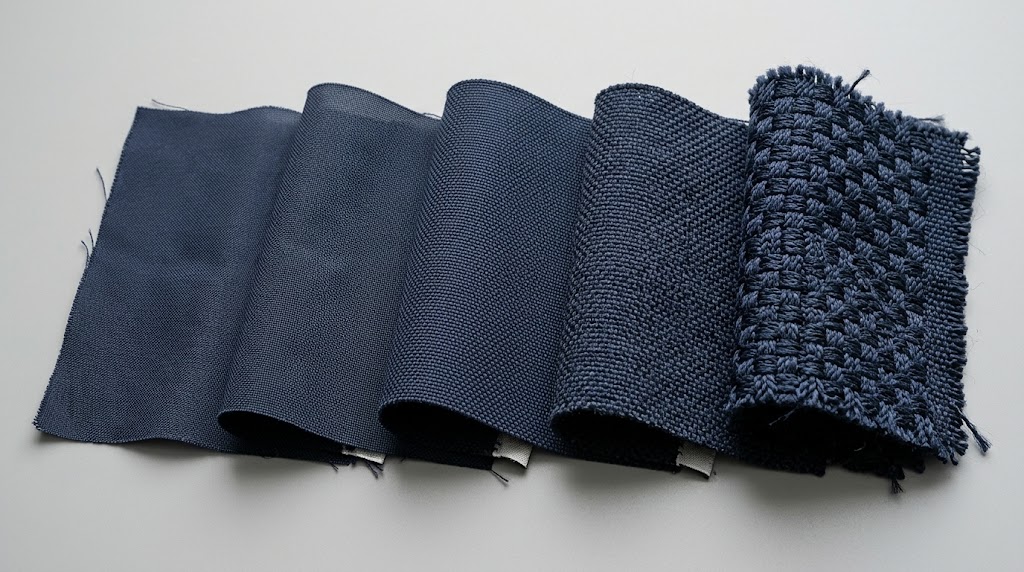
Denier measures the mass in grams of 9,000 meters of yarn or filament. A 600D yarn has a nominal mass of 600 grams over that length. It is a measure of yarn linear density, whereas GSM measures the mass of a square meter of finished fabric. Denier alone does not establish fabric weight, abrasion resistance, tear strength, or waterproofing.
| Fabric Specification | General Characteristics | Potential Bag Applications |
|---|---|---|
| 210D Oxford | Often a lighter construction | Linings and lightweight components |
| 420D Oxford | Intermediate yarn specification | Light backpacks and flexible panels |
| 600D Oxford | Common bag-material starting point for cost and durability balance | Backpacks and sports bags |
| 900D Oxford | Heavier yarn specification | More substantial bag constructions |
| 1680D Oxford | High denier; may add weight or stiffness | High-wear panels or demanding uses |
These are sourcing guidelines. Two 600D fabrics can have different weave densities, backing, GSM, and test results. Compare finished specifications and physical samples before treating any denier label as a quality ranking.
Is Oxford Fabric Waterproof?
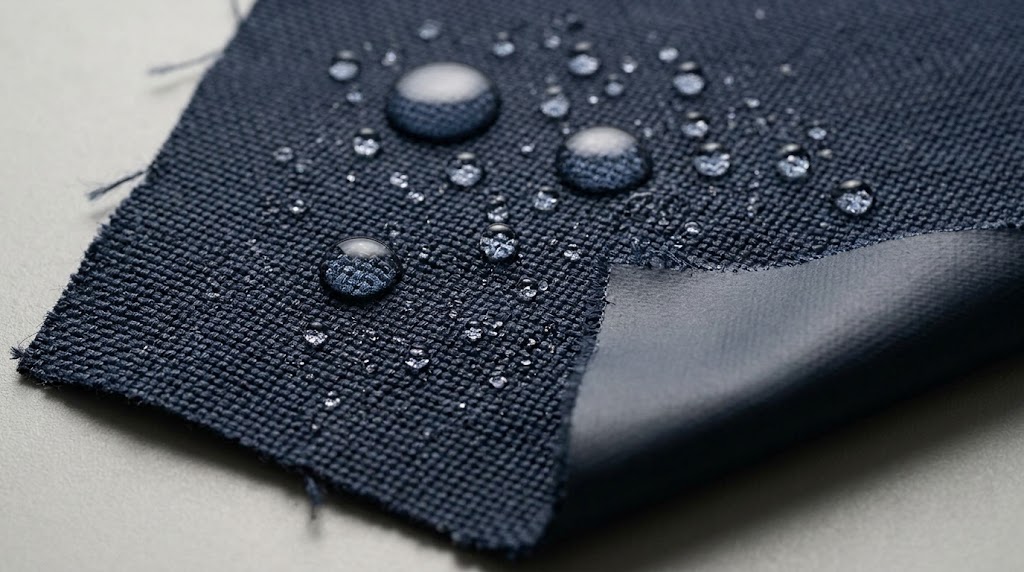
Oxford fabric is not inherently waterproof. Its resistance to water depends on the weave, surface treatment, coating, and construction of the finished product. A water-repellent surface causes droplets to bead initially; water-resistant fabric slows penetration under defined conditions. A waterproof claim needs a stated exposure condition and supporting test evidence.
PU, PVC and TPU Coatings
Polyurethane (PU) coating can improve resistance to water penetration while allowing a relatively flexible, moderately weighted construction. Polyvinyl chloride (PVC) can provide a robust barrier but may be associated with heavier or stiffer fabric. Thermoplastic polyurethane (TPU) coating or lamination can form a flexible barrier for selected technical products. Each is a family of formulations, so performance and processing vary.
| Coating | Typical Characteristics | Relevant Selection Factors |
|---|---|---|
| PU | Polyurethane-based, often flexible | Barrier target, coating weight, adhesion |
| PVC | Polyvinyl chloride-based, often robust but heavier | Stiffness, weight, formulation requirements |
| TPU | Thermoplastic polyurethane coating or laminate | Flexibility, processing, cost, durability |
Why a Water-Resistant Fabric Does Not Guarantee a Waterproof Bag
Water can pass through stitching holes, seams, zippers, openings, or poorly protected details even when a fabric sample resists penetration. Hydrostatic-pressure testing, such as ISO 811, evaluates fabric resistance under controlled conditions; it does not by itself certify a sewn bag. For tennis backpacks or tournament bags carried in rain, both material and seam, zipper, and opening design deserve review.
Oxford Fabric vs Other Bag Materials
Material names can refer to different things: a fiber, a weave, a weight, a commercial category, or a proprietary product. Compare specific constructions and test requirements rather than broad names alone.
Oxford Fabric vs Polyester
Polyester is a fiber; Oxford commonly describes a woven construction or commercial fabric category. Polyester Oxford is therefore a polyester fabric. To make a useful comparison, specify coated polyester Oxford and the alternative polyester weave, then compare finished weight, strength, surface wear, and cost under the same conditions.
Oxford Fabric vs Canvas and Ripstop
Canvas generally refers to a robust woven construction that may use cotton, synthetics, or blends. Its look, mass, and water behavior depend on fiber and finish. Ripstop describes a reinforcement weave designed to help limit certain tears; it may use nylon or polyester. Categories can overlap, and none guarantees superior durability without a defined specification.
| Material or Construction | Defining Characteristic | Typical Bag Considerations |
|---|---|---|
| Polyester Oxford | Oxford-type weave or commercial category with polyester yarn | Cost, color, finish, panel use |
| Nylon Oxford | Oxford-type construction with nylon yarn | Mechanical targets, grade, cost |
| Canvas | Robust woven construction | Hand feel, weight, finish |
| Ripstop polyester or nylon | Reinforcement grid in the weave | Tear behavior, weight, coating |
Common Uses of Oxford Fabric in Bags
Oxford fabric appears in backpacks, sports and duffel bags, luggage, equipment bags, and protective covers. Load, abrasion exposure, carrying conditions, and target weight change the useful specification. An outer shell, liner, and reinforced base may each call for a different textile.
Oxford Fabric in Tennis Backpacks
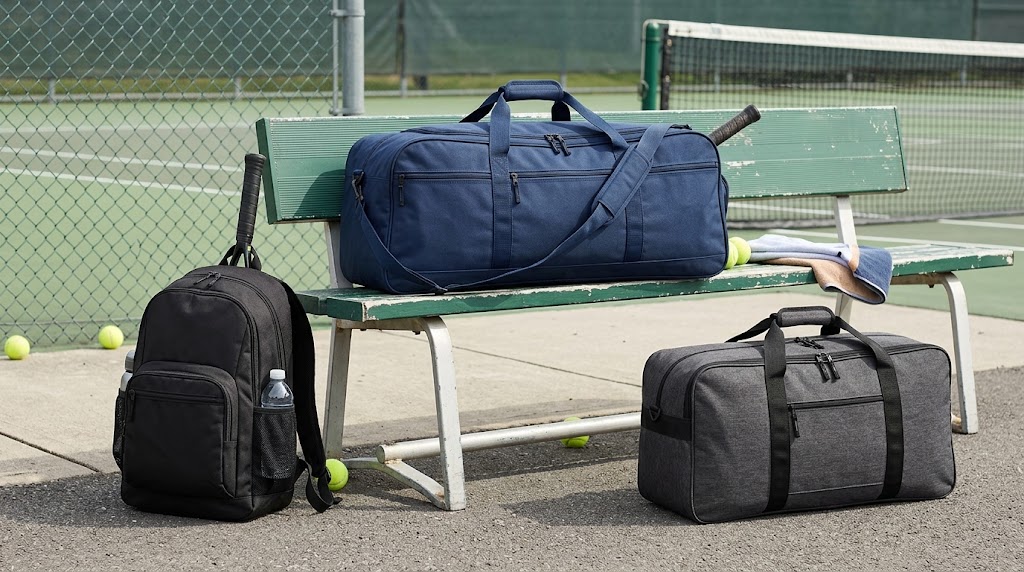
A tennis backpack is handled daily, set on floors, carried against clothing, and sometimes exposed to light rain. Its shell needs a sensible balance of abrasion resistance, weight, color or print compatibility, and water protection. Strap anchors and the base may need separate reinforcement. A 420D or 600D polyester Oxford could be a candidate, subject to testing and bag design. These considerations help explain material choices for Tennis Backpacks.
Oxford Fabric in Multi-Racquet Tennis Bags
Larger panels and equipment loads make shape, base and corner wear, multiple compartments, and stress-point stitching more important. A midweight Oxford shell might be paired with a more reinforced contact area and a lighter lining rather than used uniformly. The same principle applies when evaluating a 6 Racket Tennis Bag.
Oxford Fabric in Badminton Tournament Bags
Repeated loading, unloading, and transportation can wear outer surfaces and affect long-term appearance. A tournament bag also needs to protect equipment and manage moisture exposure. For Badminton Tournament Bags, assess the outer fabric together with panel reinforcement, seams, zippers, and handles; a fabric label alone cannot predict the finished result.
How to Choose Oxford Fabric for Bag Manufacturing
Evaluate Fabric Specifications
Record fiber composition (polyester, nylon, or blend), yarn denier, finished fabric weight, weave, density, and any coating. GSM means grams per square meter of finished fabric; it is not interchangeable with denier. Note finished usable width, since it affects panel cutting and consumption. “600D Oxford” leaves all these important variables unresolved.
Check Durability and Quality
Evaluate abrasion, tear and tensile behavior, coating adhesion, water penetration resistance, colorfastness, and roll-to-roll consistency against the intended application. ISO 12947-2 describes Martindale abrasion assessment of specimen breakdown; ISO 13937-2 uses a trouser-tear method; ISO 811 evaluates hydrostatic-pressure resistance. Coated fabrics may need additional coating-specific methods. Agree procedures and acceptance criteria with the supplier rather than assuming universal pass values.
Balance Performance, Cost and Customization
Fiber, coating, and construction influence raw material cost, bag weight, sewing, sourcing, branding compatibility, and product positioning. Recycled polyester Oxford may be an option, but recycled-content claims need documentation and supply-chain verification. OEM/ODM buyers should approve material samples, color standards, specifications, and quality expectations before bulk production.
An illustrative purchasing format is: “600D polyester Oxford, specified finished GSM, agreed PU coating, approved color standard, defined testing requirements, and confirmed sample.” This is an example format, not a current product specification. Choose for the finished bag's intended performance, rather than simply selecting the highest denier available.
FAQ
Frequently Asked Questions About Oxford Fabric
Concise answers to common material questions.
What is Oxford fabric made of?
Oxford fabric may use polyester, nylon, cotton, or blended yarns. Polyester and nylon are common for technical bag applications, while cotton Oxford is familiar in apparel. The word Oxford describes a construction or commercial category, so confirm fiber composition separately.
Is Oxford fabric waterproof?
No. Water resistance depends on weave, surface treatment, coating, and test conditions. Even a coated fabric cannot guarantee a waterproof bag: seams, needle holes, zippers, and openings can admit water. Ask what performance was tested and under which conditions.
Is Oxford fabric durable?
Many bag-grade Oxford fabrics offer useful durability, but the name alone predicts no service life. Yarn type, weave density, finish, reinforcement, and handling conditions all matter. Compare relevant abrasion and strength results with a production-like bag sample.
What is the difference between 420D and 600D Oxford fabric?
Denier measures yarn linear density. A 600D yarn has a higher nominal mass per length than a 420D yarn, but finished GSM and strength also depend on weave, yarn density, fiber, and finish. Compare complete specifications and test results.
Is Oxford fabric better than polyester?
These terms describe different attributes. Polyester is a fiber; Oxford refers to a weave-associated fabric category. Many Oxford fabrics are made of polyester. Compare a particular polyester Oxford with another specified polyester textile, not the broad names alone.
Is Oxford fabric suitable for backpacks?
Polyester and nylon Oxford are commonly considered for backpacks. Check carried load, base abrasion, strap attachments, comfort, and expected moisture exposure. A suitable shell specification still needs compatible lining, reinforcements, and sound construction.
What is the difference between PU-coated and PVC-coated Oxford fabric?
PU uses polyurethane chemistry and often suits flexible, moderate-weight constructions. PVC uses polyvinyl chloride and can form a robust but heavier or stiffer backing. Suitability depends on the specific formulation, finished fabric, environmental requirements, and processing needs.
Which Oxford fabric is best for sports bags?
There is no universal best option. 600D polyester Oxford is a common starting point, while lighter panels or heavier high-wear areas may suit a particular design. Define load, target weight, weather exposure, cost, and testing before selecting materials.
Conclusion
Choosing the Right Oxford Fabric
Oxford is a versatile woven fabric category, often made from polyester or nylon for bags. Denier describes yarn linear density, not total quality. Weave, coating, and finished-bag construction determine how well a material handles wear and moisture.
Labels such as “600D” or “waterproof Oxford” are incomplete without fiber, GSM, density, coating, and agreed tests. For backpacks and sports bags, define the load, carrying conditions, appearance, cost, and weather expectations first. Then compare complete specifications, samples, and construction details to choose a fabric that fits the intended product.
Custom racquet bag materials
Discuss Oxford Fabric Options for Custom Racquet Bags
Brands, importers, and wholesale buyers can share material options, custom colors, coatings, and OEM/ODM requirements for tennis, pickleball, padel, or badminton bags. Describe the intended use and bulk manufacturing goals so the discussion starts with the right specifications.